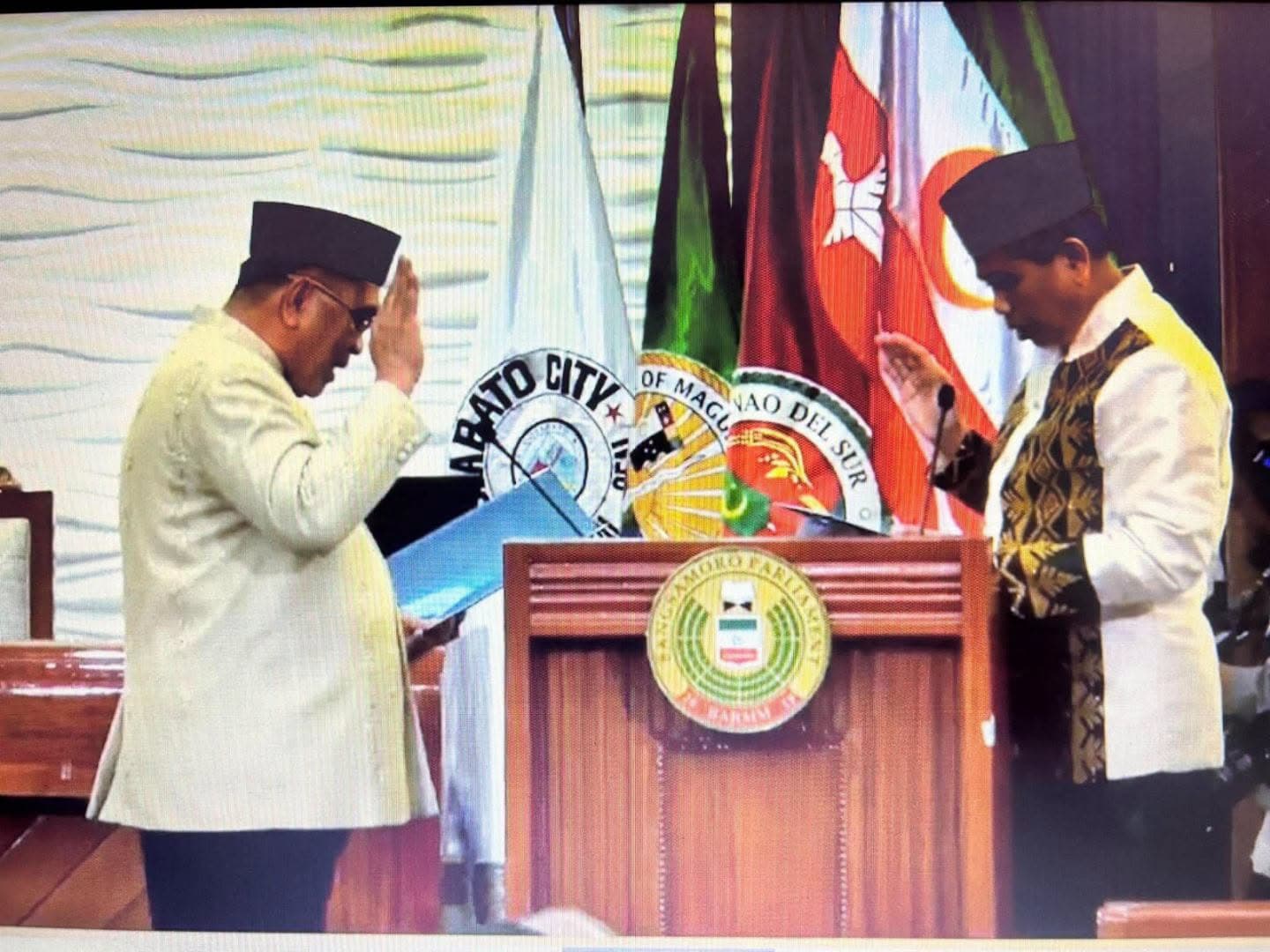
Manila (AsiaNews) – The Bangsamoro Autonomous Region in Muslim Mindanao (BARMM) has just inaugurated its first Parliament, finalising, amongst other things, the appointment of the chief executive following the elections held last September.
Abdulraof “Sammy Gambar” Macacua was elected as the first head of government of the autonomous region, securing 51 votes against the 27 received by former Prime Minister Ahod Balawag Ebrahim; the vote took place during the inaugural session of the first elected Bangsamoro Parliament, held today in Cotabato City, in the southern Philippines. The appointment was made by open ballot amongst the 79 legislators present, with one abstention.
Previously, the 69-year-old Macacua – a former rebel commander – had served as interim Prime Minister of the Bangsamoro Transitional Authority (BTA) from 2025 until the handover to the first fully-fledged Parliament. He succeeded Ebrahim, the interim leader of the BARMM from 22 February 2019 to 3 March 2025. Parliament must now proceed to elect its Speaker, form the executive and appoint two Deputy Prime Ministers.
A new chapter
This phase marks the transition from the Bangsamoro Transitional Authority (BTA) – a provisional body – to the first elected Parliament, following the region’s inaugural parliamentary elections, held on 14 September 2026. Sheikh Muslim Guiamaden, the Wali of Bangsamoro – a figure who holds a ceremonial role and acts as the moral guardian of the BARMM – opened the session and presided over the initial proceedings. The 80-seat assembly took its seat despite the absence of a pre-established majority.
Its members include representatives from various political groups, such as the Bangsamoro Federalist Party and the United Bangsamoro Justice Party, which is linked to the Moro Islamic Liberation Front (MILF, an Islamist organisation) and led by its president, Ahod “Al Haj Murad” Ebrahim. The newly elected members are tasked with appointing the regional leadership, including the Speaker of the Assembly and the Chief Minister, thereby bringing to an end more than seven years of transitional government run by figures directly appointed by the President of the Republic. Ferdinand R. Marcos Jr. himself attended the inaugural sitting.
Under national law (Republic Act No. 11054), known as the “Bangsamoro Organic Law”, the parliament elects the Chief Minister by a majority vote, requiring the support of at least 41 of its 80 members. The Chief Minister is tasked with leading the regional government and promoting development priorities, under the supervision of the parliament.
At the same time, the assembly will be responsible for enacting regional laws, approving public expenditure and monitoring government programmes, ushering in a new phase of governance after more than seven years of transition under the Bangsamoro Transition Authority (BTA).
The BARMM was established in 2019 following the ratification of the ‘Bangsamoro Organic Law’, which implemented the key provisions of the 2014 Comprehensive Agreement on the Bangsamoro, signed between the government and the Moro Islamic Liberation Front. Since then, the BTA – whose members were appointed by the Head of State – has overseen the creation of the institutions and legal framework necessary for the smooth functioning of a parliamentary government in the Mindanao region.
Mindanao and unresolved conflicts
For over 400 years, Mindanao has been the scene of protracted ethnic and religious conflicts, which have had serious consequences on multiple fronts: tenacious resistance by Muslim (Moro) and indigenous populations against external domination, land expropriations and the migration of settlers, systematic political marginalisation, and the underdevelopment of the affected regions. From the 16th century onwards, when Spain colonised Manila and the northern islands, but never managed to completely subdue the Muslim sultanates of Sulu and Maguindanao, nor the indigenous tribes of the Mindanao hinterland.
During the US occupation of the Philippines and the Second World War, US rule – followed, in the post-war period, by government-sponsored migration programmes – encouraged the influx of large numbers of Christian settlers from Luzon and the Visayas islands into Mindanao. These dynamics led to frequent land expropriations: the arrival of settlers caused Moro and indigenous communities to be displaced from their ancestral and traditional territories, fuelling deep-seated economic and social resentment, as well as deep-rooted religious mistrust.
Towards the end of the 20th century, modern forms of insurrection and secessionist groups emerged. The Jabidah massacre of 1968 and the imposition of martial law in 1972 strengthened Moro identity, leading to the emergence of rebel movements such as the Moro National Liberation Front (MNLF) and, subsequently, the Moro Islamic Liberation Front (MILF).
The conflict in Mindanao has taken a heavy toll in terms of human lives. Decades of clashes, military campaigns and the activities of splinter groups (including the Abu Sayyaf group and other extremist factions) have resulted in hundreds of thousands of casualties, large-scale forced displacement and conditions of underdevelopment. Added to this have been instances of corruption amongst government officials and the dominance of families, clans and elites wielding considerable political and economic power.
Key milestones on the long road to peace and prosperity have included the 1976 Tripoli Agreement, the 1996 Comprehensive Peace Agreement and the 2014 Comprehensive Agreement on Bangsamoro, which paved the way for a political resolution to the conflict.
In 2019, the Bangsamoro Autonomous Region in Muslim Mindanao was ratified, establishing a framework for Muslim self-government and greater regional autonomy.
With the establishment of the BARMM and the convening of its Parliament, hope has been rekindled for the peace and progress that the people of Mindanao have awaited for centuries. The challenge, however, remains daunting, as security issues persist at the local level and separatist factions remain active; nevertheless, large-scale organised conflicts have decreased significantly, steering the region towards economic recovery and institutional development.
According to the Philippine Statistics Authority, approximately 89–91 per cent of the BARMM population are Muslim, with particularly high percentages in provinces such as Tawi-Tawi (97.2 per cent), Sulu (95.2 per cent) and Lanao del Sur (94.7 per cent). The BARMM is also home to a small Christian minority (of whom around 5.3 per cent are Catholic). Between 20 per cent and 23.4 per cent of the population belong to various Moro ethnolinguistic groups (such as the Maranao, Maguindanaon, Tausug and Yakan). Finally, between 5 per cent and 12.5 per cent follow indigenous or tribal (Lumad) religions or other faiths, representing traditional belief systems and minority religious groups. Numerous religious leaders, civil society organisations, government agencies and other stakeholders have repeatedly championed peace and prosperity in the region.