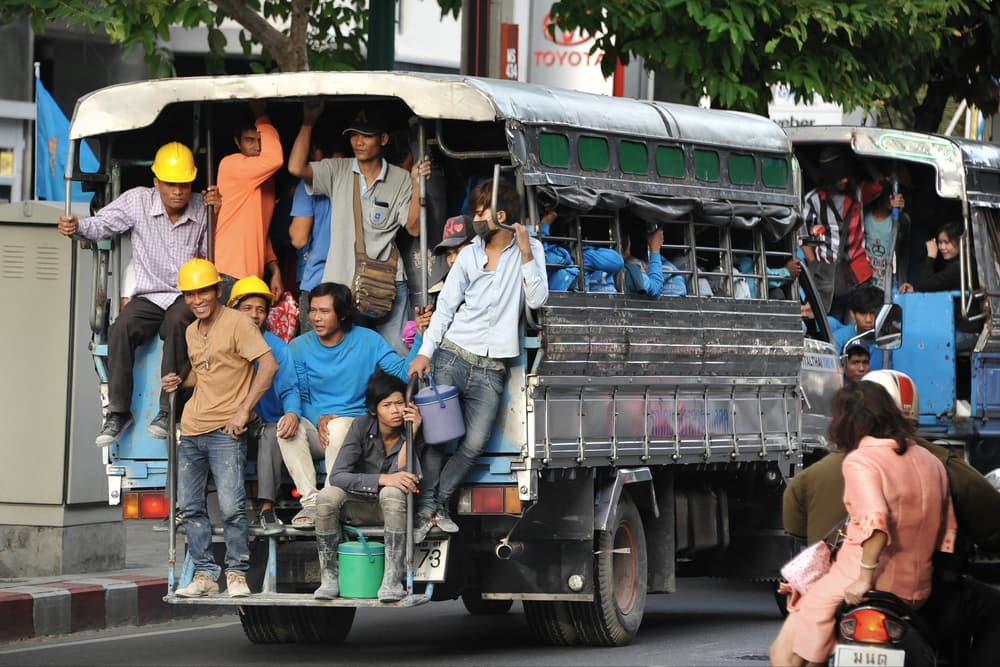
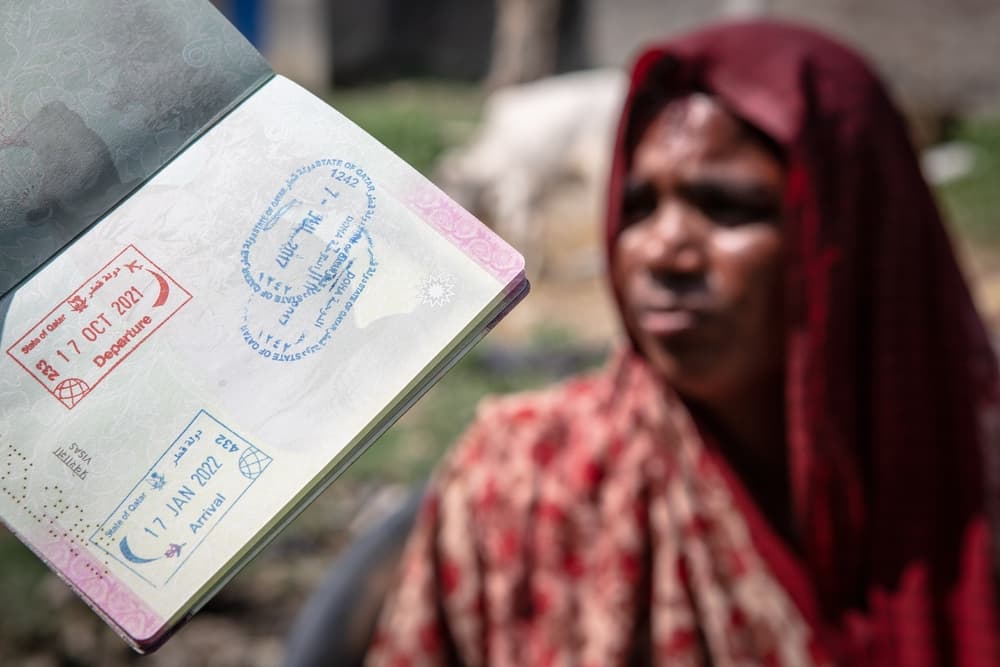
Jerusalem (AsiaNews) – Since the Hamas terrorist attack against Israel on 7 October 2023, and the subsequent war launched by the Jewish state against the movement that controls Gaza, Thai farmers, like other Asian migrants, have been called the "forgotten face" of the tragedy.
In less than three years, at least 51 workers from the Southeast Asian nation have died as a result of the conflict, while 31 have been abducted, their fate largely unresolved, although some had a positive outcome, like that of Watchara Sriaoun, a Christian who was released in late January 2025.
Despite the losses and the suffering associated with captivity, Thailand's economic migrants, especially those working in the agricultural sector, have by and large stayed and resumed their former lives, devoted to their fields, plantations, and crops.
This October will mark the third anniversary of the Hamas attack; many things have changed, and the lives of many have been upended, in Israel, Gaza, and even in the West Bank, scene of rising settler attacks and seizures of Palestinian land.
One person who chose not to change her life is Qwon, who, together with her husband Tay, tends avocado groves in a small agricultural cooperative in Western Galilee. The Thai migrant couple, as reported in length in The Times of Israel, chose to join their Israeli neighbours in May to celebrate Shavuot, the Jewish harvest festival.
Just a week earlier, four Israeli civilians had been injured in the area, one of them seriously, in a Hezbollah drone attack just 13 kilometres away. Speaking about the raid, Qwon said she harboured no fear “because I have confidence in Israeli civilian protection.”
Even after 8 October 2023, when the pro-Iranian Lebanese extremist group began launching rockets and drones at northern Israel, Qwon and the other nine Thai workers continued to tend the 1,000 dunams of avocados alongside their Israeli counterparts.
Although farmers and workers in the north remain exposed to danger, violence has subsided since a fragile ceasefire between Israel and Hezbollah, brokered by US President Donald Trump's administration, went into effect on 19 June.
Despite this, Qwon and Tay remain, and tens of thousands of other Thai workers have made a similar choice. Today, they are deemed essential to Israeli agriculture, helping to tend the fields that provide much of the country's agricultural produce. And it is they who have borne some of the heaviest costs of the conflict for more than two and a half years.
On 7 October 2023, 46 Thai citizens were killed in southern Israel when thousands of Hamas terrorists crossed the border from Gaza, killing approximately 1,200 people and taking 251 hostages.
Of these hostages, 31 were from Thailand. While 28 were eventually released, three died in captivity in Gaza, this according to Israeli authorities. In northern Israel, five Thai agricultural workers were killed by Hezbollah rocket fire.
Yet, looking around at the crowd of Israelis celebrating the holiday, Qwon was visibly in good spirits. “I like Israelis,” she said. “Even though I’m a labourer, the people here have never shown any prejudice towards me.”
Thai workers constitute the largest contingent of foreign migrants currently in Israel. The first began arriving in 1993, when the Israeli government started issuing temporary work visas to reduce Israel's dependence on Palestinian agricultural workers for security reasons, in the wake of the first intifada, which broke out in 1987.
According to the Foreign Workers Committee of the Knesset, the Israeli parliament, as of April 2025, there were over 195,000 legally employed foreign workers in the country, alongside an estimated 33,000 undocumented workers.
At the start of the war between Israel and Hamas in 2023, with scores of their compatriots held captive in Gaza, thousands of Thai workers returned home, and Bangkok suspended a bilateral agreement that allowed more workers to travel to Israel, only to reinstate it in the summer of 2024. Under the programme, Thai migrants can remain in Israel with work permits valid for up to five years.
“Thai workers are extremely important for the farmers in the north and throughout all of Israel,” said an Agriculture Ministry spokesperson. “Since the wars began, the ministry has finally succeeded in removing barriers that limit the number of workers. It’s now much easier for farmers to obtain Thai workers.”
Assia Ladizhinskaya, spokesperson for Kav LaOved, a legal aid group for disadvantaged workers, described the conditions of Thai workers overall as "fairly stable."
Since most workers arrive in Israel through a government agency, their conditions are “a lot better than those of workers who are recruited through private agencies in other countries,” she added.
However, they sometimes lack legal recourse if their employers fail to contribute to their pension fund, and face substandard living conditions, hourly wages, a situation that “makes them hesitate before they miss any work”.
It should be noted that Thai migrants remain exposed to the risk of potential drone and rocket attacks by Hamas in the south and Hezbollah in the north. Nonetheless, the desire to stay and continue their lives and work outweighs the potential risks and dangers.