








Au Kam San, Macau's pro-democracy voice, to stand trial
He was arrested a year ago under the local national security law imposed by Beijing, modelled on Hong Kong’s, on charges of “subversion”. The former primary school teacher was a member of the Legislative Assembly since the times of Portuguese rule and has called for free elections for the post of chief executive, judicial independence, and administrative transparency.
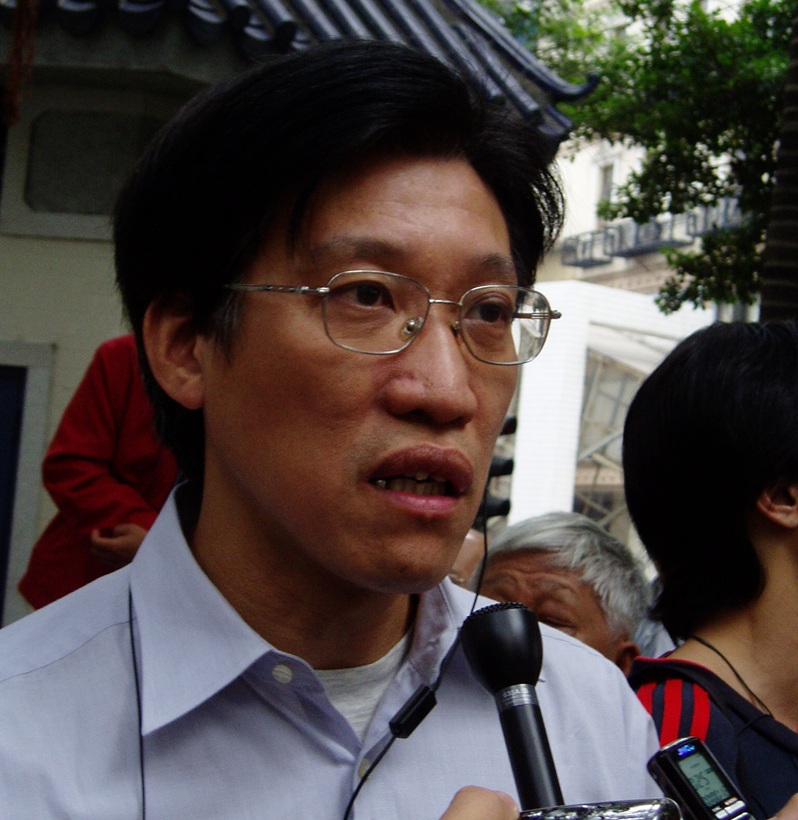
Macau (AsiaNews/Agencies) – Au Kam San, a former member of Macau’s Legislative Assembly, will stand trial under the former Portuguese colony’s national security law.
A Macau court issued a statement today saying that a judge had determined on 2 July that there was enough evidence to try him for subversion of state power.
In addition, Au is suspected of maintaining contacts with foreign organisations, groups, and individuals for the purpose of carrying out activities deemed detrimental to China's national security. The charges also include breach of secrecy.
Born in 1955, Au worked as a primary school teacher before embarking on a political career.
He was first elected to Macau’s legislative assembly in 1993, when the territory was still under Portuguese rule, and retained his seat even after the handover of sovereignty to China in 1999.
He remained a member of the legislative assembly until 2021, becoming one of the assembly's longest-serving members.
During his political career, he was a member of the Macau Association for the Promotion of Democracy, one of the few groups openly supportive of democratic reforms in the territory.
He supported the introduction of universal suffrage for the election of the chief executive and the legislative assembly, greater independence of the judiciary, protection of freedom of the press and expression, and more effective measures against corruption and promoting administrative transparency.
In recent years, he spoke out against the progressive narrowing of political participation.
For this reason, in 2021, he decided not to run again in the legislative elections, held in a context that saw the exclusion of many opposition candidates based on criteria related to "loyalty" to the Special Administrative Region established by Beijing.
His arrest in July 2025 marked a turning point in the judicial history of the former Portuguese colony since it was the first case in which of the national security law was used against a political figure.
The authorities accuse him of entertaining relations with foreign organisations that allegedly endanger China's security. Since then, official information about his case has been extremely limited.
The case has sparked international criticism. The European Union strongly condemned his arrest, arguing that it fuels concerns about the progressive decline in political pluralism in Macau, a territory that, despite formally enjoying a high degree of autonomy, has in recent years increasingly aligned with Beijing's security policies, in the wake of events in Hong Kong.
In May 2023, the Macau government expanded the scope of existing legislation, arguing that the changes were necessary to prevent foreign interference in the territory's internal affairs.
More recently, in March 2026, a further reform was approved, giving courts the power to decide whether to hold national security trials behind closed doors.
The new legislation also requires defence lawyers to obtain special authorisation before representing defendants involved in this type of proceeding.
According to lawyers and human rights organisations, these new provisions risk limiting legal guarantees, extending the constraints imposed by national security legislation well beyond the most sensitive cases.
Au Kam San’s trial will thus be an important test to assess the impact of the new laws on Macau's judicial system and civil liberties.
Photo: Wikipedia / Sdee
RED LANTERNS IS THE ASIANEWS NEWSLETTER DEDICATED TO CHINA.
WOULD YOU LIKE TO RECEIVE IT EVERY THURSDAY? TO SUBSCRIBE, CLICK HERE.

.png)
07/02/2019 17:28
01/08/2025 12:45
13/10/2020 12:37










