








Bishops stress remembrance, response to challenges on the Rosary Revolution’s 40th anniversary
In a pastoral letter, the prelates mark the 40th anniversary of the EDSA Revolution, with a reference to today’s unresolved problems. In it they mention “three sacred duties: to remember, to repent, to respond” welcoming “the spirit of that miracle” that “bring us to a better future”. To this end, “Let us support honest and competent leaders, mindful of the common good. Let us continue the education for good citizenship”.
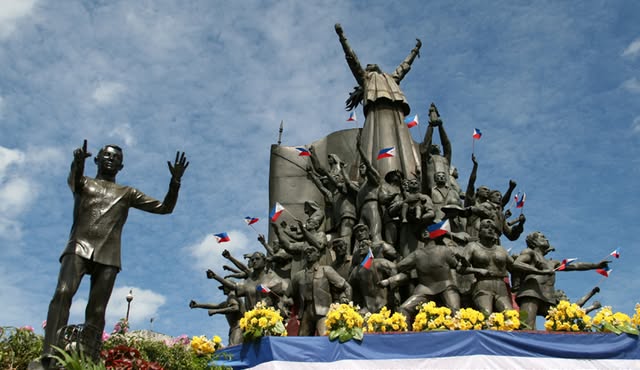
Manila, Philippines—The Catholic bishops of the Philippines have issued an appeal to their fellow countrymen and women, urging them to remember, repent, and build a better future by fighting endemic evils like corruption. This comes as the country is set to mark the 40th anniversary of the 1986 People Power uprising or Rosary Revolution on 25 February, which ended the dictatorship of Ferdinand Marcos Sr.
In a pastoral letter dated 15 February commemorating the 1986 EDSA[*] People Power Revolution, the bishops note that, 40 years ago, oppression ended when Filipinos, with courage and peacefully, took their disgust and frustrations to the streets.
Millions of them, from across the country, gathered under the protective mantle of the Blessed Virgin Mary and Jesus, clutching and praying the rosary, offering Masses, singing hymns.
“We, as people, stood shoulder-to-shoulder, faced tanks and soldiers with nothing but unyielding faith in our hearts,” the bishops say. “The dictatorship fell, not through violence but through quiet perseverance and power of piety and collective faith that clamored for justice and true change.”
According to the prelates, that was an “extraordinary event, not an accident, nor simply a human achievement.”
Commemorating 40 years since that event that marked the modern history of the nation, Church leaders now call for “three sacred duties: to remember, to repent, to respond – that we may welcome the spirit of that miracle and bring us to a better future.”
All those who took part in the revolution, including the nameless heroes in People Power, showed that the true power of faith can reshape society without bloodshed. Their witness pierced the armour of oppression. Prayers proved stronger than tanks. Faith triumphed over fear.
“The fire of EDSA, set aflame forty years ago, is our task to sustain. Let courage once again dwell in our hearts and let faith reignite our passion to pursue the common good, not only for ourselves, but also for the next generations. Let us retell the story of EDSA,” the bishops’ letter reads.
Church leaders also explain how the fruits of the EDSA revolution have not been fully fulfilled.
“We failed to take full responsibility for nation-building. Our country remained in ruins. Complacent and complicit to the scandalous corruption and the ugly face of impunity, we have betrayed not only ourselves, but also God,” the bishops note. “This betrayal stares us in the face: persistent poverty, entrenched graft, eroded trust, underdevelopment.”
For this reason, at the start of Lent, the prelates urge everyone to respond to the present-day challenges with love and courage, proposing some concrete actions to celebrate EDSA at 40.
“Let’s fight impunity together. [. . .] Wrong becomes normal. Sin gets away, and justice is silent. The powerful are not afraid. So that we may hold power accountable, let us rally together for the passage of an authentic Anti-Dynasty Bill. Power must remain in the people, not in a few,” the letter says, warning for what is going at present.
In fact, the incumbent Philippine president, Ferdinand Romuáldez Marcos Jr, is the son of the late dictator, but the issue of clans and families (like the Dutertes) holding national and local office is a long-standing problem for the country.
The bishops urge people to be vigilant regarding local, diocesan, and parish-based volunteer groups and movements to enforce public accountability and monitor the use of public funds, programmes, and projects.
“Let us engage. Let us initiate and participate in conversations, dialogues, and consultations where voices are heard, to promote responsibility, transparency, and accountability. Town hall meetings, linkages with groups, institutions, or organizations, or the recent trillion-peso marches are examples of this,” the bishops say in their letter.
“Let us support honest and competent leaders, mindful of the common good. Let us continue the education for good citizenship and governance in view of the 2028 elections. Let us start voters' education early. And let us identify who genuinely serve and those who are already engaged in electioneering,” they add.
[*] Epifanio de los Santos Avenue, a major road in Manila, where the People Power Revolution started.

.png)
24/02/2025 16:45
25/02/2026 15:49
18/06/2022 16:25










