








Cardinal Văn Thuận's ‘Road of Hope’, 50 years on
A conference in Rome looked at the 1,001 messages the cardinal wrote while imprisoned in Vietnam. They were brought to his family, who had found refuge in Australia, hand-copied by people who later escaped by boat. Declared venerable by Francis in 2017, the cardinal was an extraordinary example of meekness and love for Christ. For Cardinal Tagle: "There was no trace of bitterness or hatred in him." His sister Élisabeth was present; she co-authored a new biography that was published recently.
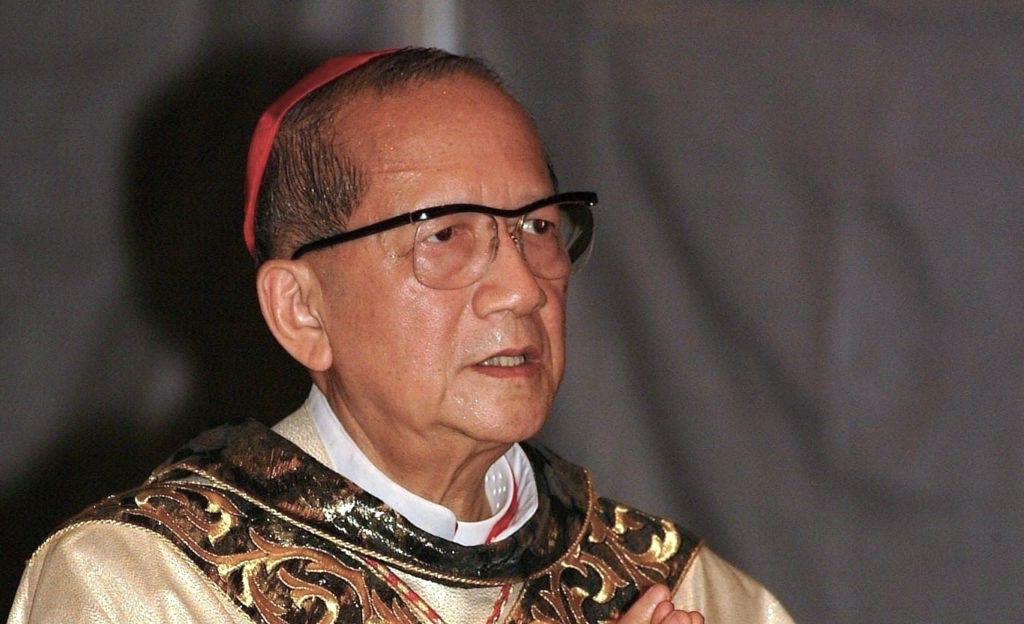
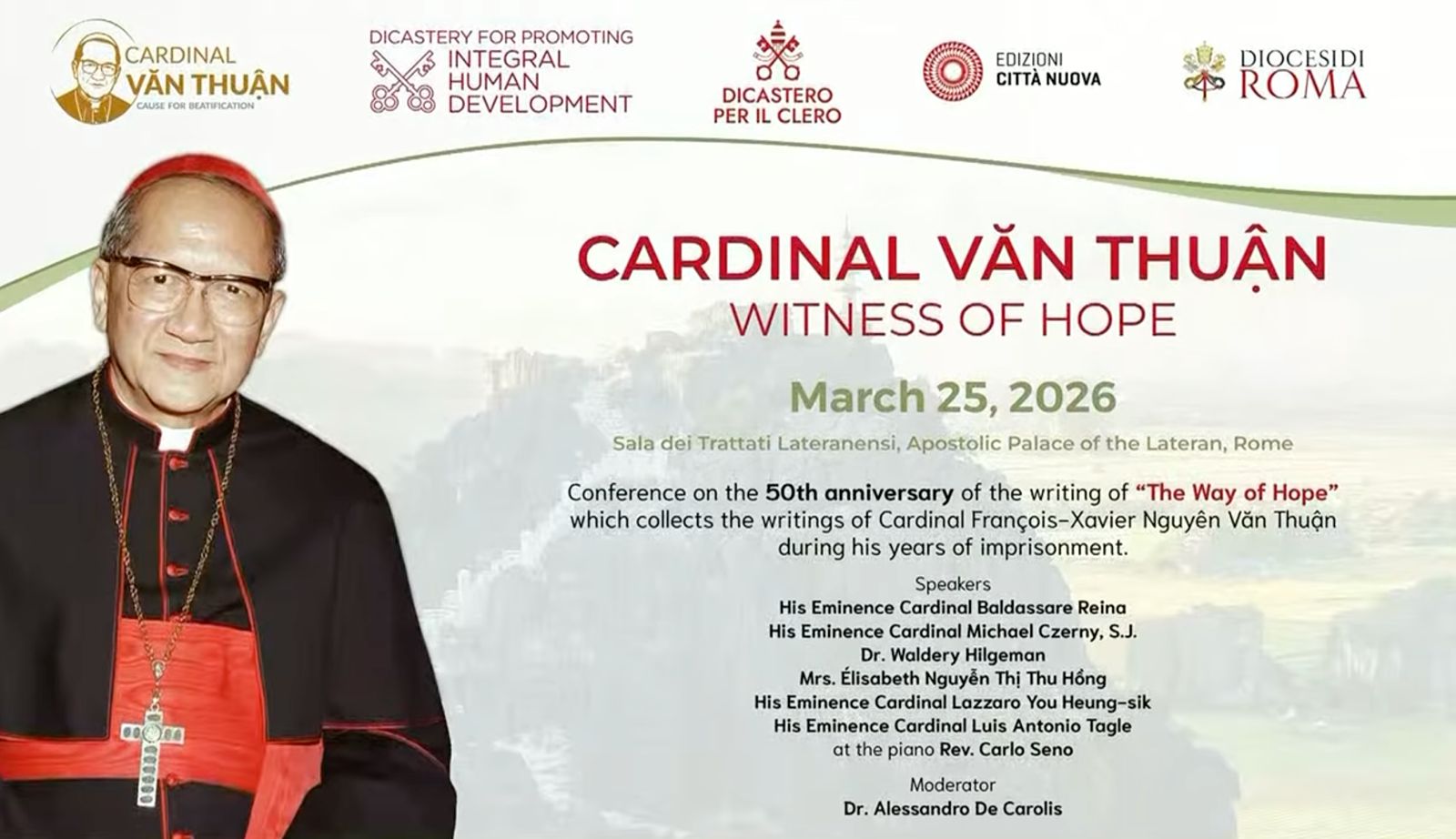
Rome (AsiaNews) – A conference was held yesterday afternoon in Rome at the Lateran Apostolic Palace to mark the 50th anniversary of the publication of Road of Hope, a book that brings together the reflections Vietnamese Cardinal Phanxicô Xaviê (François Xavier) Nguyễn Văn Thuận (1928-2002) wrote during 13 long years of imprisonment.
The event offered a polyphonic portrait of “A witness who proclaimed the Gospel when he no longer had a Church, a diocese, or any external freedom.” It also provided an opportunity to see how the cardinal, declared venerable by Pope Francis in 2017, continues to convey his love for Christ through his 1,001 "brief spiritual messages”, disseminated as a "spiritual testament" that carries a profound message of hope.
A message from Pope Leo XIV, signed by Cardinal Parolin and addressed to Cardinal Michael Czerny, inaugurated the meeting, held in the Lateran Treaty Hall, where the diocesan phase of the cause for beatification ended in 2013.
The pontiff described Văn Thuận as an "intrepid disciple of the Gospel and a generous pastor, whose example is highly relevant today." The Vietnamese cardinal reminds us that “Christian hope is born from an encounter with Christ and takes shape in a life given to God and to others.”
Vatican media journalist Alessandro De Carolis, who moderated the conference, enlivened by music and readings inspired by the exemplary life of faith of Cardinal Văn Thuận, said that the prelate’s life is “the story of a man who, through his own experience, rewrote an extraordinary clandestine Gospel" in a Vietnamese re-education camp in the 1970s.
Following his release in 1988, the prelate became president of the Pontifical Council for Justice and Peace. He also brought into his service in Rome, the visible sign of that imprisonment: a “pectoral cross of wood and electric wire” crafted with the help of his guards, who, touched by his profound humanity, became his friends.
Cardinal Baldassare Reina, Vicar General of the Holy Father for the Diocese of Rome, said that his predecessor, Cardinal Agostino Vallini, initiated the cause of beatification during its diocesan phase.
Reina mentioned that in 1995 he came across a small book by Cardinal Văn Thuận, which he read "avidly”, struck by the "extraordinary character" of the Vietnamese pastor. He added that conference is a call to embrace "the legacy of the recently concluded Jubilee," moving from being "pilgrims" to being "witnesses" of hope.
Cardinal Czerny, prefect of the Dicastery for Promoting Integral Human Development, spoke next. Văn Thuận, he said, was his "illustrious predecessor" before the organisation took its current name.
"He continues to illuminate and inspire our work," the prefect said, noting that signs of his presence include the Dicastery's conference room, which bears his name, and the Compendium of the Social Doctrine of the Church, his "main contribution worldwide", commissioned by Pope John Paul II.
Czerny cited his tireless commitment to people suffering from leprosy, as well as his efforts “for reconciliation in a divided country,” convinced that “the Church must be incarnate.”
Dr Waldery Hilgeman, postulator of the cause for beatification, outlined his biography. He noted that one of the most famous moments in his life was the celebration of the Eucharist in his cell "with a few drops of wine and a fragment of bread" in the palm of his hand.
“That hope was not born in prison. It has deep roots," he explained. Born in 1928 in Phủ Cam, Archdiocese of Huế, central Vietnam, Văn Thuận counts "martyrs of the faith" among his ancestors whose memory “profoundly impacted his spiritual preparation.”
Hilgeman noted the role of his mother, who taught him to live his faith "as a living relationship with God."
Nine of the 13 years of imprisonment were in solitary confinement. Almost all the other 250 prisoners in the prison were non-Catholics. “Deprived of everything, he discovered that nothing can separate him from Christ.”
He used to pray as follows: “Lord, you sent me here to be your love among my brothers, in hunger, in cold, in work.”
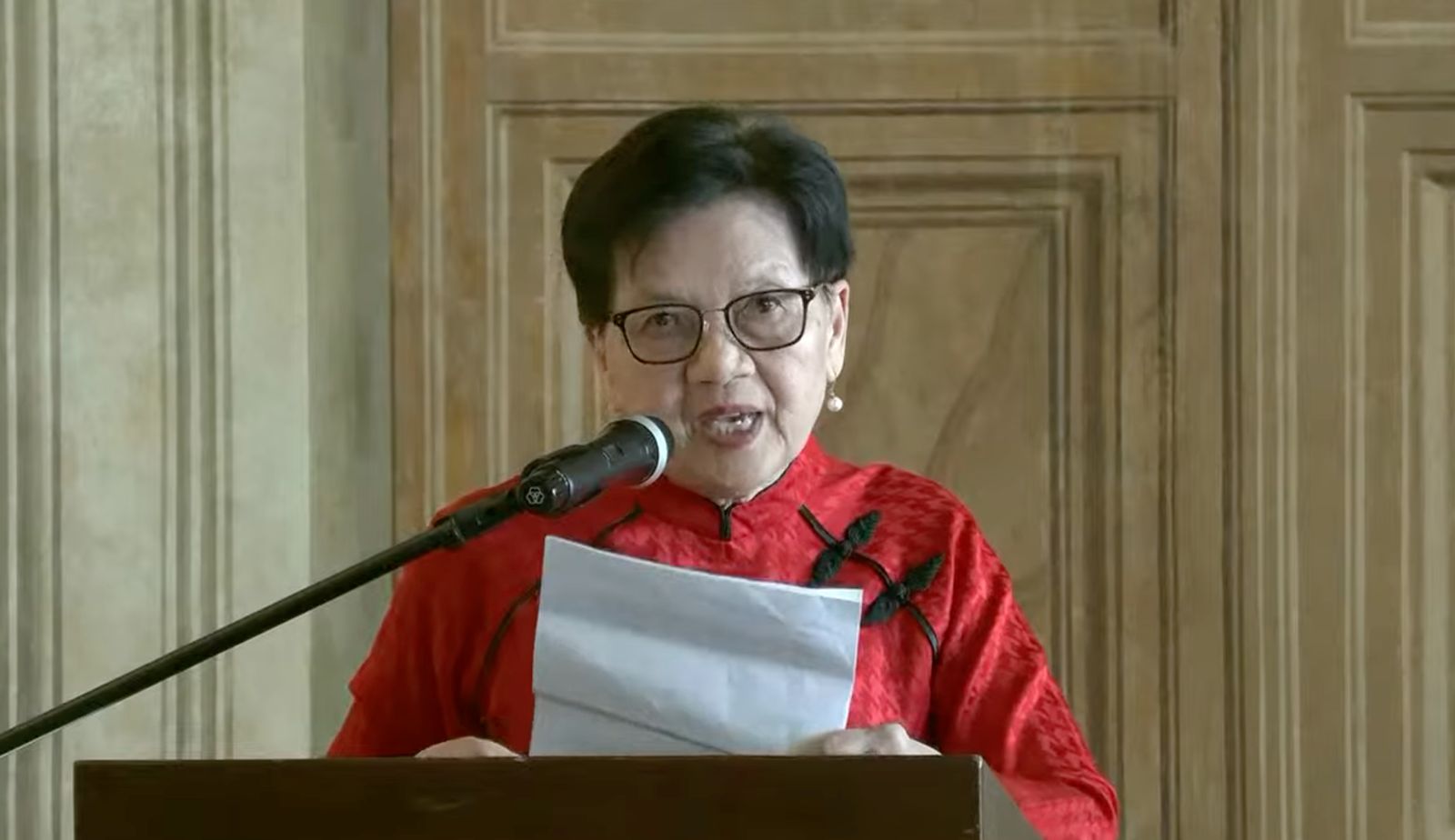
The guest speaker at the conference was one of the late cardinal’s sisters, Élisabeth Nguyễn Thị Thu Hồng. The event was the occasion to present a new biography of Văn Thuận, published in Italy by Città Nuova, Uomo di gioia e Speranza (Man of Joy and Hope), written with Stefaan Lecleir, an expert on the Church in Asia.
In her address, she stressed the "communion" with the entire family present "in different corners of the world," where they moved after fleeing to Sydney, Australia.
Văn Thuận finished writing his meditations exactly 50 years ago, on 19 March 1976, the feast day of Saint Joseph, she said.
From captivity, those messages reached Australia, hand-copied by Vietnamese people who fled by boat to survive elsewhere. Those 1,001 spiritual messages, later published, made it overseas, greeted by his mother's "tears of joy and gratitude towards God."
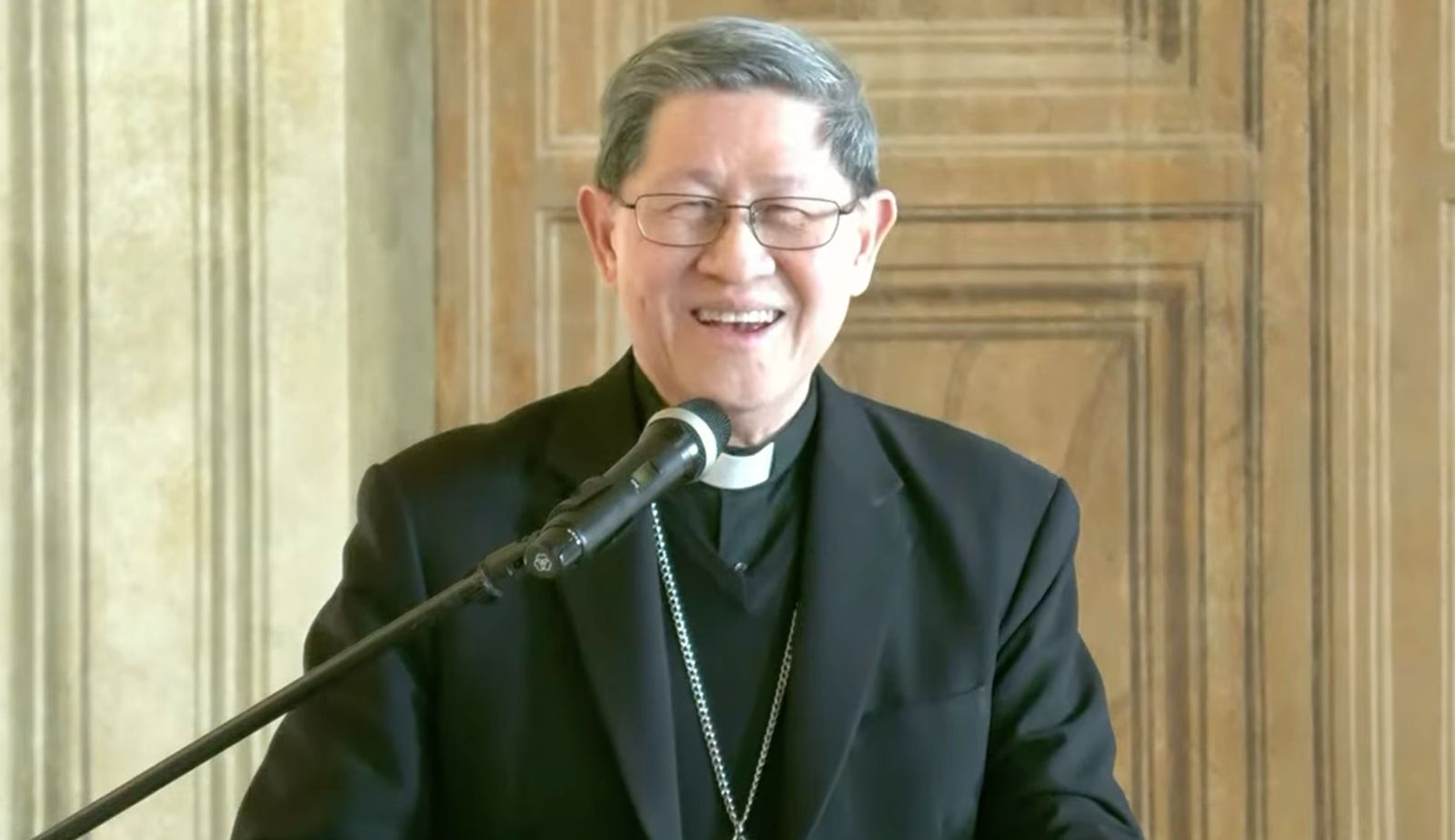
The conference ended with the less formal stories by Cardinals Lazarus You Heung-sik, prefect of the Dicastery for the Clergy, and Luis Antonio Tagle, pro-prefect of the Dicastery for Evangelisation. The cardinals said that "friendship and affection" bound them to Văn Thuận.
You Heung-sik noted that "he knew how to evangelise in every circumstance," even with "a touch of humour and love for paradox," which brought him closer to people.
He mentioned what a fellow Buddhist prisoner said, remembering that at the start of his imprisonment, Văn Thuận said: “We will be stripped of almost everything, but there is one thing no one can take away from us, and that is our faith in God.”
For his part, Tagle talked about his first meeting with the late cardinal in Manila in 1995, during the first WYD in Asia. From that moment on, Văn Thuận asked him to call him “uncle”.
At the time, Tagle addressed a meeting of FABC bishops, gathered for the 25th anniversary of the organisation’s founding. Afterward, he was anxious, but the venerable walked up to him to congratulate him.
"His voice remained calm, his face serene. There was no trace of bitterness or hatred in him," Tagle said. From there, a friendship was born, nurtured in the coming years with meetings in Rome, where Văn Thuận died at the age of 74 in 2002, a year after he was made a cardinal.

.png)










