








Dushanbe’s agenda for tackling embattled agricultural sector
Tajikistan’s five-year plan for its agricultural sector identifies 50 key issues to be resolved: from logistics to quality certification, from diversifying market outlets to financing schemes for businesses. The aim is to establish an “internationally recognised Tajik brand”.
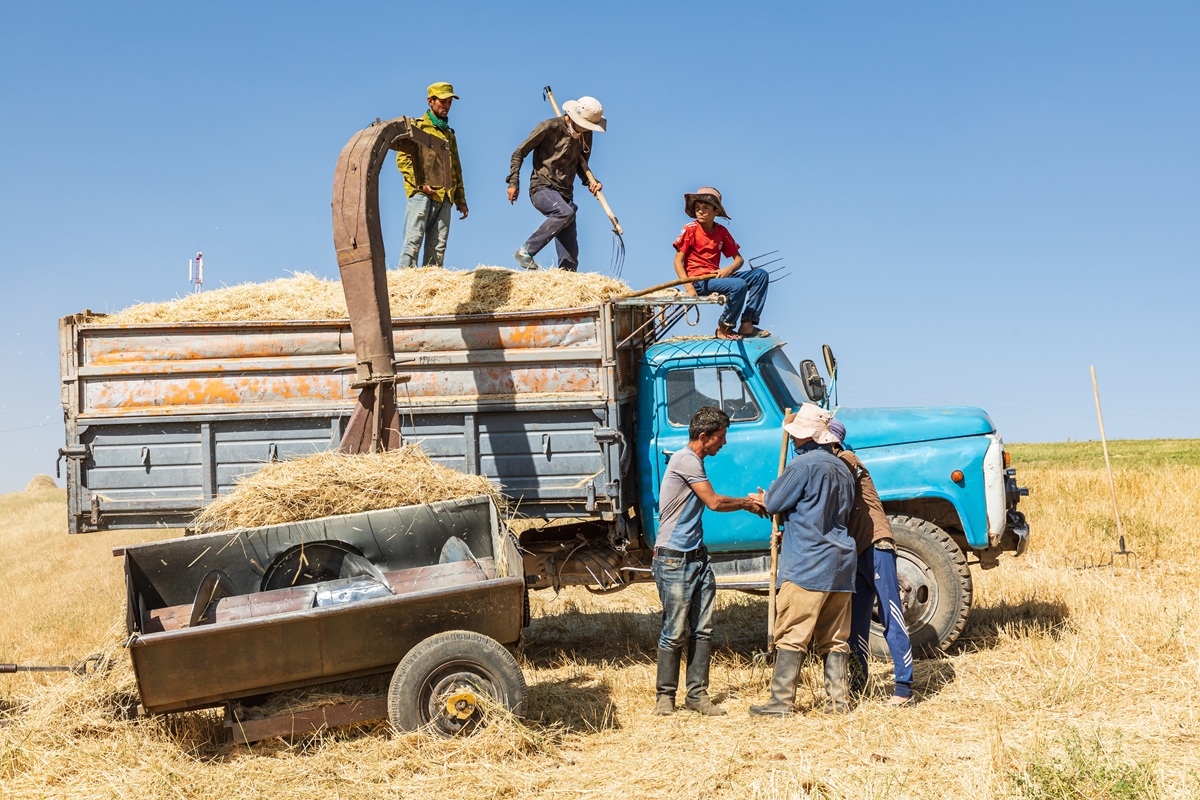
Dushanbe (AsiaNews) - Tajikistan has approved the State Programme for the Development of the Agricultural Industry for the years 2026-2030, modelled on the Soviet-era ‘five-year plans’, identifying 50 issues to be resolved and the proposed measures for developing agricultural exports and stimulating the many sectors involved.
Among the many issues, the most urgent concerns the establishment of advanced logistics centres, including sorting facilities, cold stores and refrigerated transport. With the current infrastructure, a significant portion of production is lost and profits are very low, making it difficult to export at optimal times. The government is committed to modernising the logistics and transport sectors, with the construction of new centres covering over 50,000 square metres, including cold storage facilities, as assured by the director of the Export Agency, Bakhriddin Sirodžiddinzoda.
Transport costs are one of the main obstacles to exports, making Tajikistan highly uncompetitive on world markets. As a landlocked country, it is heavily dependent on transit nations and must navigate exhausting customs and border bureaucracy. The most urgently needed infrastructure concerns precisely the border areas, where controls must be automated and simplified, particularly for products with a short shelf life, by reaching the necessary agreements with neighbouring countries to establish ‘green corridors’ to reach the required destinations.
Furthermore, the majority of Tajikistan’s agricultural production fails to obtain the essential international quality certificates (ISO, HACCP, Global G.A.P.), preventing access to European and Middle Eastern markets. The programme envisages the creation of specialised laboratories to ensure compliance with international standards, which would also greatly simplify border transit, breaking down many barriers. Greater product processing capacity is also needed, as Tajiks currently export raw materials and import finished products, making the entire economy highly fragile and dependent on external markets.
Financial support must also be radically reformed, as current interest rates on loans range between 18% and 25%, posing major difficulties for small and medium-sized enterprises, particularly in the agricultural sector. Exemptions and subsidies based on guarantee funds are envisaged to reduce risks for banks and broaden access to finance, with strong state support for export-oriented production.
To date, the Tajik economy has depended largely on exports to the former Soviet states of the Commonwealth of Independent States, and diversification is needed, looking instead towards China, Turkey and the Persian Gulf states, in the hope that the situation in this region will normalise.
Differences in quarantine and phytosanitary standards also complicate the work of producers, causing delays or product returns at the border. To address these issues, it is necessary to establish accredited laboratories for rapid quality analysis and to implement digital phytosanitary certificates, which will speed up the certification process and customs checks. The government intends to award special prizes and benefits to the best exporters of 2025, regardless of whether they are state-owned or private, and a dedicated ceremony for the ‘Best Exporter of Tajikistan’ competition was held in Dushanbe as early as January, attended by 51 different companies.
The most important objective, reiterated on several occasions by President Emomali Rahmon himself, is to “create an international Tajik brand”, which, in addition to quality standards, highlights the originality of domestic production, through appropriate presentations at international trade fairs and the digitalisation of export processes. Tajikistan is seeking to improve production processes, but above all to assert its own identity.

.png)










