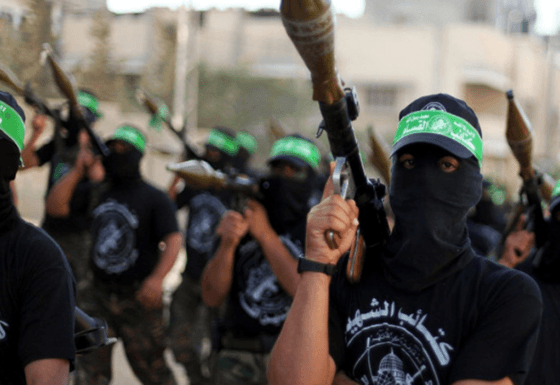
Milan (AsiaNews) – Hamas recently announced their intention to hand over power after more than two decades as the governing authority in the territory, inviting the US-backed interim administration to take over the Palestinian enclave.
Khalil Sayegh, an expert of the Israeli-Palestinian conflict born and raised in Gaza but now based in the United States, is sceptical of the recent statements by the movement that still controls territory.
For Sayegh, who is the president and co-founder of the Agora Initiative for dialogue and encounter, “Hamas has said this a few times before,” without following up on its promises. “The ultimate test will be if they give up their weapons and the security apparatus to the new committee. So far, we don't have any evidence for that.”
While “the situation remains bad with daily violations and killings by the Israeli military,” the Christian activist noted, “Hamas remains an authoritarian power that suppresses Palestinians.”
Symbolic gesture
On Tuesday, the Islamist movement announced the dissolution of the body through which it had run Gaza continuously since 2007, transferring power to the technocratic committee that was part of the ceasefire agreement with Israel.
Analysts consider Hamas's decision important, as it could unblock ongoing negotiations to define the enclave’s future, although no significant changes are expected in the immediate future.
The fear is that it may be merely a symbolic gesture, one that will not alter the situation on the ground, which is partly controlled by the extremist group and Israel.
The interim administration to which Hamas wants to transfer the government was created in January pursuant to UN Security Council Resolution 2803. Known as the National Committee for the Administration of Gaza (NCAG), it has so far been prevented from entering due to Israel’s blockade.
This situation of uncertainty and confusion raises new doubts about the timing of the handover, which is but a remote possibility.
Meanwhile, there is no news regarding the strengthening of the ceasefire or the improvement of the humanitarian situation in the Gaza Strip, still affected by a devastating crisis after more than two years of brutal war.
Although Hamas has reportedly expressed willingness to transfer security responsibilities as part of the transition, there is no certainty that it would accept unilateral disarmament as requested by Israel and the United States.
Stalled process
Critics say the extremist movement's announcement is merely a symbolic gesture, attempting to revive a peace process that has stalled, hindering reconstruction and the delivery of humanitarian aid to the 2.1 million Gaza residents who survived the war.
The NCAG, the transitional body based temporarily in Cairo, Egypt, is part of the US-backed 20-point peace plan and is led by neutral, nonpartisan Palestinian technocrats, including interim commissioner Ali Abdel Hamid Shaath.
More than a thousand people have been killed in Gaza since the Washington-brokered ceasefire was agreed upon in October 2025, while at least 73,098 people have been killed in total since Israel's war against Gaza began in October 2023 in response to the Hamas attack.
At the same time, Israel now controls approximately 70 per cent of the territory, squeezing the Palestinian population into limited and overcrowded areas.
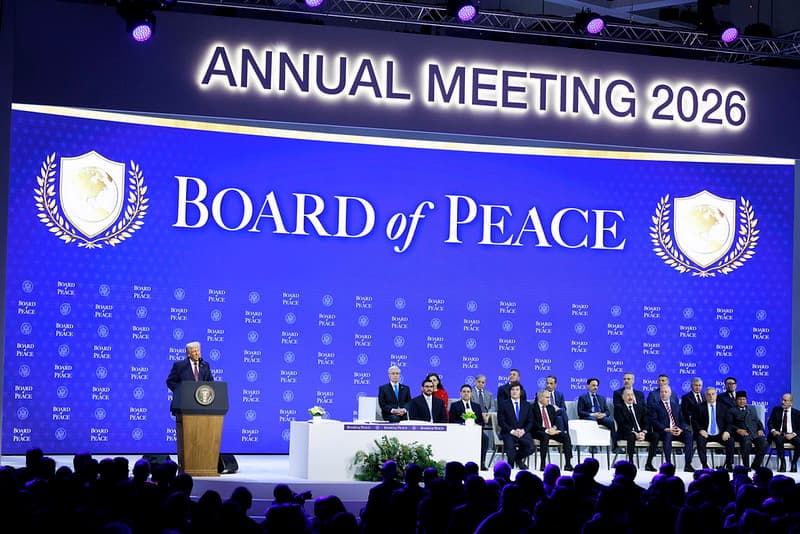
“The Board of Peace has achieved nothing for Gaza and has completely failed to hold Israel accountable for the violations of the ceasefire, Sayegh said. “In order for the peace board to achieve anything they will have to face Israeli violations.”
This is compounded by a disastrous humanitarian situation. “Gaza is unfortunately forgotten,” noted the Gaza-born Christian expert, the more so since the international community's “attention was given to the Iran war,” which has recently regained momentum, with the fragile truce increasingly in doubt.
In Gaza, “The situation remains bad with daily violations and killings by the Israeli military. On the other hand, Hamas remains authoritarian power that suppresses Palestinians,” he added.
Dark future
At a time of great hardships for Gazans, including Christians, where the tragedy of daily life is compounded by a widespread feeling of abandonment, the recent visit by the Latin Patriarch and the Greek Orthodox Patriarch of Jerusalem took on even greater significance.
On 22 June, Cardinal Pierbattista Pizzaballa and Theophilos III were able to access the Palestinian enclave, where they met with the local clergy, religious communities, Christian families, and those affected by the ongoing humanitarian crisis.
Sayegh welcomes the gesture of the Christian leaders of the Holy Land. “It is very important and it emphasises the importance of the Christian community there, and for the broader Palestinian community in Gaza it shows that the Church care about them.”
“Hamas knows that it has no future away from ‘armed resistance’ even in a rhetorical sense,” warned the activist. “Therefore, they are working hard on a political manoeuvre to pretend that they are giving up the government while not mentioning the disarmament”.
Gaza’s future and that of the people who will work on ensuring peace and hope remains unclear, but the Christian activist sets a starting point that he considers essential.
“It is hard to point out to a specific person,” he said. “However, anyone who has to lead the Palestinian people has to come via a Palestinian election or at least a general consensus.”