








India maintains a hard line on the Indus, but over 100 eminent Indians and Pakistanis call for peace
India confirms the suspension of the Indus Waters Treaty amid worsening relations with Pakistan. But various politicians, former diplomats, and religious leaders from both countries have signed an appeal to reopen negotiations on Kashmir and rebuild bilateral relations.
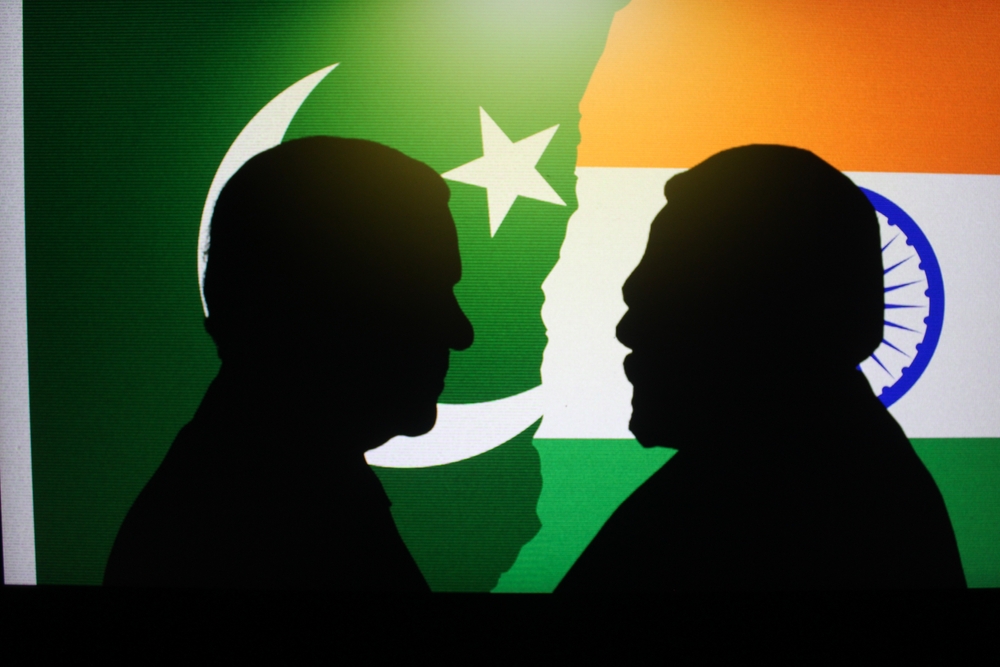
New Delhi (AsiaNews) – The Indian government has reiterated that the Indus Waters Treaty will remain suspended until Pakistan stops backing cross-border terrorism; however, over a hundred prominent figures from India and Pakistan – politicians, former diplomats, intellectuals, and religious leaders – signed an appeal to Prime Ministers Narendra Modi and Shehbaz Sharif, to reopen dialogue on Kashmir and rebuild diplomatic relations.
“IWT stands in abeyance,” said Randhir Jaiswal, yesterday. “Pakistan must credibly and irrevocably abjure its support for cross-border terrorism,” added the spokesperson for India’s Ministry of External Affairs.
This confirms the position already taken by New Delhi following last year's Pahalgam attack in Kashmir, which led the Modi government to freeze one of the oldest bilateral accords between the two countries.
Thanks to World Bank’s mediation, the treaty, signed in 1960, regulates the distribution of the Indus system's waters, on which millions of people, especially in Pakistan, depend.
Indian Home Affairs Minister Amit Shah recently said that India will never restore the agreement.
But while the Indian government remains firm on this stance, some 117 prominent individuals from both countries are urging a different path. Coordinated by Indian activist Om Prakash (OP) Shah, founder of the Centre for Peace and Progress, 61 Indians and 56 Pakistanis signed a letter calling for dialogue.
The signatories include former Pakistani Foreign Minister Khurshid Mahmud Kasuri, former Indian intelligence chief A.S. Dulat, National Conference leader Farooq Abdullah, People's Democratic Party President Mehbooba Mufti, Kashmiri religious leader Mirwaiz Umar Farooq, and former Pakistani diplomat Ashraf Jehangir Qazi.
“India and Pakistan together are home to nearly one-fifth of humanity,” the letter reads. “A large proportion of our population is young [. . .]. The people of both countries deserve a future defined by peace, development, connectivity and cooperation, rather than perpetual mistrust and confrontation”.
The appeal calls on the two governments to resume dialogue on the disputed region of Kashmir, reviving the negotiating framework established between 2004 and 2007, when the two countries came closer than ever to a compromise thanks to the so-called “four-point formula”.
The plan envisioned gradual demilitarisation along the Line of Control, greater autonomy for Kashmir without altering international borders, greater freedom of movement for people and goods, and a joint body responsible for addressing cross-border issues.
The signatories also call for the restoration of diplomatic relations, with the return of their respective high commissioners to the two capitals, the reopening of consular services, the reinstatement of regular visas, the reopening of the Attari-Wagah land crossing, the resumption of bus services between Srinagar and Muzaffarabad and New Delhi and Lahore, suspended in 2019, and reopening airspace to commercial flights to reduce travel times and costs.
“This appeal is not an endorsement of any political position. It is a call to place the welfare, aspirations and future of nearly two billion people above conflict, confrontation, and division,” the letter goes on to say.
The initiative bears the signature of O.P. Shah, a historic figure in the so-called Track II diplomacy between India and Pakistan.
An accountant by profession but involved in promoting bilateral talks for more than 30 years, Shah organised one of the first informal meetings in 1991 between representatives of the two countries after the end of the Cold War. Since then, he has promoted meetings between delegations, seminars, and publications dedicated to building mutual trust.
However, the letter has also drawn harsh criticism from Indian nationalist circles. Several commentators have questioned the lack of an explicit request for Pakistan to stop supporting terrorism before any resumption of negotiations, even though there is no evidence that the Pahalgam attack was directly supported by Islamabad.
In an interview with India Today, Shah replied that the initiative does not support terrorism and that its goal is to foster a climate of trust through dialogue, believing that only dialogue can reduce decades of mutual distrust.

.png)










