








Lebanese prisoners in Israel: a ‘hot’ issue in talks
This issue is one of the most sensitive questions in the talks that began between the two sides after the November 2023 ceasefire. For Lebanon, this is a "diplomatic priority," but the Jewish state is not cooperating, as confirmed by the International Committee of the Red Cross. In the background lurk tensions in Iran and Hezbollah's threat to act alongside the Islamic Republic.
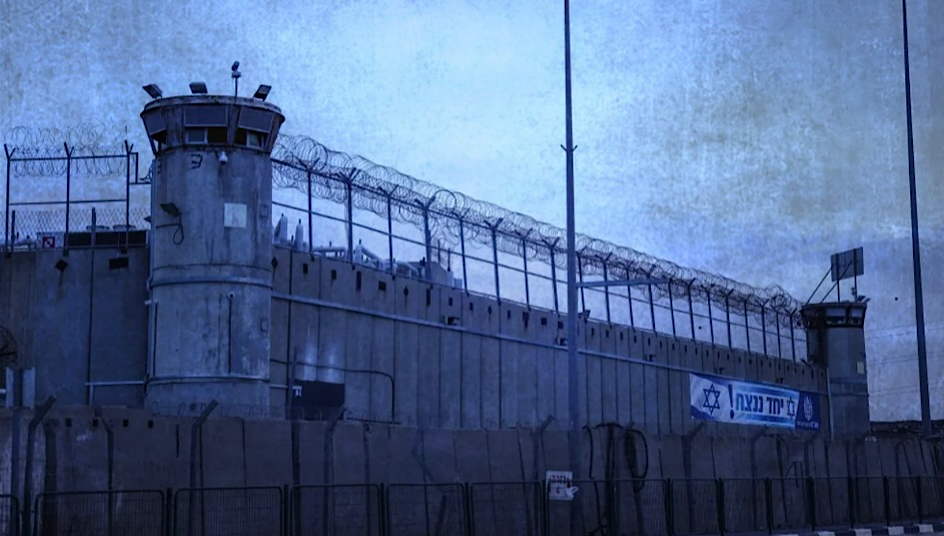
Beirut (AsiaNews) – The issue of Lebanese detainees in Israel is at the heart of the dispute between Lebanon and Israel, and has resurfaced as one of the most sensitive points in talks that began after the November 2023 ceasefire, especially as the situation becomes increasingly strained with rising military tensions in the region and Hezbollah's threat to intervene if Iran is attacked.
According to Lebanese authorities, at least 20 Lebanese nationals are currently held in Israel, most without trial and in what the families and NGOs view as a murky legal situation. The Lebanese government claims to have made their release a diplomatic priority, while the International Committee of the Red Cross (ICRC) laments the total lack of Israeli cooperation.
This case highlights Israel's persistent use of detention as a political and security tool in its relations with Lebanon.
In the shadow of conflict
Relations between the Lebanese government and Hezbollah are also deteriorating rapidly amid regional tensions. "We will not remain neutral," said the party's secretary-general, Naim Qassem, referring to a possible military action against Israel if Iran and the United States and Israel come to blows.
Against the backdrop of a possible regional conflict, the issue of Lebanese detainees in Israel is a central issue in the talks that followed the ceasefire of 27 November 2023 alongside Israeli withdrawal from Lebanese territory, the end of Israeli violations of the ceasefire, and the stabilisation of the southern border.
According to Lebanese authorities, at least 20 Lebanese are currently held by Israel. A list of 23 names was submitted to the Lebanese president: three reportedly captured before the conflict with Hezbollah, eleven during the war, and nine after the November 2024 ceasefire.
They include suspected combatants, but also civilians – a shepherd, fishermen, and aluminium workers – whose arrests are contested by human rights organisations.
All are reportedly held without trial, either in administrative detention or subjected to military investigations. According to a Lebanese officer speaking on condition of anonymity, “Lebanese detainees in Israel are victims of an opaque system.”
Complex legal procedures, limited access to lawyers and families, geographical isolation, and long periods without news constitute what several observers describe as a strategy of institutional silence, used as a psychological weapon.
Correspondents from European newspapers describe a prison system that is “harsh, cold, and highly codified,” where security concerns take precedence over the individual.
The ICRC states that it has not been granted access to detention facilities in Israel, despite repeated requests. Israel has also reportedly refused to provide information on the conditions or location of prisoners.
A priority for President Joseph Aoun
In this context, President Joseph Aoun has made the return of the detainees "a priority”, despite Hezbollah's targeted campaign claiming that "nothing is being done" for them.
The president has raised the issue repeatedly, notably during his meetings with the head of the ICRC and in his diplomatic exchanges in New York.
“Contacts are continuing to secure their release," he told a delegation from the Lebanese Association of Released Prisoners.
The matter is also being monitored by the ceasefire monitoring committee, which includes Lebanon, Israel, the United States, France, and the United Nations Interim Force in Lebanon (UNIFIL).
A Lebanese government source, however, laments the lack of Israeli cooperation. "The release of the prisoners is a central Lebanese demand, just like the Israeli withdrawal and the cessation of aggression. But so far, Israel is absolutely not cooperative," the source stated.
To date, Israel has provided information on only one detainee, Navy Captain Imad Amhaz, who was abducted in November 2024 in Batroun, on the northern coast of Beirut, by an Israeli commando.
The operation was filmed by surveillance cameras. In a taped confession released by the Israeli army, Amhaz claims to be a member of Hezbollah, but his statement may have been coerced.
Families in limbo
The families of the detainees live in limbo. Thanks to four Lebanese men released on 11 March 2025 in a “gesture of goodwill” towards the newly elected President Aoun, some details have emerged regarding the fate of some of the prisoners.
One of the released detainees is Ahmad Chokor, who confirmed meeting other Lebanese prisoners at Ofer Prison in the West Bank.
Former Palestinian detainees released in October 2025 as part of the ceasefire between Hamas and Israel have also helped to partially lift the veil of secrecy for some families.
Added to the names of this list of detainees is a former General Security officer, Ahmad Ali Chokr (not related to the prisoner mentioned above), who went missing in the Bekaa Valley on 19 December.
The brother of a Hezbollah militant linked to the case of Israeli pilot Ron Arad, who disappeared in 1986 and is now presumed dead, he was likely lured to a villa where he was abducted by Mossad, with the complicity of Lebanese nationals. There has been no news of him, and he may have been killed.
According to the Lebanese Prisoners’ Association, the fate of 38 other people remains unknown since Hezbollah’s misguided war in support of Hamas. "They could be detained in Israel, or may have been killed, or their bodies might be held," explains the group’s president, Ahmad Taleb.
This case has a long history. Three names on the presidential list underscore the long history of the dispute: Yehya Skaff, a Fatah member captured in 1978 after an operation near Tel Aviv; Abdallah Alyan, abducted from his home in Bayada in 1981; and Mohammad Farran, captured in 2005 off the coast of Naqoura.
Talks surrounding Lebanese detainees are likely to become a major issue in future negotiations, not only on humanitarian grounds, but also within the context of the current explosive geopolitical situation where the shadow of a regional conflict has not disappeared from the horizon.

.png)
14/04/2023 20:20










