








Minamata: 70 years of silence shroud Japan’s greatest industrial tragedy
In May 1956, the hospital near the factory reported an “unknown illness” that was later found to be caused by mercury discharges from the Chisso Corporation. Decades later, the wound remains open in this Japanese city. PIME missionary Fr. Ferruccio Brambillasca, now the community’s parish priest, describes a society still marked by stigma and social divisions, while the memory of the tragedy risks being erased even from school textbooks.
Minamata: Seventy Years of Silence Surrounding Japan’s Greatest Industrial Tragedy
by Alessandra De Poli
In May 1956, the hospital near the factory reported an “unknown illness” that was later found to be caused by mercury discharges from the Chisso Corporation. Decades later, the wound remains open in this Japanese city. PIME missionary Fr. Ferruccio Brambillasca, now the community’s parish priest, describes a society still marked by stigma and social divisions, while the memory of the tragedy risks being erased even from school textbooks.
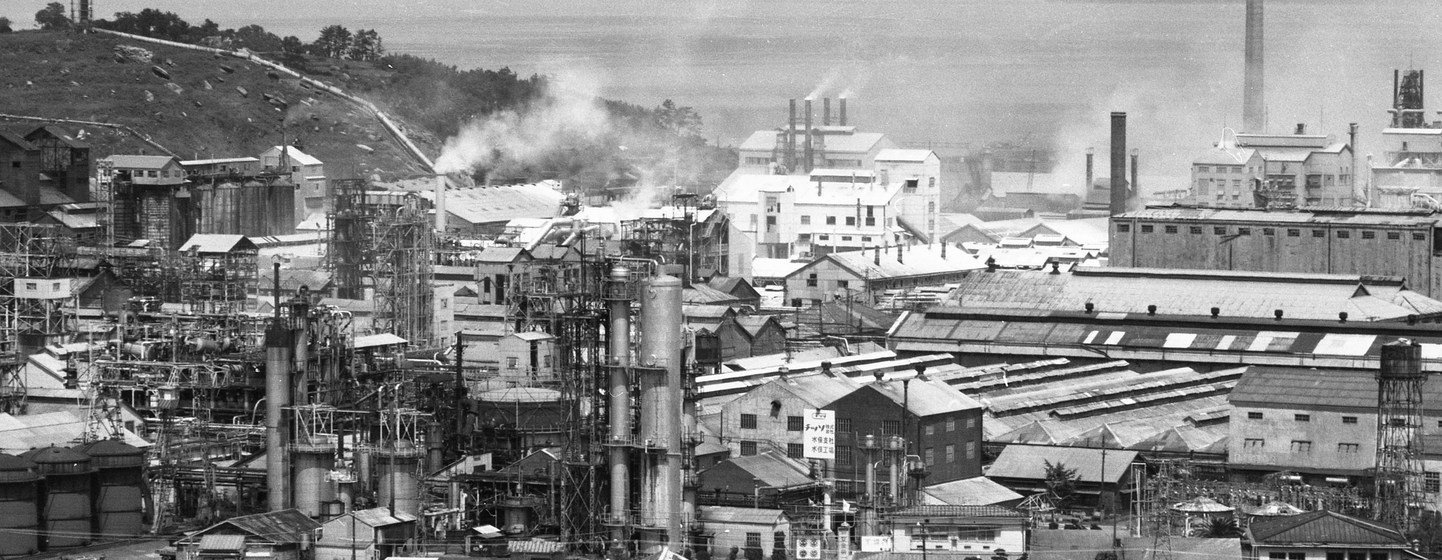
Minamata (AsiaNews) - From the Catholic church in Minamata, in southern Japan, one can still see the Chisso Corporation factory, now known as JNC. The name change is part of the company’s attempts to distance itself from its recent past, which caused immense suffering to the local population after decades of industrial mercury discharges into the sea off Kumamoto Prefecture devastated the environment and the health of thousands of people.
Minamata disease, which severely affects the nervous system, takes its name from this very city, which a few months ago welcomed PIME missionary Fr. Ferruccio Brambillasca as its parish priest. “I spent 15 years in Japan and had never heard of this incident,” he says, highlighting the sense of uncertainty and silence that still surrounds the local community and the memory of the disease. “I haven’t come to a definitive conclusion, but I think the people here feel a strong sense of shame as well as fear,” adds the priest, a former superior general of the institute, who has been commissioned by the bishop of the Diocese of Fukuoka to celebrate Mass every Sunday here as well as in the parish of Yatsushiro, carrying on the legacy of the Missionaries of St. Columban who led the community for decades.
The prevailing feeling is that the people of Minamata do not want to reopen an extremely painful wound. Many parishioners are or have been employees of Chisso, a chemical company founded in 1908. From 1932 to 1968, the company, despite being aware that it was polluting the environment, dumped the waste products of its operations into the sea, poisoning the waters, the seafood, and consequently the population. Estimates suggest that between 70 and 150 tons of mercury were dumped into the bay. Near the Hyakken discharge point, the accumulated toxic sediments have reached a thickness of 4 meters in some places.
For years, the community waged a long legal battle against Chisso and the government, which recognized the disease as a consequence of mercury pollution 12 years after the first cases appeared. The official recognition of Minamata disease occurred on May 1, 1956, when the hospital near the factory reported to the authorities an unknown epidemic affecting the nervous system. The PIME missionary recalls the words of a parishioner during the memorial service for the victims, which this year marked the 70th anniversary of that first report: “Nothing has changed in these decades, because there is a frightening tendency in the human heart to forget and to refuse to acknowledge one’s own mistakes.” Words that encapsulate the difficulties that for years prevented the truth from coming to light.
The first patients were some children, neighbors, who had suddenly become unable to walk, eat, or drink. The concentration of mercury in the blood, which had reached alarming levels due to the consumption of fish and shellfish, had caused speech problems, sensory disturbances, various types of motor disabilities, involuntary tremors, and convulsions. The disease deforms the body, making it impossible to perform even the simplest daily tasks. But above all, it results in an early mortality rate of nearly 45%, according to data collected in 1965 by Kumamoto University. After the first cases were reported, 16 patients died just three months after the onset of symptoms.
Initially called the “strange disease,” the press in the 1950s immediately labeled it Minamata disease—which remains its official name today—though this led to clear discrimination against those affected. It was believed, in fact, that the condition was a form of contagious encephalitis, to the point that the hospital established a special isolation ward. Even when, as early as 1956, it was discovered that the severe neurological damage was not caused by a bacterium or a virus but by excessively high concentrations of methylmercury in the blood due to the consumption of contaminated fish, the stigma remained. “A woman from the parish told me that her daughter, who in the early 2000s wanted to move to Tokyo for her studies, no one would ever rent her a room,” explains Fr. Brambillasca, who recently visited the memorial and museum dedicated to the victims—a total of over 2,260 officially recognized patients in the prefecture over the years, of whom only a small fraction (260 as of 2022) are still alive.
Although Chisso only stopped producing acetaldehyde using mercury as a waste material in 1968—after years of claiming that the concentration of the substance in fish was unrelated to its operations—several cases were reported even afterward. Due to the lengthy legal disputes involving financial compensation for the victims, even simply obtaining government recognition of the disease became an ordeal in the 1970s. Even today, hundreds of people are still waiting for compensation. And it was not until 1977 that Kumamoto Prefecture began work to remove the sludge and remediate the area. The dredging and burial of the mercury cost approximately 48.5 billion yen (262 million euros today) and was not completed until 1990.
On Sōshisha Hill, the air smells of the sea and exile. It was here, in a secluded corner just outside the urban center of Minamata, that the Mutual Aid Alliance was founded in 1974. Now a museum-memorial, this is where those afflicted with the “strange disease”—rejected by their own families, despised by neighbors and colleagues—“gathered to comfort one another,” explains Fr. Brambillasca. “They came here even just to wash, because they had no bathrooms in their homes.” Sōshisha preserves their everyday objects and, not far away, houses a small cat cemetery. It was they, the cats of the bay, who were the first witnesses to the catastrophe, going mad as they were seized by sudden convulsions. And it was also thanks to them that it was discovered the disease was not contagious, but a consequence of industrial wastewater from Chisso, because only the cats, like humans, ate the contaminated fish. For years, the authorities limited themselves to recommending that the population not consume local fish, while avoiding a formal fishing ban. A deliberately ambiguous choice from a bureaucratic standpoint that destroyed the economy and the livelihoods of the fishermen, yet at the same time protected the profits of Chisso Corporation, allowing it to keep its discharge pipes open and continue dumping tons of mercury into the sea. Fishermen’s committees repeatedly sought compensation from Kumamoto Prefecture and the factory, but were consistently offered sums deemed inadequate given the damage suffered.
For a time, the Minamata community was divided in what the museum calls “the battle of the leaflets,” beginning in 1971 after a group of “new patients” attempted to reach a settlement directly with Chisso to obtain compensation. The city split in two: on one side, the victims; on the other, the majority of residents who defended the factory, terrified by the idea that the protests could lead to the plant’s closure and the city’s economic collapse—a city that, thanks to the company, had entered a modern, globalized economic system. Those demanding justice were branded as traitors and social agitators. Even the local Catholic community had grown up in that post-war climate of development: “Many converted thanks to the San Colombano missionaries who taught English, and almost all found employment, directly or indirectly, in the large-scale industry,” Brambillasca explains.
It was only in the 1990s that the “Moyai Naoshi” movement emerged, a nautical term meaning “to mend the mooring ropes of boats to tie them together.” It was an attempt at social reconciliation to allow people to finally speak out about their rights and their suffering. “From there, Minamata slowly ceased to be a taboo,” the missionary notes.
Today, Minamata is listed among Japan’s cleanest cities, a capital of the environment and sustainable development goals. Yet, for many residents, these grandiose titles ring like a farce. Recently, the victims’ committee protested against the government over how the entire Minamata affair is portrayed in elementary and middle school textbooks. Several pages dedicated to Minamata disease and the stages of compensation have been reduced or altered, downplaying the responsibilities of Chisso and the Japanese government. A decision that survivors have called a deliberate attempt to “shelve” the tragedy, depriving new generations of the tools to understand what remains, even today, the country’s largest and most hushed-up industrial scandal.
Starting in July, on Thursdays, Fr. Ferruccio will lead the first Bible study and listening sessions in Minamata, bringing together about twenty Christians. Just fifty meters from the factory gates, in that parish that has long remained silent, they will seek the courage to read history in the light of the Gospel. “The bishop had mentioned something to me, but he hadn’t told me the whole story,” the priest admits. “I believe he sent me here because the Church wants to do more for this wounded community.”

.png)
12/02/2016 15:14
11/08/2017 20:05










