








Pakistan talking with Afghanistan in Urumqi with China's support
New Beijing-mediated talks took place today in Xinjiang to halt fighting along the Pakistan-Afghan border. Meanwhile, Islamabad is positioning itself as a mediator in the war between the United States, Israel, and Iran, after presenting a tentative ceasefire initiative, with Chinese backing.
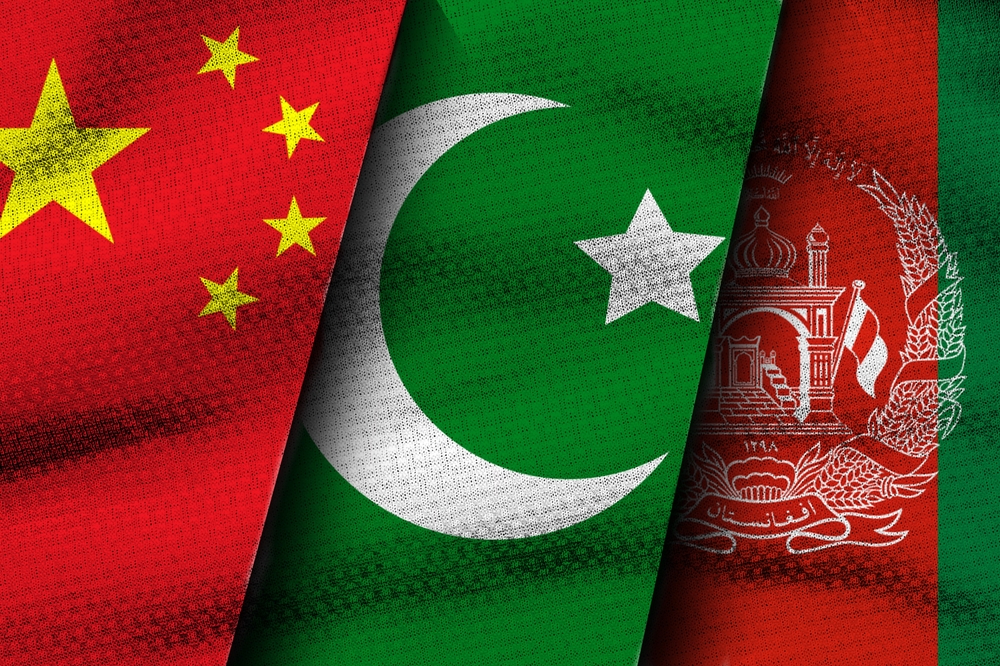
Urumqi (AsiaNews) – China is trying to consolidate its role as an international mediator by hosting a new round of talks between Pakistan and Afghanistan in its northwestern region of Xinjiang, in an effort to end more than a month of violent clashes along the Afghan-Pakistan border.
The fresh talks between Pakistan and the Afghan Taliban regime took place today in the city of Urumqi after weeks of violent clashes, briefly halted for a truce to mark the end of Ramadan.
The talks, which will last at least until tomorrow, are part of the developing crisis caused by the war in the Middle East.
Several Taliban representatives were present at the meeting, including officials from the Foreign, Defence, and Interior ministries, as well as members of the intelligence services.
According to The Khorasan Diary, the Urumqi meeting was scheduled following a series of visits by Chinese special representatives to both countries.
However, according to an official familiar with the matter, China, which has extensive interests in both countries, has opted for a low profile for now, unless a significant breakthrough is made in the negotiations.
China has not released any statement about the meeting, while the Pakistani Foreign Ministry has neither confirmed nor denied the news.
The central issue between Pakistan and Afghanistan remains security.
After supporting the Taliban for years, Pakistan continues to demand concrete guarantees that the Tehrik-i-Taliban Pakistan (TTP, or Pakistani Taliban) will not use Afghan territory as a base for attacks against its territory.
The TTP includes together several terror groups seeking to establish an Islamic Emirate in Pakistan; for this reason, they have carried out increasingly sophisticated attacks in recent years against Pakistani law enforcement agencies and other state infrastructure.
As a possible solution, the Taliban in Kabul could provide evidence to show they are not allowing the use of their territory for hostile operations, but they have already reiterated that any activities of the group within Pakistan do not fall under their jurisdiction.
China, for its part, could propose itself as a third party to assess and support compliance with the commitments made by both sides.
Meanwhile, while seeking to stabilise its western border, Pakistan has also carved out a diplomatic role in the Middle East, where the war launched by the United States and Israel in Iran on 28 February continues.
Pakistan is working with Egypt, Saudi Arabia, and Turkey, to secure a ceasefire.
Yesterday, Islamabad put forward a five-point proposal that broadly calls for an end to hostilities, the reopening and protection of the Strait of Hormuz, the creation of a channel for indirect negotiations between Tehran and Washington, a multilateral approach to issues related to Iran's missile programme and its support for proxies in the region, and finally, a role for Beijing as guarantor of any agreement.
This plan was developed after Pakistani Foreign Minister Ishaq Dar visited Beijing to seek Chinese support.
The five-point initiative is open and “we welcome response and participation of all countries and international organizations”, Chinese Foreign Ministry spokesperson Mao Ning said today.
A first positive sign came with Iran's decision to allow two Pakistani-flagged ships to pass through the Strait of Hormuz daily, a step seen as a gesture of mutual trust, even though Iran’s current leaders continue to make statements opposing possible de-escalation.
The motivations behind these diplomatic efforts are likely linked to economic stability.
China, according to several observers, is increasingly concerned about the risk of a prolonged energy shock that could jeopardise its industrial system.
"If the rest of the world begins to slow down economically because of an energy shock, that's going to be tough for China's factories and exporters," noted Matt Pottinger, chairman of the Foundation for Defense of Democracy's China Program, speaking to the BBC.
The Middle East in particular has become the fastest-growing market for Chinese electric cars, but Beijing is also the largest investor in the desalination projects that have come under fire in recent weeks.
The situation remains extremely fragile. US President Donald Trump has hinted that any military operations against Iran could be concluded within two or three weeks, without clarifying his strategy.
Meanwhile, Pakistan, Egypt, Saudi Arabia, and Turkey have announced plans to intensify diplomatic efforts.
Photo: Mr Changezi/Shutterstock

.png)
19/09/2023 19:04
04/01/2022 15:55










