








Rishabh and Shonali, the ‘social’ marriage stronger than prejudice
In India, prejudices about skin color, closely linked to the caste system, are still widespread. But a couple from Madhya Pradesh who ended up in the crosshairs of haters after posting pictures of their wedding is offering an original response, starting with their own story. It is a countercultural message in a society where everything from Ayurveda to Bollywood films still suggests that skin must be light.
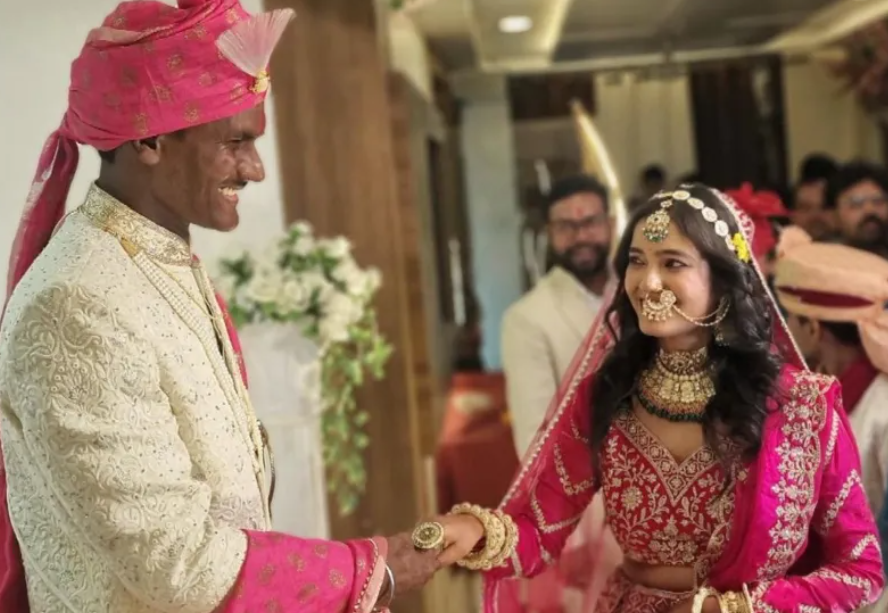
Mumbai (AsiaNews) - Stopping the spread of ancient prejudices, even on new digital media, by showcasing the beauty of one's own story. This is what is happening in India these days thanks to a post that has gone viral on the sensitive issue of “colorism,” i.e., prejudices related to skin color.
Rishabh Rajput and Shonali Chouksey, a young couple from Madhya Pradesh, recently celebrated their wedding after 11 years of relationship. Images of the traditional ceremony shared on social networks sparked offensive comments online because of the groom's darker complexion compared to the bride's lighter one. Racist and insensitive comments began to appear under the images, with some users insinuating financial motives behind the marriage or even speculating that the photos were generated by artificial intelligence.
Many targeted Rishabh for his dark complexion, while others questioned Shonali's choice, insinuating that she had married for money or status. Some even speculated that the groom worked for the government. Rishabh Rajput therefore decided to publish a response: “I'm sorry to disappoint you, I don't work for the government, but I work for my family and I want to provide them with a decent life,” he wrote in a post that went viral. “I have a good income, sure, but she loved me when I had nothing and has been by my side since college, through good times and bad. So your opinion doesn't matter.”
Rishabh also directly addresses the issue of racism: “I can't deny that I have dark skin and have faced these prejudices all my life, but I ask you only one thing: don't spread nonsense about my family. To you, I'm just another black person, but to my wife, I want to be the best husband I can be.” For her part, Shonali told the Hindustan Times that their long-distance relationship has made them stronger and that they are now taking this sudden attention in stride.
This is a story that sends a strong message against colorism and the prejudices that are still widespread in India. Dark skin and the caste system are in fact closely linked: some theories have mistakenly equated skin color with race and caste. The very term varna—which traditionally refers to the division of society in ancient India into Brahmins (priests), Kshatriyas (warriors), Vaishya (merchants), and Shudra (workers)—literally means “color.” For this reason, discrimination based on skin color remains a huge problem in the country.
Since 2009, the Indian association Women of Worth has launched the “Dark is Beautiful” campaign to combat colorism through awareness-raising activities, events, and workshops. But it has to contend with stereotypes perpetuated by films, television programs, and advertising. In every supermarket, for example, you can find an entire wall of personal care products promoting “whitening” or “lightening” creams for the body, made by well-known brands.
Skin lightening is not a practice exclusive to the modern cosmetics industry. Even the traditional Indian medical system of Ayurveda teaches that pregnant women can “improve” the complexion of their fetus by drinking milk with saffron and eating oranges, fennel seeds, and pieces of coconut. In marriage advertisements—even among aspiring Christian brides in India—reference to complexion is very common and is often described in terms such as “wheatish,” “fair,” or “dusky.”
Hence the importance of this example of lasting love and resistance to skin tone prejudices, through which Rishabh and Shonali are simply challenging stereotypes that are still very much present in India.

.png)
11/10/2023 16:37










