Astana (AsiaNews) - Hungary’s new leader, Peter Magyar, is expected in May in Turkestan, Kazakhstan, for the summit of the Organisation of Turanian Countries (OTG), a relationship significantly developed by his predecessor Viktor Orban, whom he defeated in the recent elections. His triumph and that of his party, Tisza, necessitates, amongst the many announced changes, a review of relations with Budapest’s “Turanic vector”. The first to congratulate Magyar were the presidents of Turkey and Kazakhstan, Recep Tayyip Erdogan and Kassym-Jomart Tokayev, who declared themselves ready to continue dialogue on bilateral and regional issues.
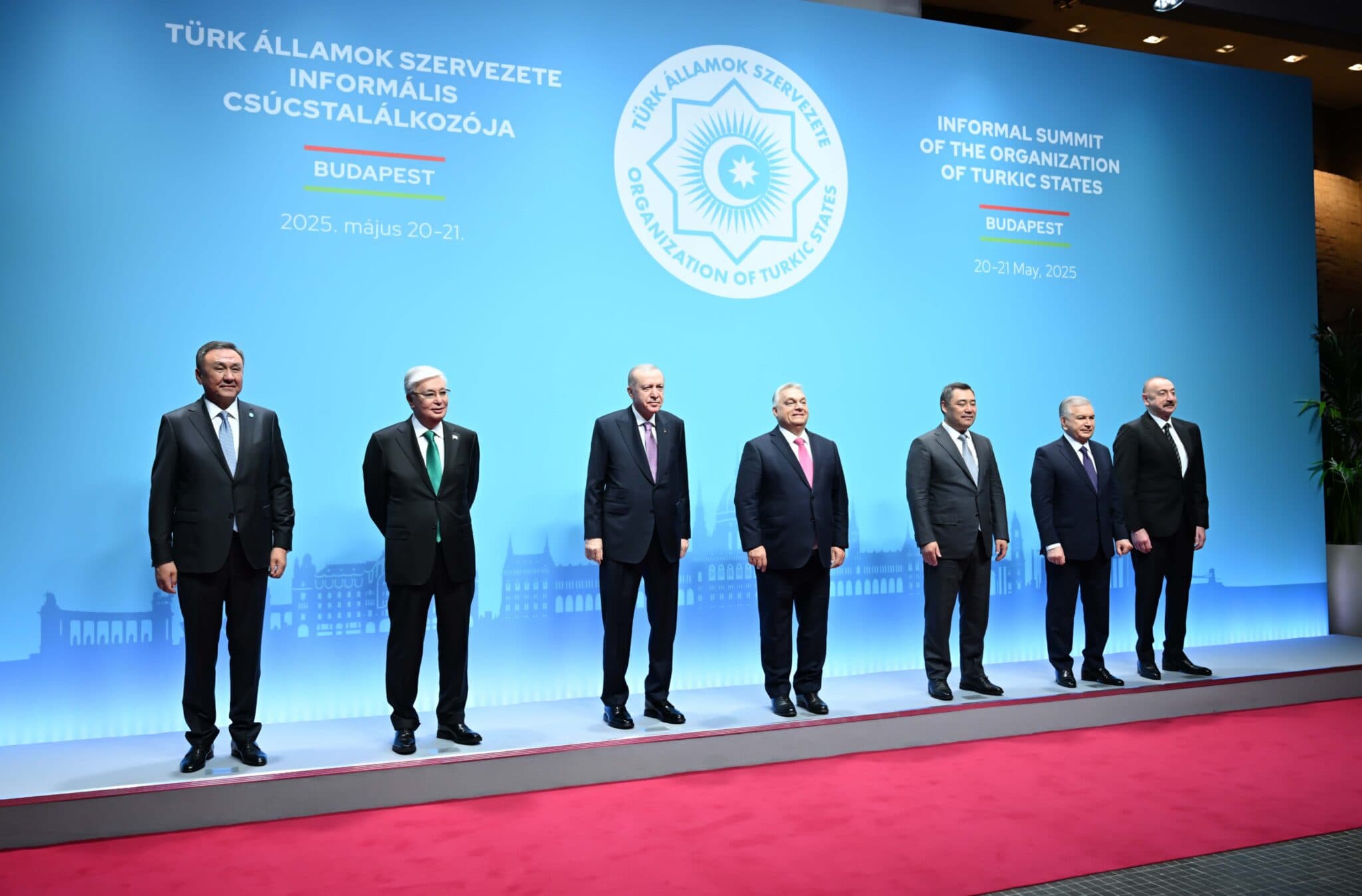
The presidents of Azerbaijan, Uzbekistan and Kyrgyzstan, however, were not quick to offer their congratulations, waiting to gauge Magyar’s stance regarding overtures towards the East. In recent years, Hungary’s rapprochement with the OTG has been very intense, progressing from observer status in 2018 to the opening of the OTG’s representative office in Budapest in 2019, with an informal summit to be held in the Hungarian capital in 2025. Participation in the Turkestan summit, and the calibre of the delegation to be sent from Budapest, will become one of the most significant indicators of the new political direction following 16 years of Orbán’s rule.
According to the Kazakh political scientist Dosym Satpaev, definitive clarification on the relationship between the heirs of the Huns and the Asian and Middle Eastern Turanian peoples will only come at the end of 2026, with the summit of OTG heads of state in Turkey. “The Eastern opening had become Viktor Orbán’s calling card,” observes Satpaev, “now we need to understand whether full integration with Brussels will be preferred, even if the two directions are not mutually exclusive.” Last year, the “Central Asia + EU” summit was also held in Samarkand, at which Europe showed great interest in expanding economic relations with the entire region.
Experts hold differing views on the possibility of sustaining Budapest’s enthusiasm for its ‘Turanic kin’; Darkhan Kaletaev, PhD in Political Science, former Astana ambassador to Ukraine and Kazakhstan’s Minister for Religious and Social Affairs, believes that Hungary will inevitably have to move closer to Brussels: “Hungary’s foreign policy priorities are changing completely, and Orbán used relations with the Turanic peoples precisely to compensate for his marginalisation within the European Union”. In his view, not even the symbolism of the name (Magyar means “Hungarian”) and the historical ties with Kazakhstan will compensate for the necessary pragmatism driving the new leader towards Europe.
There are, however, viewpoints characterised by greater ‘Turanic’ optimism, according to which Budapest’s rapprochement with the East was not a personal initiative of Orbán, but a trend deeply rooted in the Hungarian people, which the elected prime minister will not be able to ignore. This view is expressed by Bakhtier Ergašev, director of the Ma’no research centre in Tashkent, who states that “Hungary pays close attention to its historical roots, upholding the concept of the legacy of the Huns, the ancestors of all Turanian peoples”. In this regard, Magyar’s pragmatism will also have to take national interests into account in relations with the OTG, and furthermore, “Brussels may see Hungary as a very special bridge to open up new routes for Europeans to Central Asia, through investment and academic exchanges”, adds Ergašev.
Economic interests are no less important than historical and cultural ones, given that Hungary was the first EU country to sign a strategic cooperation agreement with Uzbekistan, and according to the expert, “this is a solid foundation that must not be undermined by grandstanding political gestures”. Hungarian companies are already quite active in the region’s markets, including through joint projects and Hungarian exports of agricultural production equipment, which are of great importance to Central Asians. The new Hungary will have to build itself within the relationship between East and West, becoming more attractive from both directions of Eurasian geopolitics.