








'Lalibazar', a film about Nepal’s Hill Dalits, reopens the wounds of the Badi community
The temporary halt by the Patan High Court has reignited the debate over the portrayal of the Badi community, historically marginalised and associated with the sex trade. While some activists slam it for its offensive and discriminatory stereotypes, others argue that the film depicts a reality still present amid poverty, social exclusion, and caste discrimination.
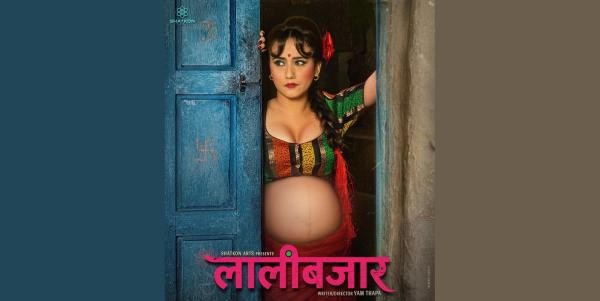
Kathmandu (AsiaNews) – On 28 April, the Patan High Court temporarily suspended the distribution of the film "Lalibazar”, on the grounds that it offers a stereotypical and offensive portrayal of the Badi community.
The order, signed by Judge Prakash Dhungana followed an appeal filed by activist Roshni Nepali, just days before the film's scheduled 1 May release, this despite the green light given by the Central Board of Film Censor, the body that approves, bans, and edits films, documentaries, and ads in the country.
Although the legal case has not been definitively settled, the same court lifted the temporary ban this week, thus allowing the film's national release on 8 May.
The Badi community, classified by the Nepali state as Hill Dalits, is one of the country’s historically marginalised social groups, along with the Damai, Sarki, Kami, and Gaine.
According to community representatives, the film portrays Badi women in an immoral and stereotypical manner, associating them with the sex trade and damaging the group's reputation and dignity.
The language used in the dialogue has also been criticised, deemed offensive and harmful.
For Roshni Nepali, one of the initiators of the petition against the film's release, the film is causing mental stress and depression among young Badi women and girls in Nepal and abroad.
The film's producers, however, reject the accusations, arguing that "Lalibazar" addresses a concrete and often ignored social reality.
To back their point, they say that members of the community who watched the film recognised themselves in the characters and saw their life stories, appreciating the attention given to the discrimination and economic hardship experienced by many Badi women.
"Lalibazar" also highlighted a rift within the community itself. As Hikmat Badi, a member of the Badi Welfare Forum Nepal, explained, the film was received differently among Badis living in cities and those in rural areas.
The film tells the story of a mother who tries to save her daughter from sex work, challenging the patriarchal culture and discrimination still prevalent in the country.
According to Hikmat Badi, the film represents a concrete reality for many women in the community, especially in the Terai areas, where some still resort to prostitution to survive.
Despite the efforts of local activists and organisations, many women continue to be pushed into the sex trade due to poverty, lack of education, and discrimination, which also affects Dalits in the wider Nepali society.
Originally from India, the Badi are traditionally an itinerant population linked to the performing arts and entertainment.
A 2020 report by the United Nations Development Programme (UNDP) indicated that about 5 per cent of Badi women were still involved in sex work. Estimates by NGOs and international organisations, however, are much higher, between 20 and 30 per cent, equivalent to some 11,000 women.
The story has also reignited the debate on freedom of expression and the limits of film censorship in Nepal.
After the first restraining order, a group of artists, activists, and prominent figures in Nepali cinema gathered in the capital Kathmandu, in front of the Maitighar Mandala monument, to protest the film's ban and demand that it be released in movie theatres.

.png)
24/08/2021 16:36










