








The Kazakh route for negotiations on Iranian uranium
The Director General of the IAEA, Rafael Grossi, has spoken of Kazakhstan as a possible third-party custodian of Tehran’s enriched uranium. Astana possesses significant nuclear expertise and, since 2019, has hosted the world’s only low-enriched uranium bank. The main obstacle is not logistics, but trust: only Russia and China could guarantee Iran the return of its uranium should the agreement fail.
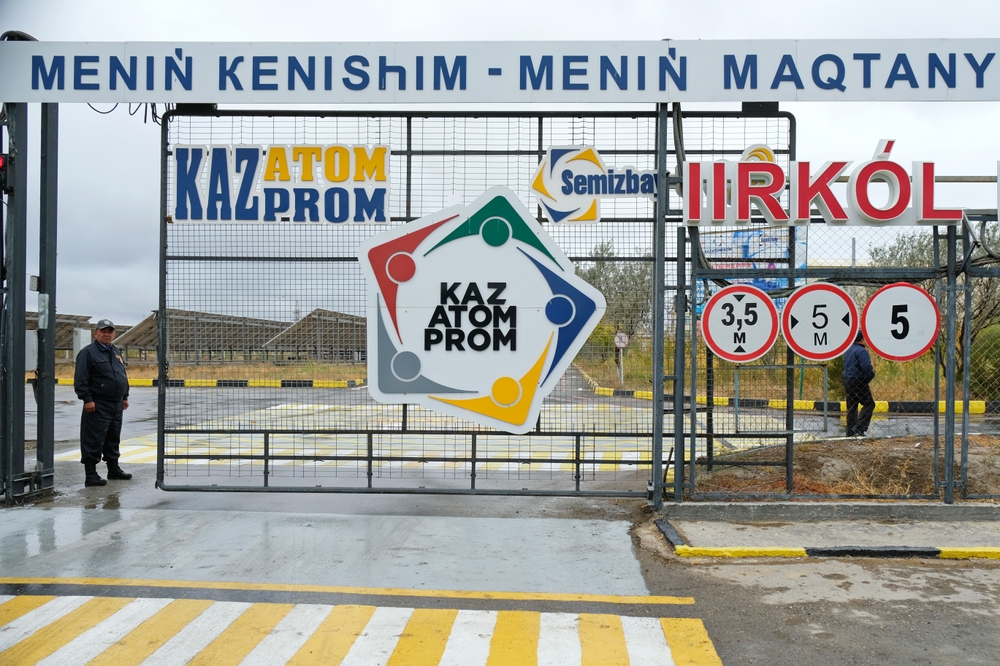
Astana (AsiaNews) – As negotiations on Iran’s nuclear programme continue, the fate of Tehran’s stockpiles of highly enriched uranium remains one of the most complex issues to resolve. Prior to the US and Israeli air strikes on Iranian nuclear facilities in June 2025, the International Atomic Energy Agency (IAEA) estimated that Iran possessed 440.9 kilograms of uranium enriched to 60 per cent.
Although this material is not yet suitable for the production of nuclear weapons, its level of enrichment is already significantly closer to the 90 per cent typically associated with such production.
Negotiators are now faced with the question of what should happen to these stocks as part of a broader agreement between Tehran and Washington. In recent weeks, Kazakhstan has been mentioned as a possible third-party custodian of this material. The Director General of the IAEA, Rafael Grossi, stated last month that the Kazakh President, Kasym-Žomart Tokaev, was open to the idea of storing Iranian uranium, and Astana subsequently confirmed its willingness to do so.
“Several countries, including Kazakhstan, have expressed a willingness to provide technical assistance in good faith to resolve the issue, provided that relevant international agreements are reached between all parties involved and that the matter is put into practice,” said Ajbek Smadijarov, spokesperson for the Kazakh Foreign Ministry. A week after this statement, Kazakhstan’s ambassador to Iran met with Iranian Deputy Foreign Minister Kazem Gharibabadi, but neither side revealed whether the transfer of uranium had been discussed during the meeting.
Kazakhstan possesses significant nuclear expertise. Since 2019, the country has been home to the world’s only low-enriched uranium bank owned by the IAEA: a 90-tonne facility supported by the United States, the European Union, Norway, Kuwait and the United Arab Emirates. Astana also maintains relations with all key stakeholders and has a long history of nuclear non-proliferation activities.
“Kazakhstan is actually a very interesting and viable choice,” says John Roberts, an energy expert at the Atlantic Council, “it has a developed nuclear industry and has been involved in the construction of nuclear power stations”.
However, technical expertise may not be the decisive factor. Ali Vaez, a leading non-proliferation expert and head of the Iran Project at the International Crisis Group, notes that the main obstacle is not logistics, but trust. It is unlikely that Tehran views this uranium solely as nuclear material to be stored safely; it also serves as a bargaining chip in negotiations.
“Given Tehran’s deep mistrust of the United States, it is unlikely to agree to remove all the material at once or in its entirety,” said Vaez, “it will prefer to dilute part of the material domestically to maintain its negotiating position and ensure that Washington honours the agreements.” This lack of trust could complicate Kazakhstan’s prospects of becoming the custodian of the uranium stockpiles. For Iran, the host country must be able to guarantee the return of the stockpiles should the agreement fall through, and only Russia and China are suitable for this purpose.
If Kazakhstan were ultimately chosen, it could bolster its international standing: “It would certainly strengthen Kazakhstan’s international position,” said former US Ambassador to Kazakhstan Daniel Rosenblum in a recent Global Power Shifts podcast, “they like to see themselves as a neutral party and sometimes a mediator”.
At the same time, accepting Iranian uranium carries certain risks; the IAEA fuel bank at the Ulba metallurgical plant in Ust-Kamenogorsk was established to store low-enriched uranium intended for civilian nuclear reactors. Iran’s stockpiles, enriched to 60 per cent, are classified as highly enriched uranium and require entirely different storage and security conditions. Kazakhstan will also have to consider the geopolitical implications. According to Roberts, Astana has for years been seeking a balance between developing relations with the West and maintaining close ties with Russia and China.

.png)










