








After diocesan phase in Phnom Penh, the cause of the 12 martyred by Pol Pot moves to Rome
The Cambodian part of the process for the beatification of Bishop Joseph Chhmar Salas and 11 other victims of the Khmer Rouge genocide ended today. Since 2015, dozens of testimonies have been collected from people who witnessed their faithfulness to the Gospel during a time of horror. Among the candidates are two nuns and four lay people. If recognised by the Vatican, they will be the first blessed of this small Church reborn in the 1990s.
Phnom Penh (AsiaNews) – The Catholic Church of Cambodia experienced a very important moment in its history today. The diocesan phase of the beatification process for Bishop Joseph Chhmar Salas and 11 other victims of the Khmer Rouge genocide ended at the seat of the Apostolic Vicariate of Phnom Penh.
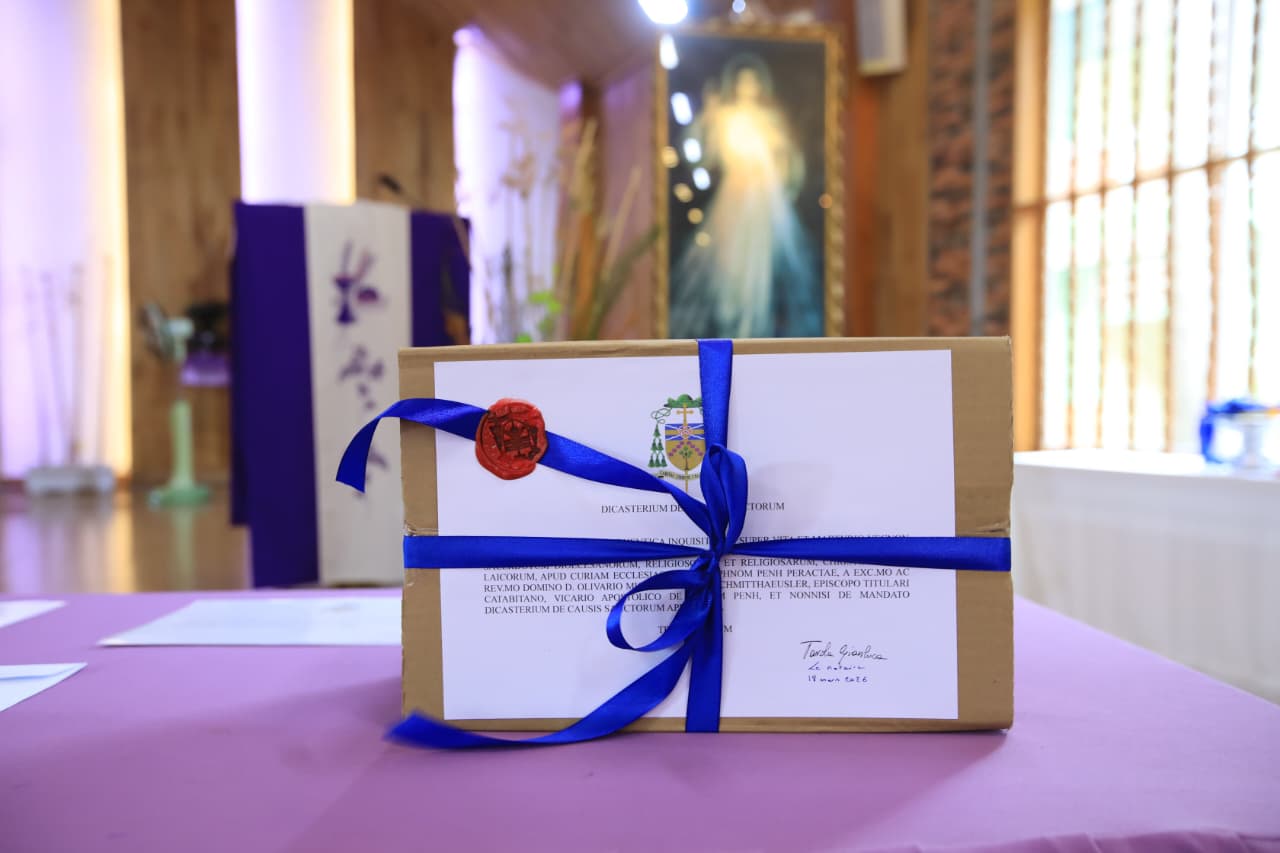
This is the first canonical process to determine the martyrdom of members of this very young local Church, reborn in the 1990s after the genocide perpetrated by the Khmer Rouge. Following a careful ten-year examination, all the documents collected to ascertain their martyrdom are now being sent to Rome.
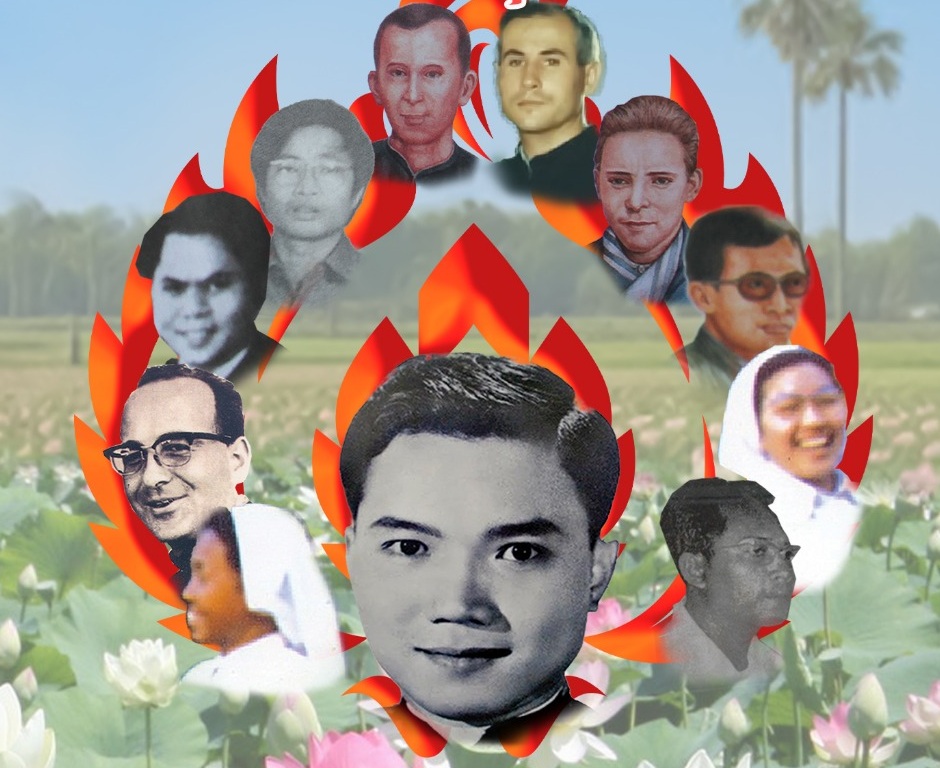
The 12 witnesses of faith were killed between 1970 and 1977 by Pol Pot and the Khmer Rouge. The leading figure is Bishop Joseph Chhmar Salas, the first Cambodian appointed apostolic vicar of Phnom Penh in 1975, shortly before the Khmer Rouge's seized the capital.
The list includes Cambodian priests: Fr Joseph Chhmar Salem (the bishop’s brother) and Fr Marcel Truong Sang Samronh. The others are Fr Pierre Rapin, a missionary with the Missions étrangères de Paris (MEP), Benedictine monk Charles Badré, Fr Damien Dang Ngoc An of the Vietnamese Order of the Holy Family of Banam, the religious Sisters Jacquelin Kim Song and Lydie Nou Savan of the Sisters of Providence of Portieux, and four lay people: Joseph Som Kinsan, Pierre Chhum Somchay, Joseph Thong, and Joseph Ros En.
Dozens of witnesses heard
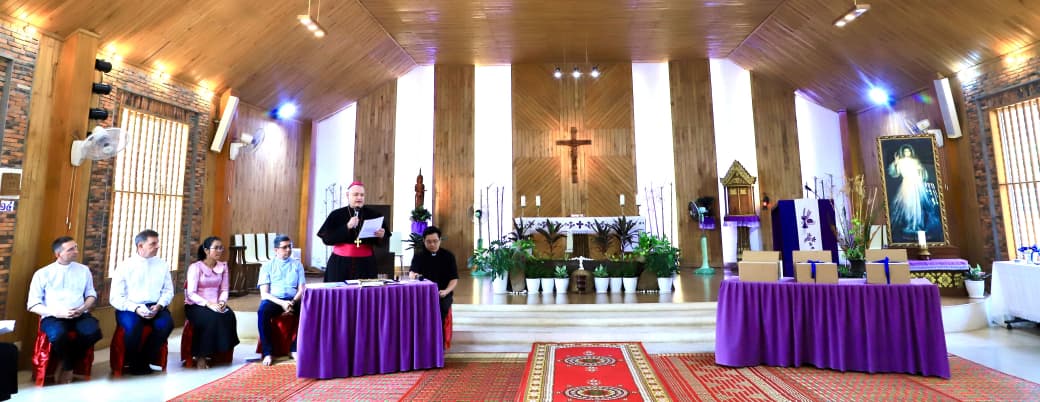
The current apostolic vicar, Bishop Olivier Schmitthaeusler, also a member of the Missions étrangères de Paris, officiated the ceremony. In his address, he said that the fidelity Bishop Salas showed to his people was comparable to that of the monks of Tibhirine in Algeria.
Coadjutor Bishop Pierre Suon Hangly was present at the final hearing of the diocesan tribunal examining the case, along with some 50 priests from Cambodia's three ecclesiastical districts (Phnom Penh, Kompong Cham, and Battambang), and approximately 200 religious and lay people, underscoring the importance of this moment for the local Catholic community.
As the second native bishop in the history of the Cambodian Catholic community, Bishop Suon Hangly is carrying on the legacy of the prelate who died in 1977.
In his address, Bishop Schmitthaeusler said that the cause for beatification was opened in May 2015, noting that over the past ten years, dozens and dozens of witnesses were interviewed, people who lived through the Pol Pot era and knew the victims personally.
Initially, 35 individuals were examined. Eventually, the work focused on 12.
“Some 2,500 pages are a testimony for the new generations of today's baptised," Schmitthaeusler explained. “These individuals are the people of God; they particularly represent all those who suffered and died praying to the Lord to welcome them into his Kingdom”.
“These documents will be sent to Rome,” the prelate added. “We shall continue to pray that these presumed martyrs of ours may be offered to the universal Church as a gift and an invaluable testimony of the faith of the Church of Cambodia to the world."
Bishop Salas and Fr Rapin: lives donated for love
The reports about the 12 Christians, the Cambodian Catholic Church sent to the Dicastery for the Causes of Saints for examination of their martyrdom, offer a glimpse into the violence of Pol Pot's genocide, which, according to various historians' estimates, in its ideological madness, exterminated 1.5 to 2 million people between 1975 and 1979, approximately a quarter of Cambodia's population.
They also show the luminous face of the deep faith with which Cambodia’s small Catholic community, born five centuries earlier with the preaching of the first Portuguese missionaries, faced the test of a communist regime that wanted to erase them (and in many ways succeeded) along with everything that opposed its ideology.
Father Joseph Chhmar Salas was 37 years old. In the spring of 1975, he was in France completing his studies when he received a letter from the then Apostolic Vicar of Phnom Penh, French Bishop Yves Ramousse, urging him to return to Cambodia.
The apostolic vicar knew that with the Khmer Rouge’s entry into the capital, all foreigners would be expelled and it was necessary to immediately to put a Cambodian in charge of the local Church. Father Salas was ordained three days before the fall of Phnom Penh and sent to Tangkok, a village in Kompong Cham province, for protection.
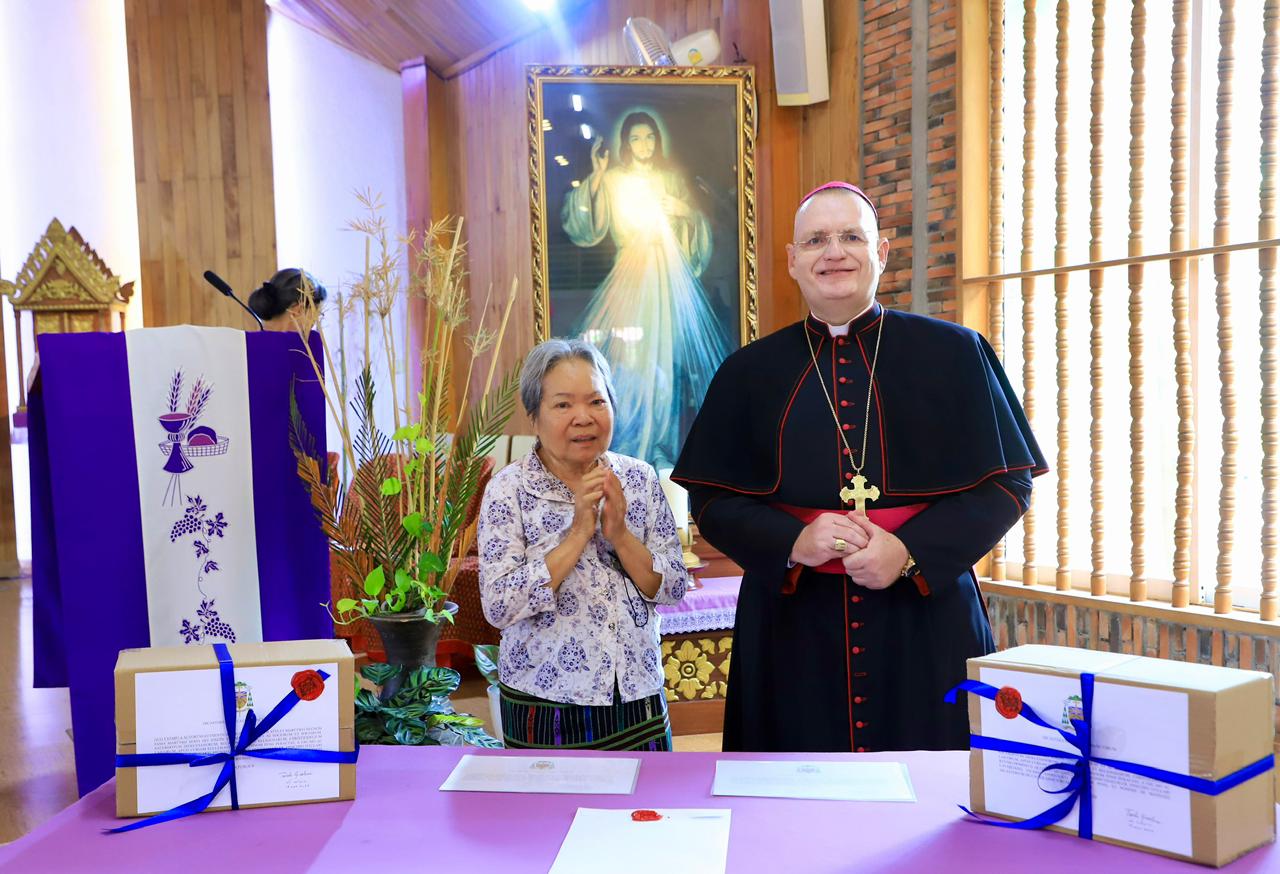
The new bishop managed to remain there for some time with several Christians and his family, including his sister Chamar Pracot, who survived the genocide and was a precious witness to what happened (pictured above today with Bishop Schmitthaeusler), his younger brother Salem, also a priest, and Father Chamroeun.
Bishop Salas later volunteered for forced labour, hoping to reach Christians scattered somewhere in the country. Exhausted, he died in 1977 of hardship and illness in a pagoda converted into a hospital.
His sister talked about the Masses celebrated in secret in the straw hut assigned to them, with their bed as an altar, while outside, Christians, pretending to work in the rice paddy, used coded signals to warn of approaching Khmer Rouge.
Bishop Salas's pectoral cross, kept by his mother in a chicken coop, was returned in 2001 to the then Apostolic Vicar of Phnom Penh, Bishop Émile Detombes, and is a precious token for the Cambodian Church.
Three years before the fall of Phnom Penh, Father Pierre Rapin, a French MEP missionary originally from the Vendée, was killed in the Christian village of Kdol Leu in 1972. By 1970, after General Lon Nol's coup d'état, the Khmer Rouge were in control of the area. The clergyman knew full well what he was risking by staying in the village, but he wrote to a priest friend: "The Christians have asked me to stay; God's will will be done."
On the night of 23-24 February 1972, he was wounded by an explosive device placed against the wall of his house. Although his life did not appear to be in danger, the Khmer Rouge took him to their hospital anyway. The next day, they returned his body to the villagers.
After he was wounded, Fr Rapin told a parishioner who was helping him: "If those who wanted to kill me are captured, forgive them, do not harm them. There is no point in seeking revenge. Have faith in God."
The stories of the four laymen
More challenging to reconstruct, but no less significant, are the stories of the four laymen included in the list sent to Rome. “Joseph Ros En was a professor at the University of Phnom Penh,” said Father Vincent Chrètienne, an MEP missionary in Cambodia and president of the Historical Commission that worked on the cause of beatification.
“He was killed because someone denounced him precisely because he was a professor and also a Christian. And he confirmed this during interrogations: 'It's true, I am,' he said. Thus, we are practically certain that he was killed in hatred of the faith."
"We know that Joseph Thong," Father Chrétienne said, "was a catechist, while Joseph Som Kinsan was a soldier who was arrested immediately after 17 April 1975, the day the Khmer Rouge entered Phnom Penh.
“The figure of Pierre Chhum Somchay is also very significant. This man had 12 children, all killed during the Khmer Rouge massacres. Under the communist regime, he kept a notepad in which he wrote a prayer for each of them. In the end, in 1977, he too was killed, because the Khmer Rouge realised that he was a Christian.”

.png)
16/11/2018 10:03










