Jakarta (AsiaNews) – In Indonesia, online disinformation campaigns against journalists, activists and political opponents are becoming an increasingly systematic tool of repression under Prabowo Subianto’s presidency.
This is the finding of a new report published today by Amnesty International, which states that profiles linked to the military and coordinated networks of anonymous accounts are using social media to discredit critical voices by accusing them of being “foreign agents”, fuelling intimidation, physical violence and a growing climate of fear.
The report, entitled “Building up Imaginary Enemies”, argues that over the past 18 months, disinformation has become “a key tactic to systematically discredit government critics, stifle public debate and justify repression”. Amnesty also accuses the major digital platforms (Meta, TikTok, X and YouTube) of allowing harmful content to spread without taking effective action.
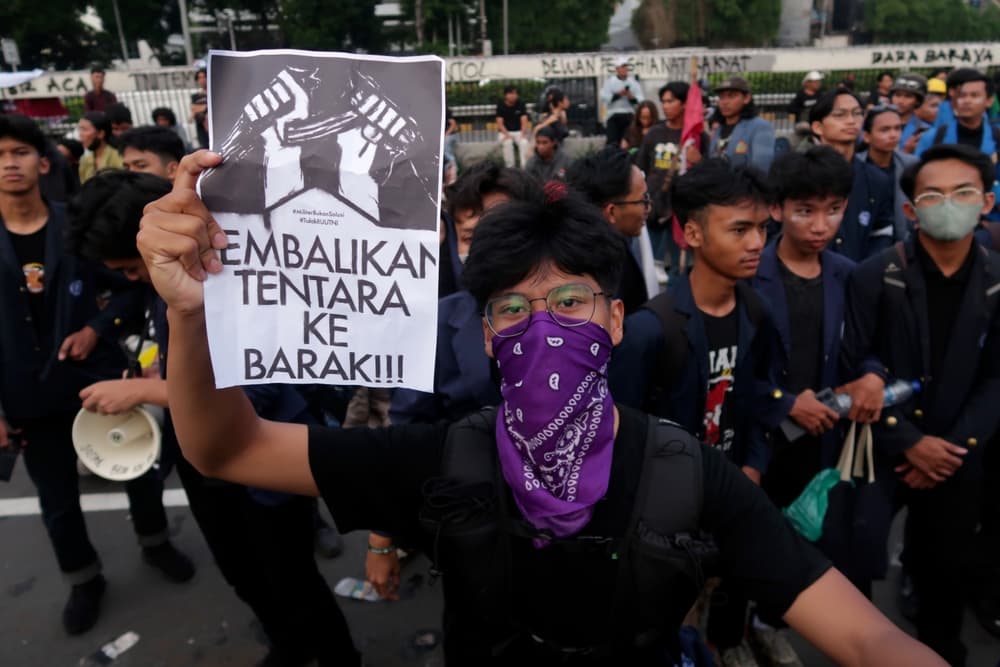
According to the organisation, since Prabowo took office in October 2024, protests against corruption, budget cuts, environmental degradation and the expansion of military powers have multiplied. In response, the president and other government officials have reportedly repeatedly accused activists, journalists and protesters publicly of being “manipulated” or “paid” by foreign interests, framing political dissent as an alleged threat to national security.
Amnesty describes coordinated campaigns in which hundreds of accounts simultaneously post identical videos, graphics and messages on Instagram, Facebook, TikTok, X and YouTube. Much of the content claims, without evidence, that civil society organisations receive foreign funding to “divide” or “weaken” Indonesia. In reality, Amnesty points out, international law provides for and protects the right to receive international financial support as part of the freedom of association.
The consequences, however, extend beyond the digital realm. According to the report, online hate campaigns often precede incidents of physical violence. In March 2026, Andrie Yunus, deputy coordinator of the Commission for the Disappeared and Victims of Violence (KontraS), was the victim of an acid attack in Jakarta, sustaining severe chemical burns.
Yunus had been targeted for months by online campaigns portraying him as a “foreign agent” following his involvement in protests against the revision of Indonesia’s military law. Following the attack, four army officers were arrested, but the disinformation continued: several accounts claimed that Yunus had staged the attack to secure foreign funding.
Tempo, one of the country’s leading newspapers, was also the target of coordinated campaigns after publishing critical articles on government policies. Amnesty reports that some social media profiles posing as military units accused the newspaper of being controlled by foreign donors.
The intimidation then spread offline: a severed pig’s head was delivered to the Tempo newsroom, followed by parcels containing decapitated rats. Here too, the narrative spread online that the incident had been “staged”.
Among the activists targeted is Iqbal Damanik of Greenpeace Indonesia, who came under fire after leading a protest against mining activities in Raja Ampat, West Papua. “I received a huge number of private messages from anonymous users,” he told Amnesty. “Some were death threats. One of them wrote to me: ‘Your head will fall to the ground’.”
According to Amnesty, this strategy is creating a climate of intimidation that discourages journalists and activists from expressing critical views or taking part in demonstrations. “If we all start to fear being labelled ‘foreign agents’ and stop reporting news critical of the government, we will return to the authoritarian atmosphere of the past,” said a journalist, referring to the time when Indonesia was a military dictatorship led by General Suharto, with Prabowo as his right-hand man.
Even Indonesian laws, according to the human rights organisation, do not adequately protect victims of disinformation. On the contrary, the legislation is often used to criminalise dissent. Of particular concern is a new draft law against “disinformation and foreign propaganda”, which Amnesty fears risks further reinforcing the drift towards authoritarianism by restricting freedom of expression.
Amnesty has also set its sights on digital platforms, however, accusing them of leaving false and defamatory content online for months, content that often went viral thanks to engagement-based algorithms. The organisation has written to Meta, TikTok, X and YouTube on several occasions to seek clarification and share the findings of its research. Only TikTok has responded, promising “further monitoring on this specific issue”.
“Authoritarian practices are accelerating under Prabowo Subianto’s government,” said Amnesty International’s Secretary General, Agnès Callamard. “This disinformation is a political weapon used to consolidate the government’s power and weaken those who dare to speak out.”