








Arms race: spending continues to grow in Asia, stable in the Middle East
According to the latest report from the Stockholm International Peace Research Institute, global military spending reached US$ 2.887 trillion in 2025, marking the eleventh consecutive year of growth. In Asia, growth is driven by China, Japan, India, and Taiwan, due to strategic rivalries and uncertainty over the role of the United States. In the Middle East, Israeli spending was down, but Turkey’s and Saudi Arabia’s were up.
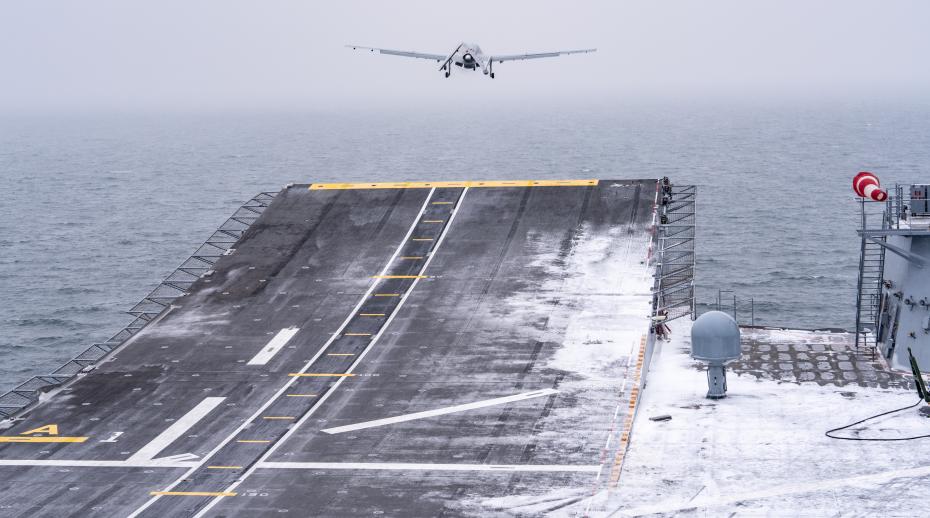
Stockholm (AsiaNews) – Military spending continues to grow worldwide, with the rise increasingly led by countries in Asia and the Middle East.
According to the latest data published by the Stockholm International Peace Research Institute (SIPRI), global spending reached US .887 trillion in 2025, or 2.5 per cent of global GDP, growing for the eleventh consecutive year.
In percentage terms, the increase was "only" 2.9 per cent, due to a slowdown in the United States: without the US, growth would have been 9.2 per cent.
Behind the overall figure, very different regional dynamics emerge. While in Europe the surge continues to be linked to the war in Ukraine (+14 per cent), in Asia and the Middle East, larger military budgets are a response to growing rivalries in the region and a perceived increasingly unstable international order.
With US$ 681 billion in 2025 (+8.1 per cent), Asia and Oceania recorded the fastest increase since 2009. However, the figure confirms an established trend: Asia's military spending has been growing for over three decades.
China remains the leading player, with an estimated spending of US$ 336 billion (+7.4 per cent), equal to 12 per cent of the global total and consistent with a military modernisation strategy aimed at strengthening all components of the armed forces by 2035.
Chinese spending growth has not slowed despite anti-corruption campaigns targeting certain military leaders.
Japan boosted spending by 9.7 per cent, reaching its highest level of GDP since 1958. Taiwan's increase was even more impressive (+14 per cent), a response to Chinese military exercises around the island. Taipei wants military spending to reach 5 per cent of GDP by 2030, partly under pressure from the United States.
In South Asia, the India-Pakistan rivalry continues to influence defence policies. India, the world's fifth-largest military spender, reported an increase of 8.9 per cent, while Pakistan increased by 11 per cent.
This is a direct consequence of the conflict in May 2025, when the two nuclear powers showcased their new weapons, but neither emerged as the victor.
Meanwhile, the two governments continue to fuel domestic propaganda and nationalism, especially now that Pakistan is in the international spotlight for its mediation attempts between the United States and Iran.
But beyond regional tensions, other political factors also weigh heavily. SIPRI notes that uncertainty about US commitment in the region is pushing Washington's allies to seek their own path to defence.
In the Middle East, military spending appears stable (+0.1 per cent), at US$ 218 billion. However, Israel cut spending by 4.9 per cent in 2025, to US$ 48.3 billion, as the war in the Gaza Strip eased, although levels are still nearly double those of 2022.
Saudi Arabia remains the region's largest spender, with US$ 83.2 billion (+1.4 per cent), while Turkey recorded one of the largest increases, 7.2 per cent, driven by both military operations abroad and investment in its defence industry at home.
Iran bucked the trend, with spending decreasing by 5.6 per cent in real terms due to high inflation (42 per cent). However, according to SIPRI, the official figure does not fully reflect reality: a significant portion of military programmes, particularly missiles and drones, are financed through oil revenues that do not appear in official budgets.
Overall, insecurity and distrust in the international system prevail in Asia, pushing states to continue their arms race, a trend that appears unlikely to end anytime soon.
Amid “current crises, as well as many states’ long-term military spending targets, this growth will probably continue through 2026 and beyond,” the report states.
The risk, already highlighted in previous studies, is that rearmament will fuel new tensions, diverting resources from economic development and social policies.

.png)
16/06/2025 16:46
17/06/2024 17:52
22/04/2024 11:44
27/04/2020 16:04










