








Astana’s ‘soft divorce’ from the Commonwealth of Independent States
Established in 1991 to regulate relations between the republics of the former Soviet empire, the CIS has failed to prevent conflicts in Georgia, Ukraine and the Caucasus, and its leadership lacks the capacity to take decisive action. Whilst Kazakhstan regards it as a ‘working tool’, its policy no longer looks solely towards Moscow.
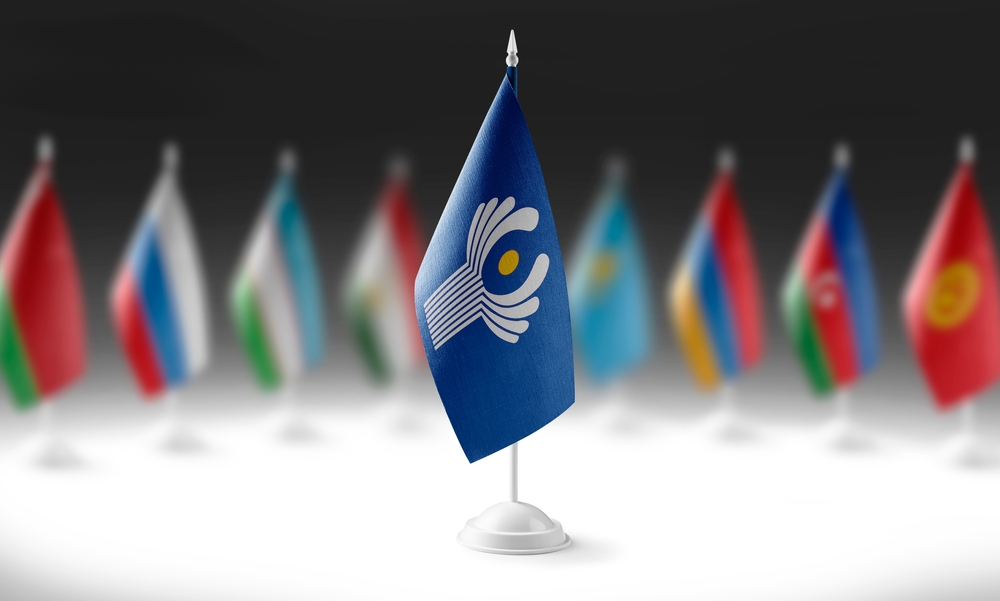
Astana (AsiaNews) - Following the collapse of the Soviet Union, the republics of the former empire sought a formula to keep them united despite major changes in the economy and administrative systems, and in 1991 the CIS platform was created, the Commonwealth of Independent States, which was joined by 11 of the 15 republics, excluding the three Baltic states and Georgia, which was then already in the midst of a civil war but later rejoined in 1993. Turkmenistan remained only as an observer, Ukraine subsequently withdrew, and Moldova is also in the process of leaving.
Kazakhstan has never contested its ties with Russia and the other countries, but has independently opened itself up to global dialogue, becoming a full member of the UN and prioritising international relations, thereby achieving a very gentle and diplomatic form of separation from subordination to the Moscow-centred bloc.
According to the Kazakh political scientist Danijar Ašimbaev, the CIS was initially a mechanism designed precisely to facilitate a conflict-free separation, a ‘gentle divorce’ between the post-Soviet republics, which, as we see today, has worked very little in many states such as Ukraine, Moldova, and the Caucasian nations of Armenia and Georgia, and with different balances even in Central Asia.
Issues of property, administration, armaments and defence had to be resolved, whilst infrastructure needed to be reviewed and rebuilt in different ways. The expert notes in Azattyk that “the CIS may be a fiction, a farce, but it is a platform that still functions to some extent, and where many issues can be resolved calmly across various countries”. Some believe the CIS is an active negotiating platform; others feel it should not be limited solely to this.
Another political scientist, Talgat Kaliev, emphasises Kazakhstan’s current position in world politics, without dwelling too much on the past: “We are effectively joining virtually all the regional blocs of the new world order, participating wholeheartedly in various institutions, without limiting ourselves to a single platform.
‘Multipolarity’, which in Moscow’s aggressive interpretation means rather the recovery of a central role in global rivalries, is for the Kazakhs a useful tool experienced without particular tension.
“Kazakhstan needs all its partners, including the CIS, which provides access to areas that others cannot cover,” observes Kaliev, noting that changes in world politics today “require great flexibility and balance, without forcing relations or dependence on one state or region over another”.
Ašimbaev adds that “every conflict affects Kazakhstan’s interests, whether it be Ukraine, Iran or Afghanistan, and we must maintain relations with our neighbours in all directions”.
The CIS is, moreover, the only platform where Astana can engage in dialogue within a single framework not only with Russia, but also with Armenia, Azerbaijan and Belarus, in addition to the more specific framework of the whole of Central Asia.
Kaliev states that “broadly speaking, we are part of the Russian world, but also of the Western world, the Islamic world and the Turanian world”, so the CIS and the strong dependence on Moscow are no longer at the centre of development, but remain “a working tool”.
For Ašimbaev, it is first and foremost “a platform for the regulation and maintenance of relations”, whilst Kaliev looks instead to “a broader system”, in which Kazakhstan organises the entire network of its relations across all regions.
The last meeting of the CIS states was held in December 2025 in St Petersburg, for the first time in the Hermitage Palace, following a meeting in Dushanbe in October, without reaching any particularly significant conclusions.
On 3 April this year, the deputy prime ministers of the CIS Economic Council met in Moscow, bringing together the International Economic Forum and celebrating the 35th anniversary of the organisation’s founding as a “development of the great Eurasian partnership”.

.png)
07/02/2019 17:28










