








Baghdad, Shiite leader: a government against pro-war and sectarian “regional forces”
Sayyid Rahim Abu Ragheef rejects al-Maliki's candidacy, calling it ‘reckless’ and “irresponsible” in a theatre of internal and regional crisis. Tensions between Iran and the United States and the political stalemate blocking the election of the president are cause for concern. Citizenship and the protection of minorities are the foundation of the nation. ‘Responsibility’ is needed in relations with Tehran.

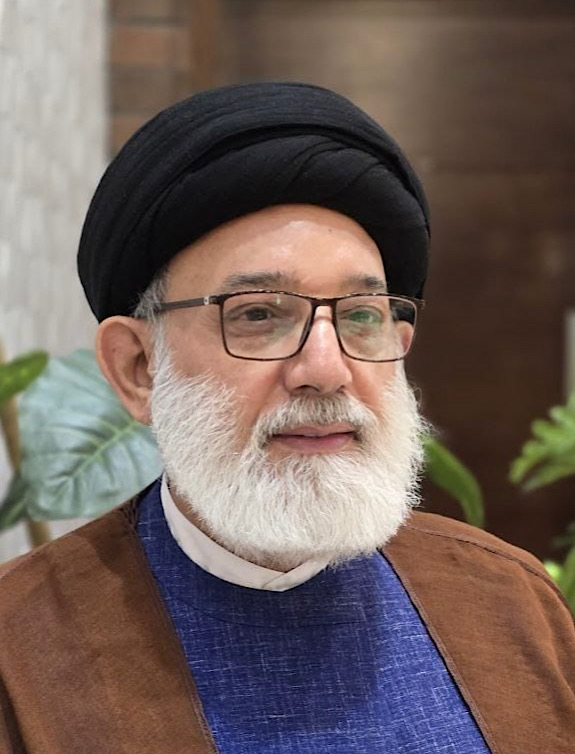
Milan (AsiaNews) - A ‘rash’ and “irresponsible” candidacy, especially ‘in the midst of the crisis affecting the Middle East region’, where Iraq is ‘at the centre of events’ due to its ties with Tehran and the United States. Iraqi Shiite leader Sayyid Rahim Abu Ragheef, president of the Al-Wasat Forum for Culture and Moderation and a leading figure on the political scene, does not mince words when asked by AsiaNews about the prospect of a new term for the former prime minister. More than names, the influential representative of the majority wants to outline the ‘characteristics and qualities’ that the next head of government and leader of a nation going through a turbulent phase in its history must possess. From ties with the Islamic Republic to difficult relations with the (former?) ally in Washington, from the resurgence of jihadist violence to the renewed militant activism of the Islamic State, there are many factors at play. Not least among these is the issue of the still-stalled appointments to the highest institutional positions in a country that is looking with attention - and concern - to the present and to an uncertain future.
Institutions (still) blocked
Last weekend, Parliament postponed the election of the new president for the second time due to the lack of a legal quorum, against a backdrop of continuing division between the two main Kurdish factions: the Kurdistan Democratic Party (KDP) and the Patriotic Union of Kurdistan (PUK), called upon to reach an agreement on the presidential candidacy, which must then be approved by other smaller blocs and obtain a two-thirds majority in the Assembly. According to the Iraqi constitution, legislators must choose a president within 30 days of the first parliamentary session, which took place on 29 December after the November elections. Once elected, the president has 15 days to entrust the candidate of the largest bloc with the task of forming a cabinet, which must then obtain a vote of confidence in Parliament within 30 days. In a post-2005 ethnic-confessional balance (power-sharing agreements or muḥāṣaṣa), the president is a Kurd, the prime minister is a Shia, and the speaker of Parliament is a Sunni.
Yesterday, outgoing Prime Minister Mohammed Shia al-Sudani met with Kurdish leader Masoud Barzani, head of the Kurdistan Democratic Party (KDP), in Pirmam, near Erbil. The talks focused on constitutional deadlines and the formation of the new federal executive. The meeting was also attended by a high-level delegation from the Shiite Coordination Framework movement, called upon to choose the next head of government as the group with the most support. The internal political process is stalled due to repeated delays in Parliament linked to a lack of quorum and unresolved political disputes. The meeting also addressed current regional developments, with particular attention to Syria and Iran. The third date for the election of a figure who, although largely ceremonial, is crucial for setting the institutional machinery in motion and ensuring national unity, is expected to be set in the next few hours. Also over the weekend, the main Shia alliance confirmed its support for Nouri al-Maliki's return to government, snubbing (for now) US threats that consider the former prime minister too “close” to Tehran.
A new leadership
Al-Maliki's name is dominating the Iraqi political scene these days, although Washington considers him too “pro-Iranian” and accuses him of failing to stop the advance of the Islamic State in 2014.
His name has been rejected by Shiite leader Sayyid Rahim Abu Ragheef because of the way in which his candidacy was (not) studied and because of the consequences on the domestic and regional political scene. ‘Due attention was not paid,’ he explains to AsiaNews, ‘to the reasons that led to his rejection in the past, both inside and outside the country.’ Added to this, he continues, is the fact that during his previous term, ISIS ‘took control of almost a third of Iraq's territory and caused ethnic and religious unrest’ to which he failed to provide a credible and effective response. And even ‘more important,’ he says, ‘is the ideology to which he belongs,’ which ‘is not innocent of extremism, according to its doctrinal and political structure.’ Hence the consideration of a ‘difficult candidacy,’ which risks ‘adding further factors of crisis.’
More than names, Abu Ragheef illustrates the characteristics and values of the future head of government ‘in this historical context and in the objective conditions of the Middle East and Iraq in particular: he must have a vision of the future,’ he says, ‘know how to implement a profound and responsible review of the failure, corruption, sectarianism and extremism’ that have characterised recent history. “And he must believe, with a spirit of participatory responsibility, in coexistence and civil peace, and have the tools and philosophy to manage diversity and protect the different components,” he continues. Because diversity, he stresses, “must be transformed into wealth” and not a source of 'conflict, hatred and division. It must show tolerance and spread its culture‘ as well as defending ’the institutions and components of the state, not limiting itself to words of courtesy on the occasion of religious or institutional functions‘. Finally, on the subject of minorities, it must make it clear that ’their protection is not a concession but a duty‘, while at the same time consolidating ’the principle of citizenship" as the cornerstone and foundation of the nation.
Tehran and the Shiite universe
Citizenship, protection of minorities and defence of institutions are fundamental to creating a state that can protect ‘the Iraqi people’ who, despite having a certain degree of democracy, have not enjoyed the benefits that ‘their abundant wealth would allow’. Among these, Abu Ragheef emphasises the importance of “the healthcare system and a solid education”, which today are “low level” and “below global standards”. Building a strong state is “fundamental” to overcoming the stranglehold of the United States and Iran, which influence political and social life. As for relations with Tehran, he explains, “we hope that everyone will feel the necessary sense of responsibility” in such a tense situation, sparing their peoples “the calamities of war” and “spreading the language and spirit of peace”. “We have witnessed conflicts,” he continues, 'from which we have reaped nothing but destruction, poverty, orphans and displacement. And the only beneficiaries are the warlords and the arms manufacturers. We also hope that governments will understand that, however long they last, they are destined to disappear, while the people remain, and that repressing the people is not a solution, as some regimes imagine, but rather a postponement of the problem." In this perspective, Tehran's openness to talks with the US is welcomed, as stated this morning by Masoud Pezeshkian on X: “I have instructed the Foreign Minister to prepare the ground for fair and equitable negotiations,” the president wrote.
Then there is the (controversial) issue of relations between Najaf and Qom, the two centres of Shiite Islam in Iraq and Iran, which is essentially a relationship “between two schools”, explains Abu Ragheef, which “share doctrinal and legal aspects”. Najaf stands out because it is a “traditional Iraqi school”, in which the jurist “has no role in the political arena” but “limits himself to religious advice and guidance and the value system”, dealing with “religious teaching and education”. As for Qom, he continues, ‘it is a school in which jurists are present in the political sphere and includes the ideology of velāyat-e faqih’ in power today in Iran, although it does not apply to everyone. ‘Although extremism,’ he warns, ‘has exerted an influence on both schools, in Najaf it has done so to a much lesser extent due to the absence of a religious ideology.’ Finally, the Shiite leader addresses the issue of coexistence and minorities, with a picture that has been deteriorating and is a source of ‘concern.’ Complicating the situation is ‘what has happened in Syria,’ with the rise of an “extremist” component that has ‘enjoyed international and regional support and cooperation’ and fuelled a violent drift, as happened in Sweida or in the Kurdish area. “This will have consequences for Iraq and its minorities,” he concludes, “if the international community, and America in particular, does not pay attention. Perhaps the Iraqis have learned their lesson from the ISIS occupation,” but the challenge posed by “regional forces” attempting to “replicate forms of terrorism” remains.
GATEWAY TO THE EAST IS THE ASIANEWS NEWSLETTER DEDICATED TO THE MIDDLE EAST. WOULD YOU LIKE TO RECEIVE IT EVERY TUESDAY? TO SUBSCRIBE, CLICK HERE.

.png)










