








Balochistan: coordinated attacks in border region with Iran over autonomy and resources
In an already tense situation, a series of attacks claimed by the Balochistan Liberation Army (BLA) has resulted in scores of deaths among civilians and security forces, while ethnic tensions rise again in Iran. The Taliban in Afghanistan backed the operation. The violence stems from tensions over mineral resources, while local hostility toward Islamabad has fuelled the escalation.
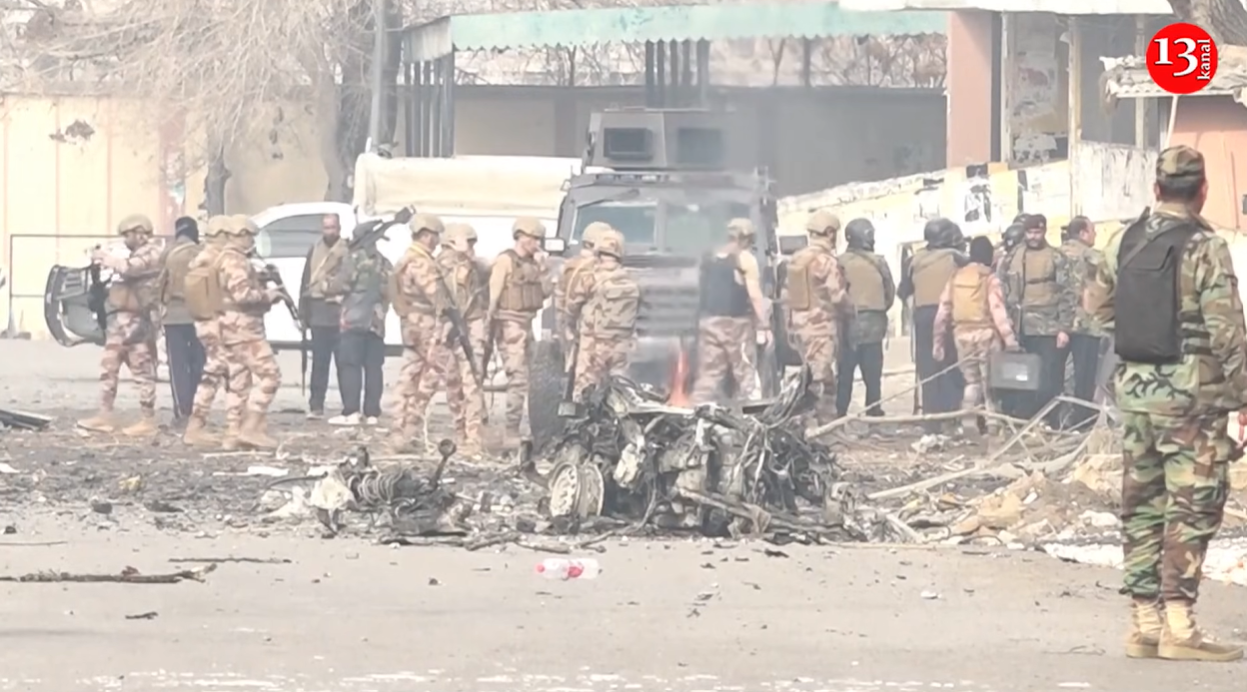
Quetta (AsiaNews/Agencies) – Some 31 civilians and 17 members of the security forces were killed in a series of coordinated armed attacks over the weekend in Balochistan, the province’s Chief Minister, Sarfraz Bugti, reported today, adding that after a 40-hour operation, security forces killed 145 fighters.
The Balochistan Liberation Army (BLA), a separatist group that has been fighting Pakistan’s central government for decades demanding greater autonomy and, above all, control over the province’s resources, immediately claimed responsibility for the attacks.
According to Pakistan’s Minister of State for Interior Talal Chaudhry, the attackers entered hospitals, schools, banks, and markets in nine cities on Saturday in civilian clothes and "indiscriminately targeted ordinary people working in shops," in some cases using civilians as human shields.
Through its media outlet, Hakkal, the BLA said that it dubbed the operation “Herof” ( black storm, an expression from Balochi poetic tradition) and later posted photos of some of the suicide bombers, including several women and men as old as 70.
The group later claimed to have killed 84 members of the Pakistani security forces, but this was impossible to verify. Estimates put the number of fighters at 800-1,000.
The attacks occurred in an increasingly sensitive regional context. The Pakistani province of Balochistan borders Iran and Afghanistan, both of which are home to Baloch minorities.
The Iranian province of Sistan-Balochistan, where two thirds of the population is ethnically Balochi and predominantly Sunni, has been the focus of protests against the Islamic Republic's regime in recent weeks.
As in Pakistan, economic underdevelopment and political marginalisation have fuelled discontent, resurfacing ethnic tensions.
Following the outbreak of anti-government protests, the Balochistan People's Party, the main Balochi political organisation in Iran, issued a statement urging residents to join countrywide protests and strikes.
The unrest has gradually moved closer to the Pakistani border. According to Reza Shojaei, commander of Iranian security forces, “terrorists trying to infiltrate Iranian territory” were captured near Saravan.
The border area between Iran and Pakistan is also a hotspot for Jaish ul-Adl activities. Following the Taliban's return to power in Afghanistan, where the group's leaders are believed to be located, the long border between the three countries has become even more porous, facilitating the transit of weapons and fighters.
Pakistan has previously accused Afghanistan (and consistently accused India) of being behind BLA attacks. Unlike India, which has consistently denied the accusations, several Taliban officials have expressed support for Balochi separatists on their social media channels in recent days.
Pakistan's Balochistan is also home to the hub of the China-Pakistan Economic Corridor (CPEC) infrastructure project, the port of Gwadar, which has been targeted several times in the past, along with Chinese workers employed on the project.
Recently, however, the Pakistani government, through Field Marshal Asim Munir, who has been granted broader powers, has reconnected with the United States, offering President Donald Trump access to Pakistan's rare earths, concentrated in Balochistan.
In November last year, Canadian company Barrick, the world's largest gold mining company, pledged to invest approximately US$ 7 billion in the development of gold and copper deposits in Balochistan.
The BLA has long accused Islamabad of selling off natural resources without the local population benefiting from foreign investment.
Several local observers point out that the current situation also reflects the limitations of the policies implemented thus far by the Pakistani government.
According to Michael Kugelman, a researcher at the Atlantic Council, the fact that the issue has been framed “through the lens of all the fighters” killed is indicative of Islamabad's difficulties, “because the question is why are there so many fighters? [The] BLA has exploited local anger at the state, boosting recruitment and getting stronger,” the analyst wrote in X.
In recent years, the group has indeed succeeded in conducting increasingly sophisticated operations.
In March 2025, for example, BLA militants seized a passenger train travelling from Quetta, the capital of Balochistan, to Peshawar, capturing several hostages who were supposed to be freed in exchange for the release of Balochi political prisoners.
Human rights organisations have also long criticised Pakistan's handling of the Balochi insurgency.
According to Amnesty International, even civilian activists fighting nonviolently for Balochistan's autonomy are labelled "terrorists" and arbitrarily detained.
The army is also accused of carrying out extrajudicial killings and enforced disappearances, fuelling resentment and frustration in the local population, which is also Pakistan’s poorest.

.png)
11/03/2025 17:08










