








Centres for migrants from Europe: Uzbekistan and Kazakhstan as potential locations
Following the entry into force of new EU regulations providing for facilities in third countries, Astana and Tashkent are being cited as possible locations. These proposals are linked to their proximity to Afghanistan and the availability of vast tracts of land. Brussels would offer visa facilitation in return. However, the two countries in question have denied the reports, partly due to domestic opposition.
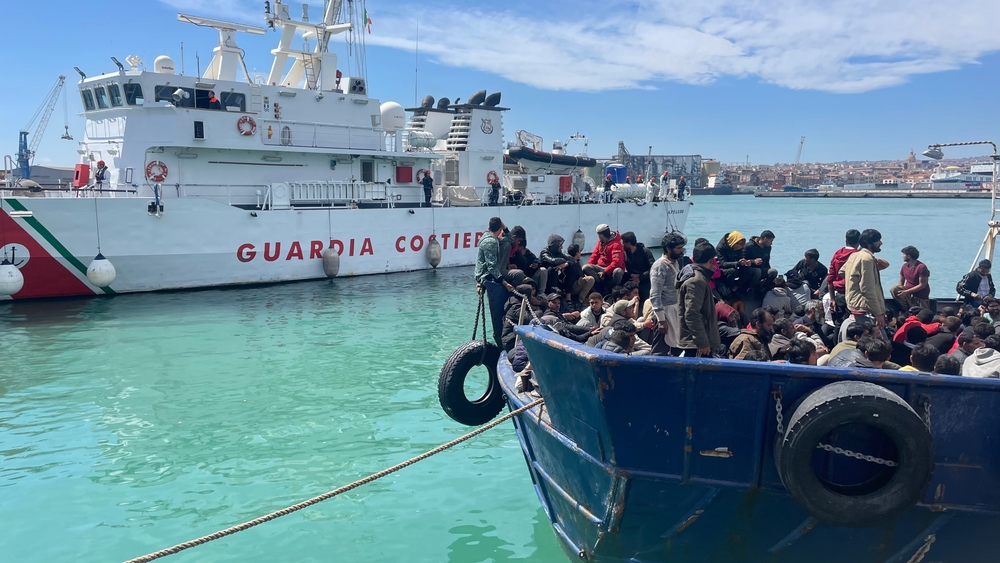
Astana (AsiaNews) – In June, the European Union approved new rules on migration, which provide for the creation of processing centres outside the EU’s borders. Several European media outlets have reported that Kazakhstan and Uzbekistan are also being considered as possible locations for these facilities, although both countries have so far denied the reports. The issue has nevertheless sparked much debate in Central Asia regarding the region’s role in European migration policies.
Europe is moving towards a stricter migration policy, against a backdrop of the rise of conservative parties and mass protests against the influx of migrants. The new regulation will speed up procedures for the removal of irregular migrants and allow EU Member States to establish ‘return centres’ outside the Union. The Council of the EU noted in a statement that such centres could serve both as final destinations and as transit hubs for the subsequent transfer of returnees to their country of origin or to another third country.
“With return centres, we are creating the conditions for Member States to find new solutions for the return of migrants. Naturally, this applies only to those who do not have the right to remain in the European Union,” said Magnus Brunner, European Commissioner for Home Affairs and Migration. Under current regulations, EU authorities can only return irregular migrants to their country of origin, or to a country with which they have demonstrated links, whereas under the new system this restriction will be removed.
EU officials have not officially disclosed the countries to which they intend to return irregular migrants, but European media report that they have already identified around ten countries for this purpose. Among these, according to the American news website Politico, which cites diplomatic sources, Kazakhstan and Uzbekistan could become EU partners for deportations. According to the publication, Brussels could offer these countries financial assistance and visa exemptions in exchange for the establishment of deportation centres on their territory.
The authorities in Tashkent and Astana were quick to deny these reports; the Uzbek Foreign Ministry stated that the information was false, whilst the Kazakh Foreign Ministry confirmed negotiations with the EU on visa facilitation, but not on the establishment of deportation centres. Subsequently, Eduards Stiprais, the European Union’s representative for Central Asia, also denied the rumours regarding the creation of deportation centres in Kazakhstan and Uzbekistan.
According to Ališer Ilkhamov, director of the London-based organisation Central Asia Due Diligence, the EU’s interest in the region with regard to deportations may be primarily linked to its geographical location. “ In Uzbekistan, they are likely counting on receiving a large number of Afghans, given that Afghanistan is the source of the largest influx of irregular migrants into Europe. As for Kazakhstan, it simply has a vast territory, so there are places where deportation centres can be set up.” Kazakhstan and Uzbekistan are considered the most stable countries in the region, capable of hosting migrants for a fairly long period of time.
According to Tolganai Umbetalieva, director of the Central Asian Foundation for the Development of Democracy, a decision by the governments to host the centres could provoke a critical public reaction: “In Kazakhstan, the local population is rather intolerant on this issue. If there were an influx from Afghanistan or, say, Syria, I think protests would most likely follow.” The migration issue is becoming increasingly complex, and Central Asia could nevertheless make a significant contribution to resolving it.

.png)
11/08/2017 20:05










