Milan (AsiaNews) - The prophetic voice of Jerusalem remains ever alive and relevant even in times of war “because amidst all this darkness there continue to be points of light, men and women who do not surrender to the logic of violence, revenge or hatred," affirms Br Francesco Ielpo, Custos of the Holy Land, speaking to AsiaNews ahead of Easter celebrations amidst closures and restrictions imposed due to the ongoing conflicts.
For from Gaza to Lebanon, from the West Bank to Iran, there are many fronts causing bloodshed across the region, particularly since 28 February with the Israeli and US attack on Iran, which has led to the closure of holy sites to the faithful and to last-minute changes to the celebrations. And prayer remains essential, because it reminds us that “true peace comes from above” and “helps to change hearts. And when people’s hearts change, history changes over time too,” emphasises the religious leader, whilst faint signs of a negotiated solution are emerging following the words of US President Donald Trump.
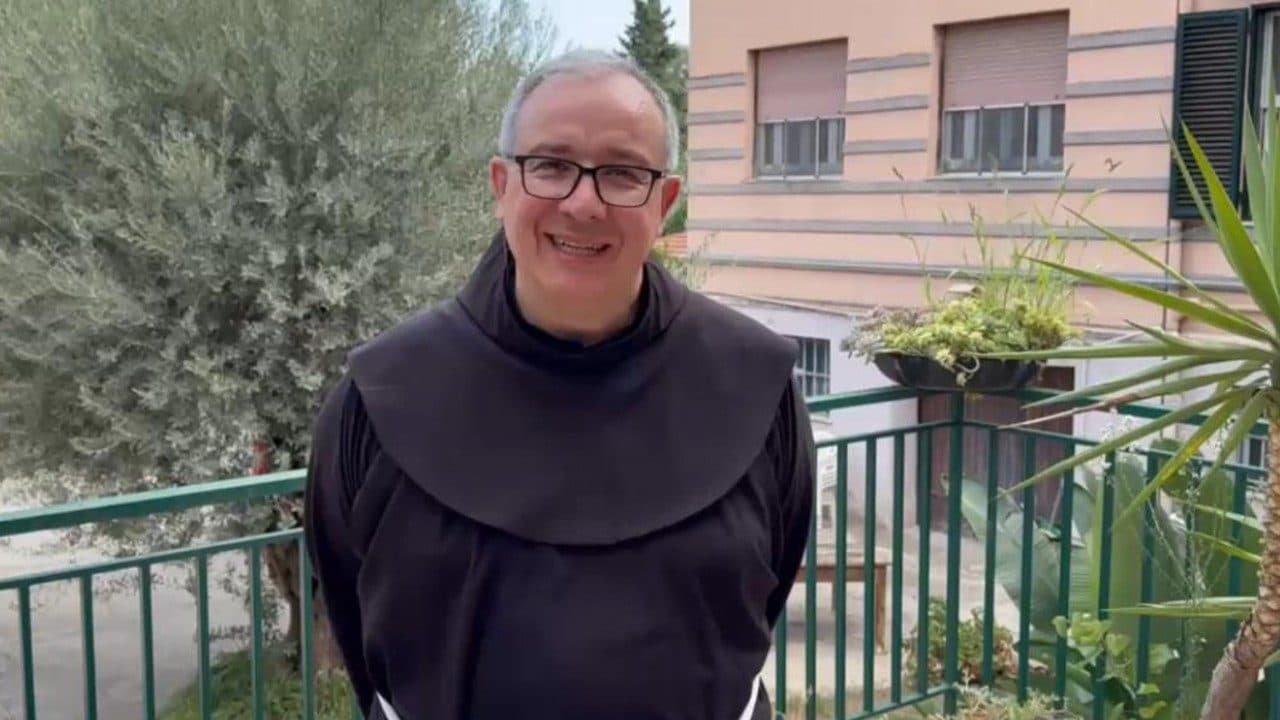
On 24 June, Pope Leo confirmed the election of the 55-year-old friar (born in the province of Potenza on 18 May 1970) as Custos of the Holy Land and Guardian of Mount Zion. Ordained a priest in 2000, he taught religion and served as Provincial Definitor of the Lombardy Province from 2007 to 2010. Since 2014, he has been a member of the Executive Council of the Pro Terra Sancta Association and, since 2022, president of the Holy Land Foundation. He succeeded Br. Francesco Patton, who, after nine years, concluded his mission. “The consequences of this latest conflict,” he says, “affect everyone. Nevertheless, Christians keep alive a great desire for hope, which is nourished by faith” and “is sustained by not feeling abandoned by Christians throughout the world” and by bearing “this latest cross” together.
Below is the full interview with the Custos of the Holy Land for AsiaNews:
Fra Ielpo, the Holy Land is preparing to celebrate Easter with the holy sites inaccessible to the faithful and without pilgrims. Patriarch Pizzaballa has announced closures and cancellations. What is the situation?
We are living in a time of war, and therefore in suffering. Today, Easter is a continuation of Good Friday, of the Passion. The atmosphere is characterised by uncertainty about the future. And also by weariness.
This is also because, in addition to the war with Iran, there is the Lebanese front; the conflict in Gaza is far from being resolved; and we are witnessing a spiral of violence by settlers in the West Bank. The fronts of tension are numerous and serious.
Yes, there are many hotspots. Our attention and concern are not focused on a single sphere or a single area. It is as if there were not a single area spared from violence, injustice and pain. A pain that is truly ever-present.
There has often been talk of Christian communities, describing them as ‘living stones’, a direct witness to the Church of the Holy Land. How are they experiencing this deeply dramatic phase and what are they asking for?
First of all, it must be said that the ‘living stones’ still have a great desire to remain in their land, to be able to live in peace, and to raise their children in a peaceful environment. Hence the widespread sense of weariness, because war generates truly intense tension and is certainly not the ideal environment in which to raise one’s children. The consequences of this latest conflict in the Middle East affect everyone, not just those directly involved, not just one side or a particular people. Nevertheless, Christians keep alive a great desire for hope, which is sustained by faith, nourished by tangible solidarity, by not feeling abandoned by Christians throughout the world. Together, we can bear this yet another cross.
How much does the war affect daily life, people’s livelihoods and, above all, Christians? Let us also consider young people, with the forced closure of educational institutions…
The first consequence [of the war] is that since 28 February schools have been closed and we have had distance learning, with all that this entails. Because not all families are in a position to manage this; not all families have the necessary resources, even simply due to having several children with limited resources. There are also repercussions on the economy, which, moreover, had already been severely tested by these years of conflict [in Gaza] and by the [Covid-19] pandemic beforehand. An economy, speaking specifically of Christians, which is based mainly on religious tourism and was showing tentative signs of recovery. Now a return to the abyss looms, with enormous consequences in terms of social life and participation. Finally, the suffering of not being able to fully participate in religious rites is evident: the restrictions are a source of fatigue, frustration and despondency. The consequences are felt on all fronts, starting with the psychological: it is hard to imagine a future.
It seems like a chain that is struggling to be broken: Covid, Gaza, Iran. The Custody has always paid close attention to its mission in schools and the educational sphere: how great is your concern for the younger generations?
For the Custody of the Holy Land, education certainly remains a priority, alongside the need to stand by the faithful. On 22 March, for example, I was in Bethlehem for the inauguration of a new gym, a new sports and leisure centre for the city’s young people. These too are small signs that help restore hope, starting from places that are not only educational but also spaces for gathering, where young people and, more generally, families can come together.
Why is it that in the Holy Land the Church does not merely safeguard places, but is also a voice of hope? Where can we find this prophetic element in today’s Jerusalem?
The prophecy remains true and concrete, because amidst all this darkness there continue to be points of light: men and women who do not succumb to the logic of violence, revenge or hatred. There is a living hope that springs from the witness, for example, of our Christian brothers and sisters in Gaza, when the Patriarch [Latin Patriarch Pierbattista Pizzaballa], after a visit, reports of people who assert with conviction that no poison flows in our blood, no hatred flows. Or when you see men and women who, despite everything, seek different ways of coming together. We have many experiences and testimonies that express this vision. Men and women who, despite their grief, are capable of reconciliation: one example above all is “Parents’ Circle” [which brings together Palestinian and Israeli families who have lost relatives due to the conflict, ed.] the most obvious, but we have many others. When you see people who refuse to give up, who do not stop at the logic of evil, who do not fall into the trap of hatred, resentment, bloodshed… all this is a prophetic source of hope!
Father, how important is it in this context to support the Holy Land collection on Good Friday?
The collection is a gesture that concerns all Christians worldwide and becomes a concrete expression of solidarity. It serves not only the Custody, but the entire Church of the Holy Land, enabling it to continue its work of outreach and direct aid. It supports parishes, schools, charitable works, healthcare centres, the upkeep of shrines, but also, quite simply, the maintenance of Christian activities. Thanks to the funds raised, it will be possible to continue guaranteeing a salary to thousands of families working for the Church and the Custody: this is essential, as it represents a concrete form of livelihood.
Returning to the causes for concern, there is the escalation of attacks by settlers in the West Bank, which also affect Christians, as is happening in Taybeh. And more often than not, this goes unreported…
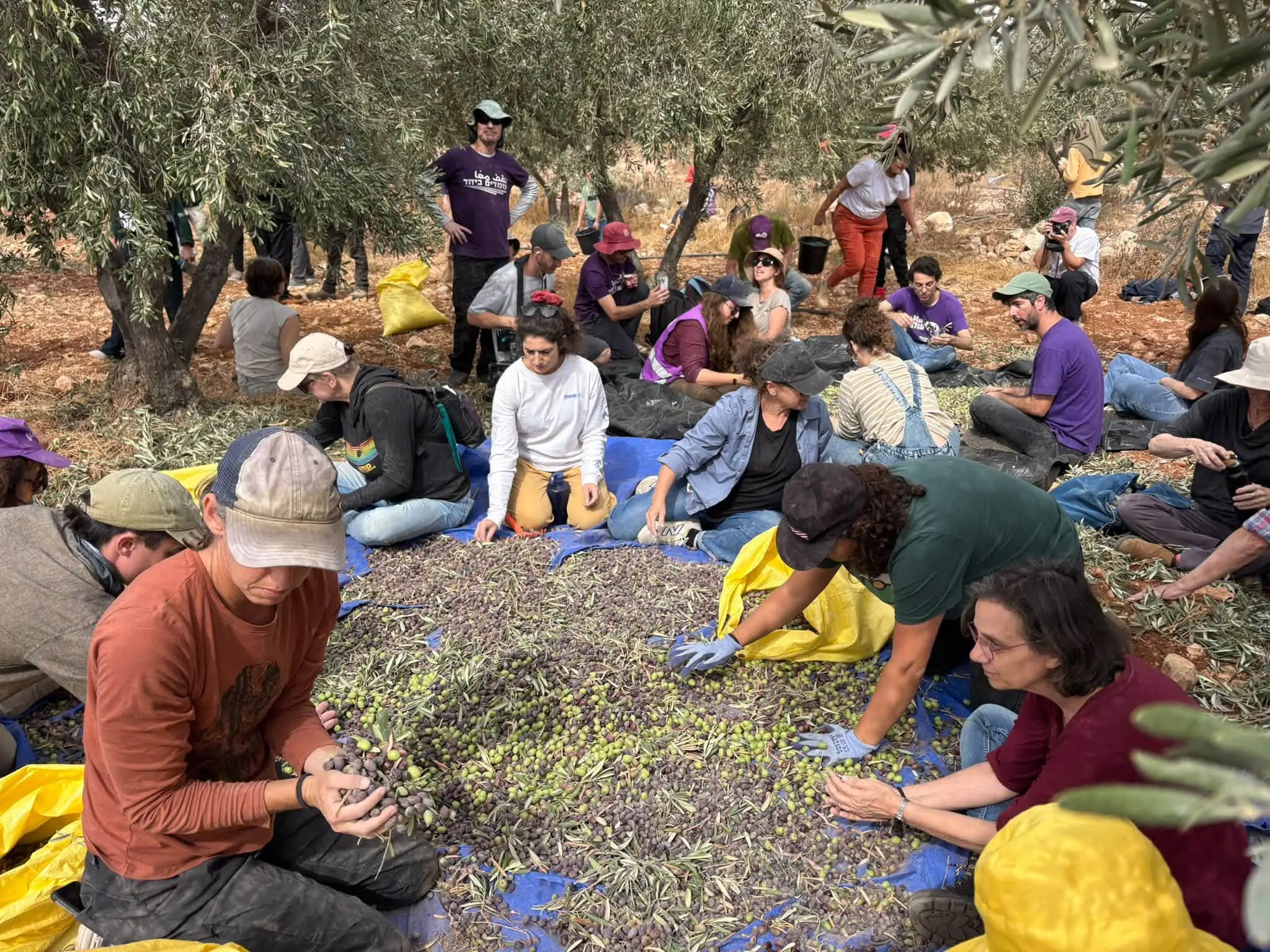
Exactly! This is currently one of the situations that worries me most, along with what is happening in southern Lebanon. I returned just yesterday [22 March, ed.] from this whirlwind trip, during which I visited our communities on the border. Then there is the West Bank, where the situation is alarming, especially given the silence surrounding the violence that is becoming increasingly brutal and senseless. We are witnessing truly serious acts against people – not just Christians – who simply wish to live in peace on their own land and through their own work.
E What can you tell us about your brief visit to southern Lebanon?
If I am to start with a positive aspect, first of all I saw a Church that sprang into action immediately. It is truly wonderful to see the Christian community, the various Catholic rites, at work to respond to this emergency. But I also saw hundreds of thousands of displaced people living in towns and villages. Almost 600 shelters have been set up, yet there are still many people who have no access to them, whilst the bombardments continue.
Fra Ielpo, in terms of dialogue and relations between faiths – particularly Jews, Christians and Muslims – what impact has this war had?
It is difficult to answer this question, because it is a sensitive issue. To build dialogue and coexistence, we must start from a lower level, from individual people, from the grassroots.
In recent weeks, you have repeatedly emphasised the value of prayer. Looking ahead to Easter, why is it important to pray, and with what intentions?
Prayer is important because it constantly reminds us of ‘Who’ is the true guide of history, and it also helps us to cope with this sense of powerlessness; for when faced with all this evil, the question that always springs to mind is: ‘What can we do?’. Sometimes we have no means, we do not know what to do, but prayer reminds us that true peace comes from above and, even when we do not realise it, it helps to change hearts. And when people’s hearts change, history changes over time too.
GATEWAY TO THE EAST IS THE ASIANEWS NEWSLETTER DEDICATED TO THE MIDDLE EAST. WOULD YOU LIKE TO RECEIVE IT EVERY TUESDAY? TO SUBSCRIBE, CLICK HERE.