








Cyber Slavery: Pope Leo speaks out against the scourge of scam centres
In his message for the World Day of Prayer and Awareness against Human Trafficking, the pontiff drew attention to the victims of online scams forced to work in Southeast Asian compounds, where thousands of migrants have been lured with false job offers, held against their will, and forced to commit online fraud. In Cambodia, the billion-dollar business also involves political leaders, while the victims, even if they are freed, are often unable to return home.
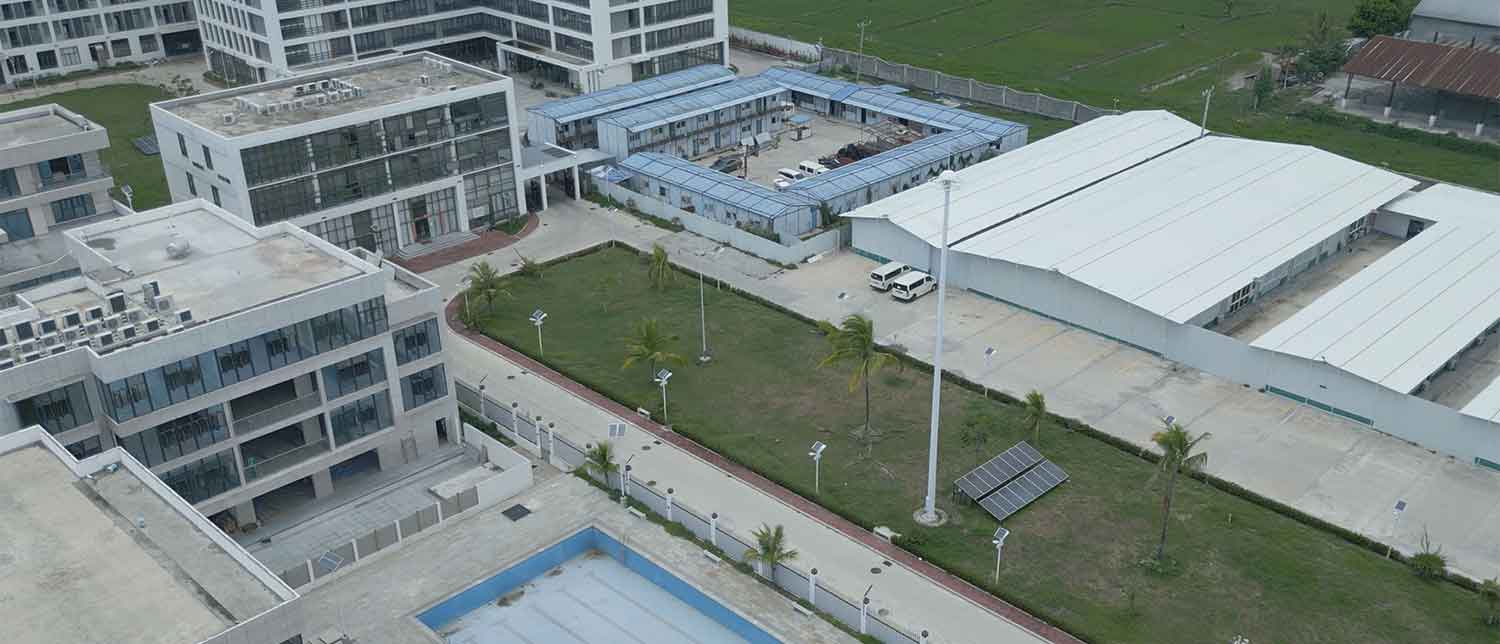
Milan (AsiaNews) – Pope Leo XIV remembered the victims of cyber slavery in his message for the World Day of Prayer and Awareness against Human Trafficking.
“Geopolitical instability and armed conflicts create fertile ground for traffickers to exploit the most vulnerable, especially displaced persons, migrants and refugees,” the pontiff said.
“This phenomenon is particularly disturbing in the rise of so-called ‘cyber slavery,’ whereby individuals are lured into fraudulent schemes and criminal activities, such as online fraud and drug smuggling.
“In such cases, the victim is coerced into assuming the role of perpetrator, exacerbating their spiritual wounds. These forms of violence are not isolated incidents, but symptoms of a culture that has forgotten how to love as Christ loves.”
Online scam centres began to proliferate in Southeast Asia in 2018, after China made all forms of online gambling a criminal offence.
It is no coincidence that those behind online scams are often Chinese tycoons who took out Cambodian or Thai citizenship, while the victims are mostly migrants from China or developing countries, lured by fake job offers, brought to Myanmar, Cambodia, Laos, and Thailand, where they are taken to large compounds, often small self-contained fortresses.
Some people might join the business voluntarily, hoping to make large profits quickly (in this case, mostly young unemployed Chinese), but in most cases, those working in scam centres are not free to leave, since they have their passports confiscated.
Victims are forced to engage in online fraud known as "pig butchering", whereby the scammer attempts to establish a relationship (often romantic) with a victim until they obtain money.
Those who refuse to work or attempt to escape are tortured. In some cases, the violence has led to the death of trafficked persons, like South Korean student Park Min-ho, just 22 years old, found dead in August 2025.
It is estimated that US citizens have lost US$ 16 to US$ 17 billion in 2024 alone to online fraud. Thais were also defrauded of more than US$ 17 billion, approximately 3.4 per cent of Thailand’s GDP.
In recent months, the United States, China (from where a significant number of trafficked persons originate), and South Korea have put more pressure on Cambodia, where these activities often involve members of the country’s business elite and top government officials.
Although many centres have been dismantled (Thailand even struck some during border clashes), the problem persists.
In Cambodia, revenues from online scams exceed US$ 12.5 billion, almost half of the country’s GDP.
After several years, Cambodian authorities acknowledged the problem and launched a crackdown, but it is hard to imagine how it can disappear completely. In fact, like in Myanmar, scam centres shut down only to reopen not far away.
A freelance Cambodian journalist, Dara Mech, recently visited Koh Kong province, in the southwestern part of the country, where several resorts operated as scam centres owned by Ly Yong Phat, a Cambodian senator of Chinese origin involved in various commercial activities and under US sanctions.
With the closure of a local scam centre, many residents also fear losing their jobs.
A 20-year-old man, for example, spoke of the presence of migrants from China, Vietnam, Laos, and Myanmar for whom he prepared 50 kg of food a day. Now, demand is down to 10 kg.
Tuk-tuk drivers have also reported the loss of customers, and many fear arrest for giving rides to people working in the compounds due to a new Cambodian law that criminalises anyone who hosts undocumented people.
According to a United Nations estimate, 100,000 to 150,000 people have been trafficked to work in scam centres in Cambodia alone.
Furthermore, those who are released are not always able to return to their countries of origin, so they often continue to live in Cambodia hiding from the police.
This is especially the case for Chinese nationals, who avoid contacting their embassy because they risk being imprisoned.
"When you stand next to these Chinese, you feel sorry for them. They were sold from one place to another, and some were tortured. Some died and were thrown away like dogs," one person explained anonymously.
Early last year, following the kidnapping of a Chinese actor in Thailand that caused a stir in China, approximately a thousand Chinese were freed from compounds along the Thai-Myanmar border. They subsequently went missing after returning home.
More recently, China has executed members of several families active in the Kokang region of Myanmar, a notorious trafficking hub.

.png)
26/02/2025 20:17
04/04/2022 15:04
12/07/2024 18:11










