








Ecumenical and international: Orthodox university opens at the site of Jesus’s baptism
Inaugurated recently in Jordan, the establishment is not just an academic initiative but a project that combines education, interreligious dialogue, and the development of spiritual heritage. The goal is to make Al-Maghtas a centre for study and reflection on early Christianity, where history, theology, and culture intertwine. This vision looks to 2030, when the two-thousandth anniversary of Jesus’s baptism will be celebrated at the site.
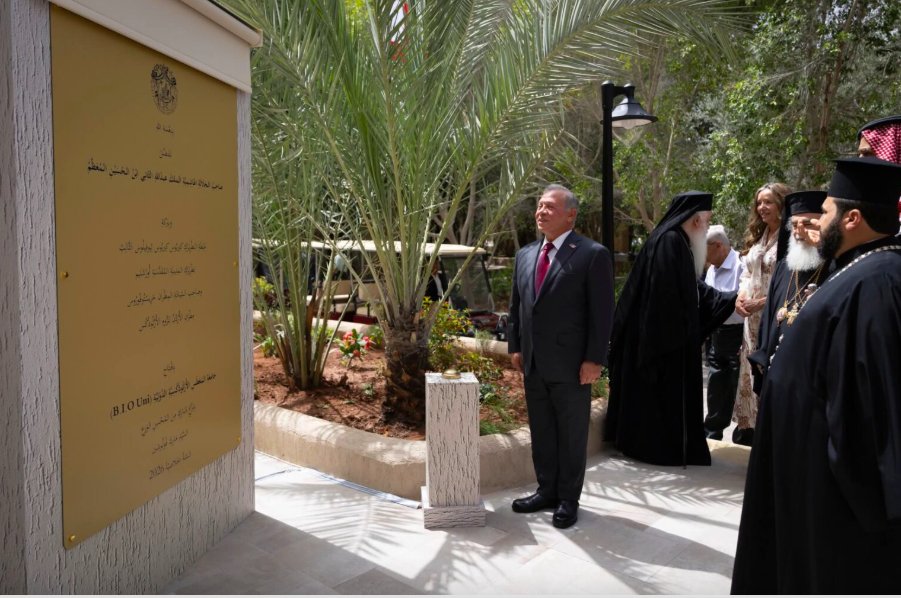
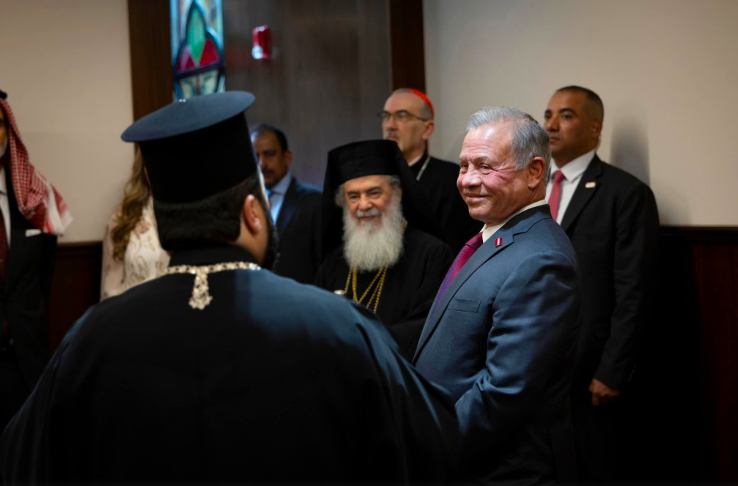
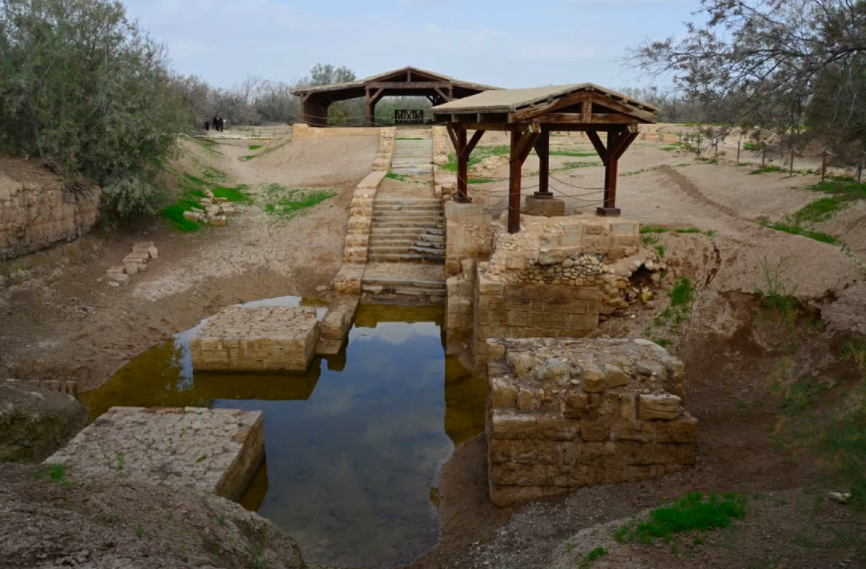
Milan (AsiaNews) – Jordan’s King Abdullah II on 18 May inaugurated the campus of the Baptism Site International Orthodox University (BIO Uni) at the site of the Baptism in Bethany-Beyond-the-Jordan (al-Maghtas, in Arabic). Established by the Greek Orthodox Patriarchate of Jerusalem, the non-profit cultural institution is funded by the Russian billionaire and philanthropist Mark Voloshin.
The event, with strong symbolic and political as well as religious significance, is part of a broader strategy adopted by the Hashemite Kingdom, looking forward to 2030 to mark the bimillenary of the Baptism of Christ.
The Jordanian government intends to support the initiative and develop an integrated plan for infrastructure and services for the place, with the aim of promoting Christian pilgrimage.
In addition to the king, the opening ceremony was attended by Prince Ghazi bin Muhammad, Princess Maryam Ghazi, Jordanian Prime Minister Jaafar Hassan, various ministers and officials, as well as the heads of the Churches of Jordan and Palestine.
BIO Uni will accommodate around 40 resident students, who will begin lessons next September.
Created with a decidedly international and ecumenical vocation, not merely as an academic project, it reflects a vision that brings together education, interreligious dialogue, and the development of the region's spiritual heritage.
As clearly noted in the inaugural ceremony, the campus wants to be a centre for study and reflection on early Christianity and the theological and historical significance of the Baptism of Christ.
Bethany Beyond the Jordan was inscribed on the UNESCO World Heritage List in 2015. Over the past decades, various archaeological digs have uncovered the remains of churches dating back to the late 5th and early 6th centuries, plus chapels, hermit caves, and a baptistery.
Three popes have made pilgrimages here: John Paul II, Benedict XVI, and Francis.
During his visit on 10 May 2009, Benedict XVI, after blessing the laying of the cornerstone of two new Latin and Melkite Catholic churches to be built near al-Maghats, emphasised the uniqueness of this place.
“Near here, facing Jericho, the waters of the Jordan opened before Elijah who was taken up by the Lord in a chariot of fire. Here the Spirit of the Lord called John the son of Zechariah to preach a conversion of hearts.”
When he visited the Jordan on 24 May 2014, Francis noted that at the place where he was baptised, Christ “stooped down to us and by his love he restored our dignity and brought us salvation.”
Francis also mentioned the tragedies and wounds of the Middle East, caused by still active wars. “I think particularly of our beloved Syria,” he said, “rent by nearly three years of civil strife which has led to countless deaths and forced millions to flee and seek exile in other countries.”
BIO Uni’s founding in today's Middle East, increasingly torn by strife and conflict, is intended to be an ecumenical sign of peace and sharing among the various Christian Churches; not just an educational institution, but a cultural and spiritual hub rooted in one of the most symbolic places in Christianity.
As already mentioned, the project is linked to the 2030 initiative for the second millennium of the Baptism of Christ, which aims to turn the anniversary into a global event and encourage pilgrimage, study, and dialogue.
The main ecclesiastical authorities present at the ceremony (from the Greek Orthodox Patriarchate of Jerusalem to representatives of the Anglican and Latin Churches) emphasised the value of the event as an opportunity for unity among Christian denominations.
Card Pierbattista Pizzaballa, Latin Patriarch of Jerusalem, noted that 2030 represents not only a historical anniversary, but also an opportunity to reaffirm the values of peace and reconciliation.
Likewise, Anglican Archbishop Hossam Naoum of Jerusalem emphasised the need to build international cooperation networks to make the site fully accessible and spiritually vibrant.
For his part, Orthodox Patriarch of Jerusalem Theophilos III delivered a message strongly focused on peace and Christian unity.
In his address, he noted the unique spiritual value of the baptismal site, emphasising that it is not merely a historic or archaeological site, but also a living sign of faith and hope for the entire region.
The Orthodox patriarch issued a call for reconciliation, praying that the Holy Land may finally find stability and peace after years of tensions and conflict. He also highlighted the importance of collaboration between the various Christian Churches in the Middle East, urging them to overcome divisions to bear witness to the Gospel message together.
The Kingdom of Jordan plays a leading role in protecting the Holy Places (both Muslim and Christian) and promoting religious coexistence in the Middle East.
The local Churches, along with the various institutions associated with them (schools, hospitals, universities, welfare agencies) play a key role in this process, contributing to the construction of a more cohesive social fabric.
BIO Uni’s inauguration is part of this process, and serves as a point of convergence for a broader strategy that unites education, faith, and development.
Al-Maghtas, the Baptism (or Immersion), thus becomes a place of memory and a laboratory for the future, where history, theology, and culture intertwine in a long-term vision that looks to 2030 as a goal capable of sowing hope.

.png)
10/01/2025 19:28
06/05/2022 15:03










