








Father Nasr: Israel's war risks tearing Lebanon’s mosaic apart
The secretary general of Catholic schools spoke to AsiaNews about the climate of fear and mourning in his country a day after Israeli’s devastating attack. “We have never experienced anything so strong, serious, and sudden,” he said, speaking on the eve of peace talks in Pakistan. Meanwhile, he remains committed to keeping teaching alive, online and in person.
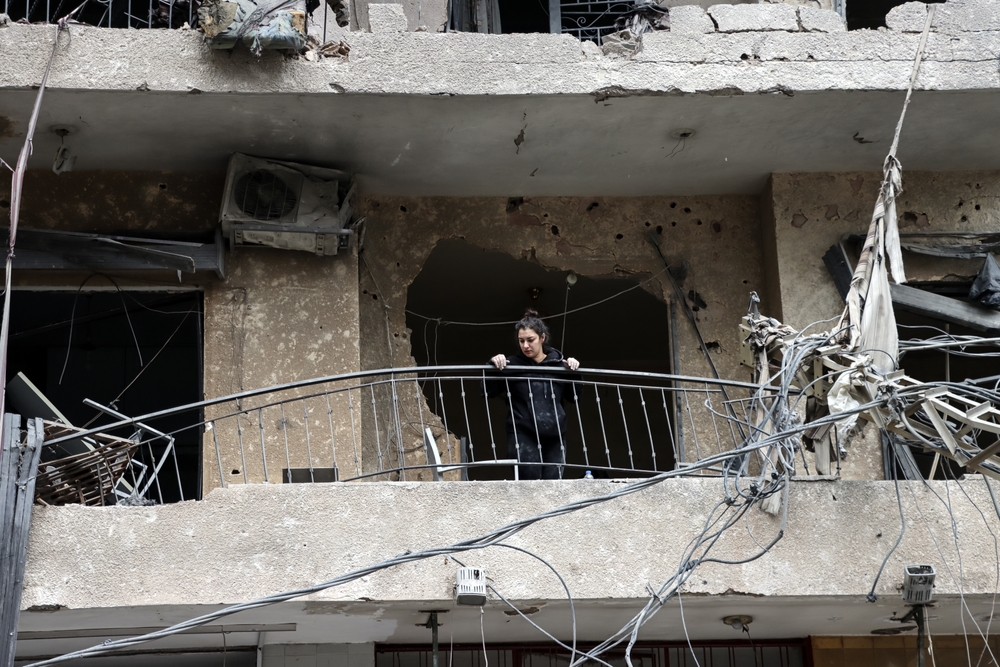
Milan (AsiaNews) – Father Youssef Nasr, secretary general of Catholic schools in Lebanon, spoke to AsiaNews about yesterday’s Israel’s devastating attack against the country, resulting in a tragic toll: hundreds of deaths, over a thousand injured, and more than a hundred sites and targets hit.
“Do you know what the greatest fear is linked to the war launched by Israel against Hezbollah in Lebanon, which is also affecting the civilian population?” That it could tear society apart, that something could happen among the Lebanese as well, that this conflict could, in some way, also shatter the so-called Lebanese mosaic. This is an extremely important point for us,” Father Nasr said.
“The scale surprised us,” he noted, “because we have never experienced anything so strong, serious, and sudden. It was impossible to leave Beirut; these were very difficult hours. Today we are experiencing a day of mourning; the situation is better than yesterday, and no heavy bombing has been reported.”
“People are gripped by great fear, really great fear,” Father Nasr stressed, “a fear fuelled by the fact that the attack came without warning. Now we wait to see and understand what will happen in the coming days," both in the country and internationally with the peace talks between the United States and Iran.
"Today, more than ever, the key issue is understanding how to preserve and protect the unity of Lebanese society, the fabric of Lebanon, because it is a very important element. The war has consequences on various levels, starting with the political and social, but economically as well for a country that had just partially emerged from a serious crisis. The hope is that the conflict, which certainly did not spare Christians, especially in the south, will end quickly and well."
Yesterday, Israel conducted large-scale bombings in a matter of minutes across many Lebanese regions and several neighbourhoods in Beirut. Further attacks followed in the capital, particularly in the southern suburbs, as well as in the south of the country and the Bekaa Valley.
These devastating raids dashed any optimism surrounding the 14-day truce and peace talks reached a few hours earlier by the United States and Iran, who are expected to begin peace negotiations in Islamabad tomorrow, mediated by Pakistan (and China).
According to the Ministry of Health, at least 182 people were killed yesterday alone (including four soldiers), but the Civil Protection Department's death toll is far higher with 254 deaths; a true bloodbath by Israel, prompting government authorities to declare today a "national day of mourning”.
Today, Prime Minister Nawaf Salam, a Sunni, met with Nabih Berry, a Shia, and the speaker of Parliament, to discuss the attacks and provide a "joint response" by Lebanese leaders regarding the planned negotiations between the United States and Iran.
The prime minister said that he was working on “stopping the Israeli war machine”. Previously, he had spoken with President Joseph Aoun, a Maronite Christian, at a time of serious crisis for a country that, more than any other, is paying the price in human lives and devastation from the new conflict that erupted in the Middle East.
In recent hours, the president received a commitment from the Emir of Qatar, Tamim bin Hamad Al Thani, to include Lebanon in the ceasefire agreement, in addition to expressing condolences for the victims and solidarity for the devastating attacks.
The latest death toll since 2 March, when Israel began its military operations in Lebanon following the conflict it launched against Iran, stands at 1,739, largely civilians.
More deaths were reported today in Lebanon due to Israeli air strikes. In addition to the civilian population killed, at least 17 in the south, Israeli fighter jets reportedly hit and killed Ali Youssef Kharshi, personal advisor and nephew of Hezbollah Secretary General Naim Qassem.
Israeli Prime Minister Benyamin Netanyahu made the announcement, claiming responsibility for the targeted attacks on “a series of terror infrastructures in southern Lebanon: crossings used to transfer thousands of weapons, rockets, and launchers, as well as weapons depots, launchers, and Hezbollah headquarters”.
Israel also reported the launch of dozens of rockets from southern Lebanon into the north of the country, but no casualties or material damage to infrastructure.
Attention is now turning to Pakistan, where peace talks between Washington and Tehran are expected to begin tomorrow, although serious doubts remain about the stability of the fragile and shaky truce.
"Iran says Lebanon is included in the ceasefire," Father Nasr said, “while the United States and Israel say no. The vision is unclear, so we await developments in the coming days. We are in a phase of fear and uncertainty, but we remain hopeful that it will end quickly."
The priest reserves a final thought for schools, a sector he knows well from his role as secretary general and former coordinator of all the country's private institutions.
“Throughout this time, we have tried to continue teaching in Lebanon in various ways: in person in the north and in the central areas of Mount Lebanon, and online with remote learning in the south and the Bekaa,” he said.
“All schools are doing their duty and it is very important for us to ensure continuity in teaching.” This “requires great effort, but remains a priority” for the future of the country.

.png)










