








Following Trump's comments, Lai reiterates that ‘Taiwan will not be sacrificed or traded’
Taiwanese President Lai Ching-te responded to US President Donald Trump's statement that he is “not looking to have somebody go independent”, made after the summit with Xi Jinping in Beijing. Concerns are growing in Taiwan about Washington’s possible "transactional" approach, with Beijing leveraging these concerns to promote political reunification.
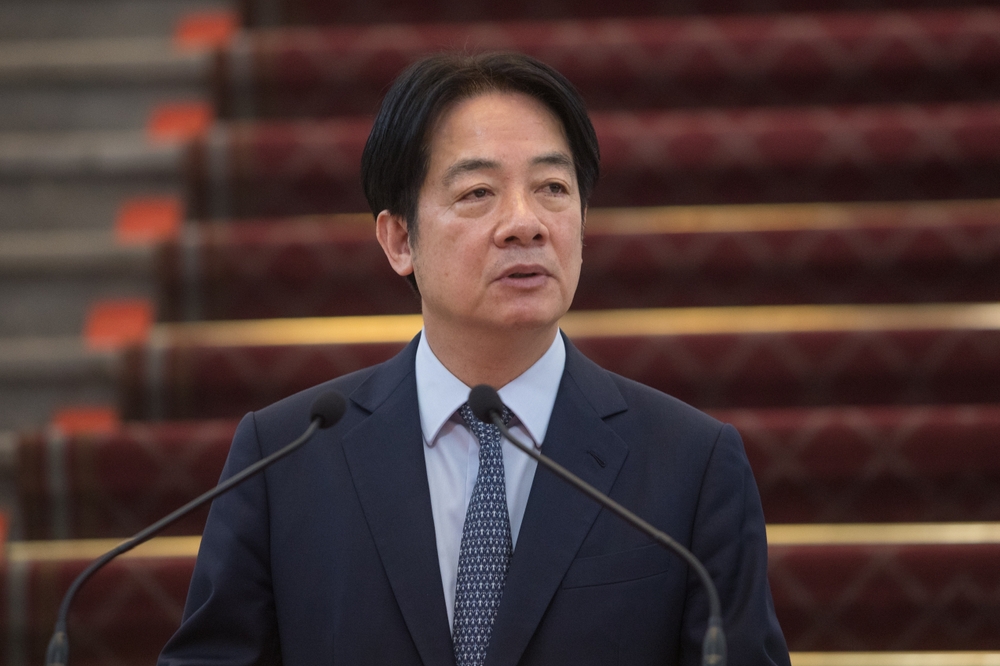
Taipei (AsiaNews) – Taiwan will not provoke any conflict, but, at the same time, will not give up its sovereignty, Taiwanese President Lai Ching-te said after US President Donald Trump's statements following his meeting with his Chinese counterpart Xi Jinping in Beijing.
For China, Taiwan remains "the most important issue" in bilateral relations with the United States, Xi said, while Trump, who avoided mentioning the island during the summit, later told Fox News that he is “not looking to have somebody go independent.”
US Secretary of State Marco Rubio later intervened to save the situation, stating that US policy on the island had not changed. Trump himself later added that no specific commitments had been made one way or the other towards Beijing.
In a post on Facebook after the summit, Lai reiterated his government's position. “Taiwan, the Republic of China, is a sovereign and independent democratic country," he wrote, adding that “there is no 'Taiwan independence' issue" in the way mainland China puts it.
The Taiwanese leader was emphatic that the island's future “must follow the will of all the Taiwanese people.” Nevertheless, he stressed the need to avoid escalation. “Taiwan will not provoke, will not escalate conflict, but will not under pressure give up national sovereignty and dignity, as well as the democratic and free way of life,” he wrote.
His government, he added, remains in favour of maintaining the status quo in the Strait and a dialogue with Beijing based on the principles of “equality and dignity”, rejecting any form of coercion.
Despite Trump's statement, the United States remains the island's main arms supplier under the Taiwan Relations Act. In December, Washington approved arms sales worth approximately US$ 11 billion, one of the largest in recent years, sparking protests from Beijing.
Yet, as Trump’s transactional approach rules US policy, many in Taiwan fear that the island's fate could be decided by a trade agreement. In light of this, Lai noted in his statement that "Taiwan will not be sacrificed or traded.”
In February, the Trump administration tied tariffs on semiconductor-related imports to the level of Taiwanese investment in the United States, seeking to bring semiconductor production back home. For Taiwan, this vision represents a threat to the “silicon shield” on which it had hitherto relied.
What is more, the US has asked Taiwan to increase its defence spending up to 10 per cent of GDP, resulting in a growing perception among Taiwanese that the United States cannot be trusted.
All these factors play into Xi Jinping's hands, who has intensified pressure, especially diplomatically, on Taiwan.
Last month, Cheng Li-wun, the leader of Taiwan’s Kuomintang party, which is much more pro-China than Lai's Democratic Progressive Party, visited China, during which she emphasised the island's ties to the mainland, suggesting that Taiwanese identity could be reintegrated into the “Chinese nation”.
Several analysts believe that Cheng also wants to avoid irritating Beijing while seeking greater support among the Taiwanese ahead of the upcoming presidential elections in 2028, when she will directly challenge Lai.
Lai, on the other hand, faces not only threats from China but also a sluggish economy (except sectors linked to chip manufacturing and artificial intelligence), rising housing costs, and stagnant wages.
Thus, nearly two years after his election, uncertainty prevails. The opposition continues to control the Legislative Yuan (Taiwan’s parliament) and recently slashed the government’s proposed special rearmament budget by more than a third.
For its part, Beijing continues to do everything it can to discredit Lai. Last week, the Global Times, the mouthpiece of the Communist Party of China, took advantage of Trump's statements, and wrote: “Taiwan independence forces are increasingly being left behind” and “increasingly resemble a shoe that could be kicked off at any moment”.

.png)
09/04/2026 20:11










