





-65511.html&is_video=&description=From+drones+to+an+Islamic+NATO%2C+Turkish+activism+is+stirring+up+trouble+in+the+Gulf+%28and+Israel%29)


From drones to an Islamic NATO, Turkish activism is stirring up trouble in the Gulf (and Israel)
The axis between Israel (and the US), the United Arab Emirates, and India is being countered by a bloc that includes Turkey, Saudi Arabia, and Pakistan. Turkey is refocusing on the idea of an alliance of Muslim countries to minimise “dependence on outside the region.” At home, the row over the leadership of the main opposition party has reopened wounds that had never healed.
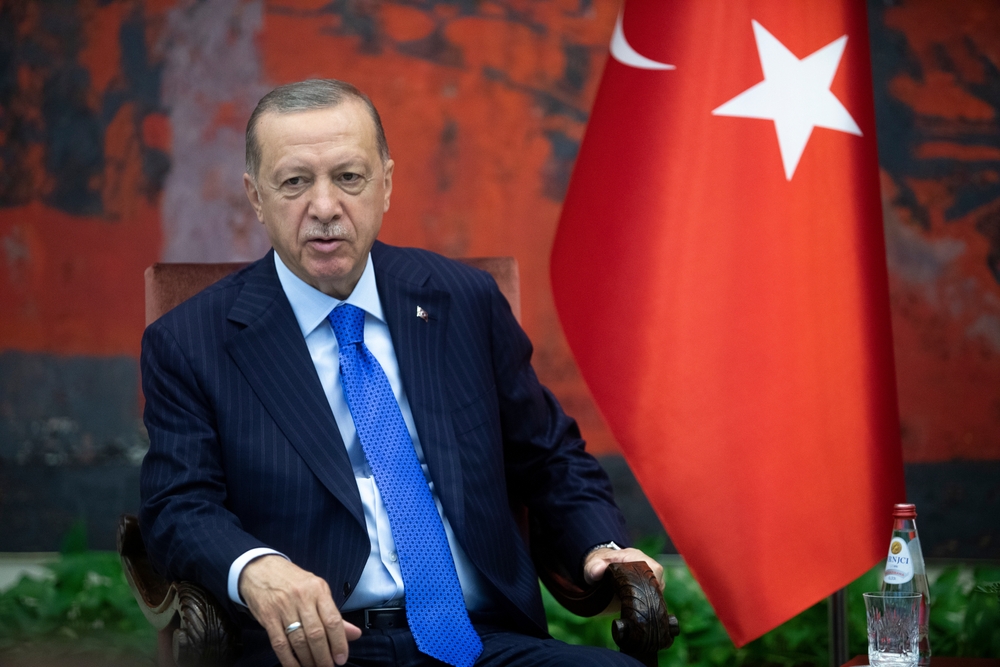
Milan (AsiaNews) – Saudi Arabia, Pakistan, and Turkey are consolidating their ties in an alliance that is committed to countering Iranian attacks, but also emerging as the main rival for regional hegemony against the axis formed by Israel, the United States, the United Arab Emirates (UAE), and India.
The extant power struggle between the two blocs reflects the decades-old rivalry between Saudi Arabia and the UAE, part of a broader conflict of interests and alliances that stretches from the eastern shores of the Mediterranean to the turbulent waters of the Indian Ocean, involving India and Pakistan, two rival nuclear powers.
In this context, Turkey and its president, Recep Tayyip Erdoğan, intend to play a greater role on the Middle Eastern and global stage in the name of a common Muslim alliance (see Pakistan’s idea of an Islamic NATO).
The recent visit by Turkish Foreign Minister Hakan Fidan to Qatar, until now Turkey’s main ally in the region, for high-level discussions on the war against Iran, with its repercussions in the Gulf, and on efforts to ensure safe navigation in the Strait of Hormuz.
Over the past few months, Ankara has called for an end to the war, and condemned attacks on Iran, but, in an awkward attempt to find a balance between regional stability, diplomacy, and domestic challenges, it has also criticised Tehran for firing missiles and drones at Gulf states.
At home, a court on 21 May removed Özgür Özel as leader of the main opposition party, the Republican People's Party (CHP), who had assumed office in 2023, ruling that the post be given to Kemal Kılıçdaroğlu, a controversial figure.
Over the past two years, the CHP, which is in a virtual statistical dead heat in popular support with the president’s Justice and Development Party (AKP), has faced an unprecedented crackdown.
Erdoğan's main rival, Istanbul Mayor Ekrem Imamoğlu, is languishing in prison and faces decades in prison, along with hundreds of party officials and members, raising doubts about Turkey’s democracy.
Yesterday, riot police fired tear gas outside the CHP headquarters, forcing a blockade by activists and party members opposed to the court’s ruling and determined to defend Özel's leadership.
A Turkish "umbrella" for the Gulf
At a time when the United States and US companies face supply problems in weaponry, Gulf and Arab nations are increasingly looking to Turkey to build up their own military.
Despite robust air defence systems, which remain effective against ballistic missiles, Kuwait, the UAE, Qatar, and Saudi Arabia are facing ammunition shortages at a time of growing threats.
Since Iran’s long-range drones have managed to destroy several radar systems, the other countries in the region have sought to boost ties with Turkey and Turkish companies, signing numerous contracts.
“The Gulf nations are on a buying spree,” a person familiar with the Gulf told Middle East Eye, and “are even enquiring about systems already in use by military forces in the region”. In fact, “There is even an interest from Oman, which is traditionally neutral.”
This was evident at Saha EXPO 2026, the Turkish defence and airspace exhibition, where Gulf and Arab countries like Iraq were among the most interested.
The Kuwaiti Defence Minister Sheikh Abdullah Ali Abdullah Al Sabah signed an intra-governmental sales protocol with major Turkish companies, including Aselsan, Havelsan, the Baykar drone manufacturer, Otokar armoured vehicles, and Yonca Shipyard.
Of particular interest are Baykar's medium-altitude, long-endurance Akinci drones, as well as the Hisar air defence systems designed for short- and medium-altitude threats and laser-guided anti-drone systems for mounting on small trucks.
One area where Turkey is developing new projects is ballistic missile interception. Although it has several systems under development, including the Siper long-range missile defence system, another four to five years are needed to effectively adapt them to threats in the Gulf.
A Turkish defence industry insider added that countries in the region are interested in future systems because alternatives, like the US Patriot and THAAD, including ammunition, have years-long backlogs in delivery.
Diplomacy and encirclement
Regarding foreign policy, Turkey has recently welcomed a significant number of diplomats and foreign officials, an unusual occurrence that confirms its growing international activism.
First, Kuwaiti Foreign Minister Jarrah Jaber Al-Ahmad Al-Sabah, met with his Turkish counterpart, Hakan Fidan, in Ankara for discussions on the Iranian conflict, the disruptions in the Strait of Hormuz, and bilateral ties.
Next came Saudi Arabia's Prince Faisal bin Farhan, who flew to the Turkish capital to attend the third meeting of the Turkish-Saudi Coordination Council to discuss defence, energy, and finance.
Erdoğan and his Algerian counterpart, President Abdelmadjid Tebboune, oversaw cooperation agreements in finance, agriculture, transportation, telecommunications, disaster management, and media.
It is should be noted that all three visitors came from countries with turbulent relations with the UAE, albeit for different reasons.
All this seems to confirm Turkey's alignment against the UAE, although the UAE Vice President Sheikh Mansour bin Zayed Al Nahyan made a surprise visit to Istanbul in a delicate diplomatic and trade balancing act between the two sides.
Analysts note that Turkey fears encirclement, starting with its old rival Greece, which has been forging closer ties with Israel. The Greek government appears increasingly focused on the Gulf countries and India to boost its position in an unstable geopolitical environment.
The encirclement theory is not new. Foreign Minister Fidan had already alluded to it in the past, citing “areas of alliance” against Turkey.
In April, the minister said that “the issue of the triad, Greece, the 'Greek Cypriot Administration' and Israel, which are involved, or give the impression that they are involved, in an operation aimed at encircling Turkey in the Eastern Mediterranean, is an issue that is under our close monitoring.”
Ankara's concern stems from the arc of cooperation that Greece is building with the help of the US and Israel. Analysts note a bridge from Athens to India, crossing the Gulf and the Jewish state, with the fundamental support of Washington, which favours the axis.
At the same time, Ankara sees this development (mistakenly, perhaps) as a hostile act of encirclement and a direct attack, primarily from Israel, which seeks to undermine Turkish diplomatic influence to better control, if not dominate, the Middle East.
This rivalry between Turkey and Israel also seems to justify the Greek government's strategic cooperation with the Jewish state, whose policies in the region it has never condemned or criticised.
An Islamic NATO
One response to the alliance challenge, reiterated by Pakistani Defence Minister Khawaja Asif but previously advocated by Turkey itself, is an “Islamic NATO”, modelled after the North Atlantic Alliance currently in the crosshairs of US President Donald Trump.
In an interview with Hum News, Asif opened the door to Qatar's entry into a bloc that already includes Saudi Arabia and Pakistan, with advanced talks underway with Turkey.
This cross-border link from Ankara to Islamabad, passing through Riyadh and Doha, would be, according to the minister, the way to minimise “dependence on outside the region.”
This initiative took its first steps in September, in response to Israel's missile attacks against Hamas targets in Qatar, which revealed "structural vulnerabilities" among the Muslim-majority states in the Gulf and the lack of a coordinated security mechanism.
In response to the strikes, high-level discussions began between Saudi Arabia, Pakistan, and Turkey on establishing a joint defence pact. This led to the Riyadh-Islamabad alliance signed last year, which largely mirrors NATO's Article 5, which stipulates that aggression against a signatory would trigger a collective response.
Saudi Arabia wants to leverage Pakistan's nuclear umbrella and substantial military expertise, while Pakistan gains greater strategic influence in the Gulf and strengthened defence ties with a major economic power.
In early 2026, Bloomberg reported, Turkey had actively sought membership, providing the alliance with one of the largest standing armies in the Muslim world, as well as access to critical sea lanes in the Middle East and the Eastern Mediterranean, and advanced defence technology.
Globally, an Islamic NATO introduces new complexities into strategic calculations. With Pakistan's nuclear capability and Turkey's military might, the bloc could alter deterrence paradigms, forcing traditional powers to reevaluate their intervention strategies and alliances.

.png)
04/09/2008










