








In Goa, the São João festival blends devotion and folklore
Across the Indian state, thousands of people took part in the celebrations, diving into wells, ponds and watercourses in a symbolic ritual that recalls the biblical episode in which St John the Baptist leapt for joy in the womb of his mother, Elizabeth. A festival deeply cherished by the Catholic community, it coincides with the start of the monsoon season.
Goa (AsiaNews) – On 24 June, Catholic communities in the coastal state of Goa celebrated São João, the traditional feast of St John the Baptist, one of the region’s most cherished religious and cultural events. The festival, which coincides with the monsoon season, combines religious devotion, local folklore and a sense of community.
Despite the heavy rain, thousands of people took part in the celebrations, diving into wells, ponds and streams in a symbolic ritual that recalls the biblical episode in which St John the Baptist leapt for joy in the womb of his mother Elizabeth upon the visit of the Virgin Mary. In Campal, near the capital Panaji, young and old gathered around a decorated well to re-enact this centuries-old tradition.
From the early hours of the morning, Goa’s villages and streets were filled with colour thanks to the traditional kopels, handcrafted wreaths made from wild flowers, leaves and fruits typical of the monsoon season.
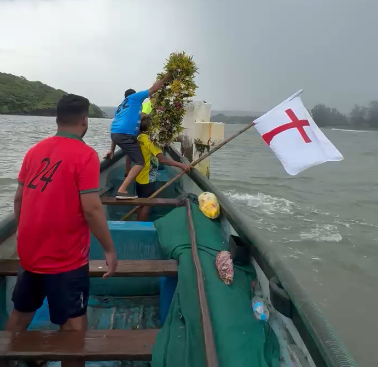
In the village of Siolim, in the north of the state, one of the day’s most eagerly awaited events took place: the spectacular river parade. Decorated rafts and boats paraded along the River Anjuna, accompanied by local musicians performing traditional Konkani songs (mandos) using traditional instruments such as the ghumot and the kansallem. A grand river procession took place in front of St Anthony’s Church, drawing in residents and visitors alike.
In addition to the public celebrations, São João holds great significance for families. According to local custom, the families of the newlyweds present the groom’s relatives with an oze, a basket brimming with seasonal produce such as jackfruit, pineapple, mango and traditional Goan sweets.
Religious leaders took the opportunity to emphasise the values of spiritual renewal, environmental protection and community solidarity, drawing on the purifying symbolism of baptismal waters.
Among the participants was Bernard Lewis, who had travelled from Mumbai with seven friends to take part in the celebrations. “Our celebrations,” he explains, “begin with prayer, and even on the boat we carry a wreath of flowers to place on the cross in the river. This has always been our traditional festival. In recent years, the state government has been promoting it as a tourist attraction, but we are committed to preserving its religious character and bearing witness to our faith both on land and on water, especially in a political climate that tends to tinge everything with saffron.”

.png)










