








Iranian Christian: People feel abandoned, oppressed, with war to end the regime
Attieh Fard, a political leader and lawyer who has lived in the United Kingdom for many years, spoke to AsiaNews about a country willing to accept war to end the clerical regime, its torture and killings. The nomination of Mojtaba Khamenei is a source of concern as some see him as "worse than his father”, Ali Khamenei. The lack of external support for the popular uprisings and the need to protect the borders are important issues.
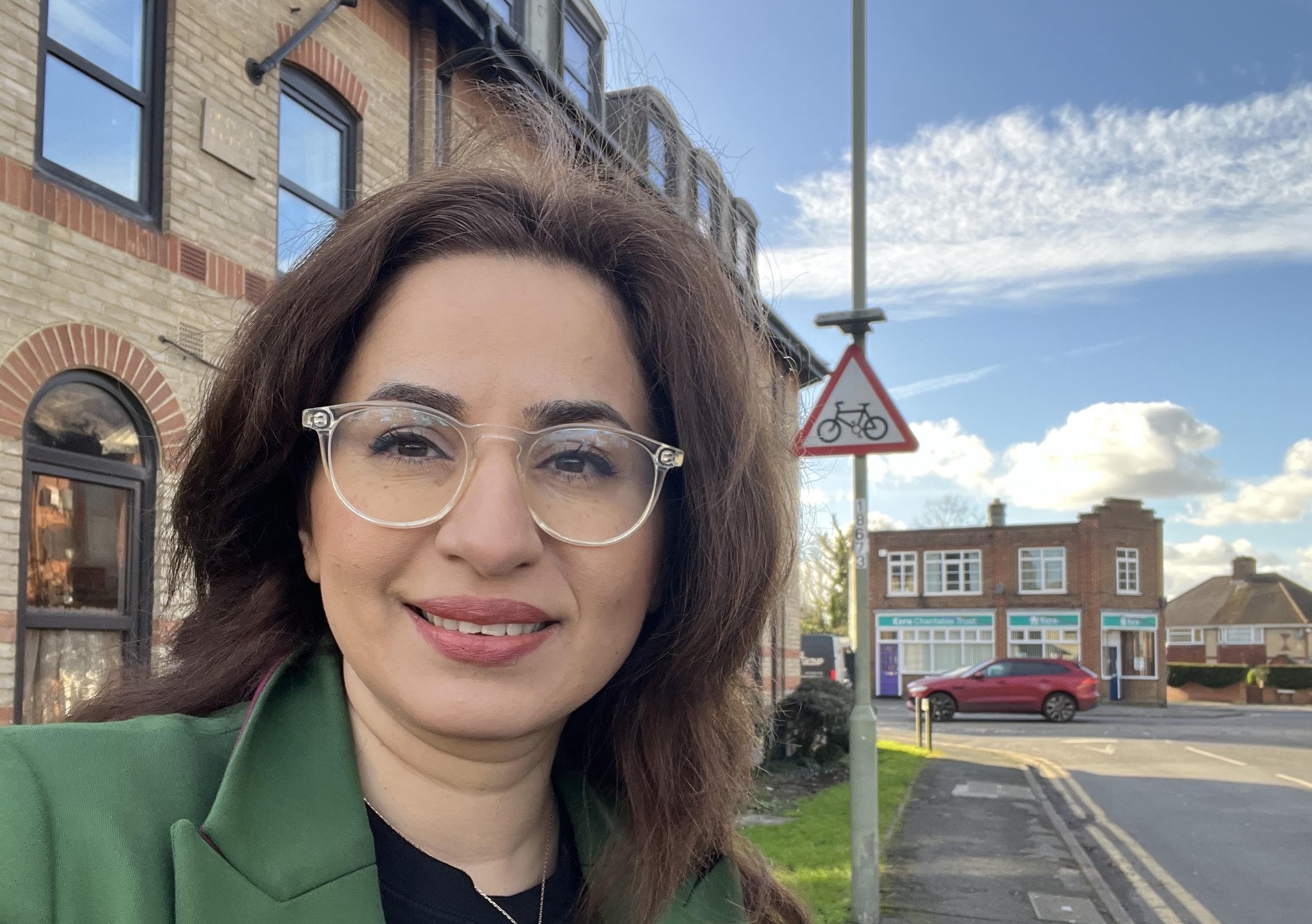
Milan (AsiaNews) – Abandoned for years, Iranians are willing to accept war and bombs to put an end to the Islamic Republic, its use of torture and its killings, ready to accept the consequences of the conflict such as rising prices of food and basic goods while hoping for a different future.
Against this background, Attieh Fard, a 44-year-old Christian politician and lawyer born in Iran but living to the United Kingdom, is promoting a recently launched declaration signed by more than 200 Christian religious and secular leaders in and outside Iran, calling for the end to the Islamic regime (and the return of Crown Prince Reza Pahlavi).
She spoke to AsiaNews about the war waged by Israel and the United States, which she now considers perhaps the "only way" to change the country’s decades-old “oppressive” regime.
The activist views with concern the official appointment yesterday of Mojtaba Khamenei to replace his father, Supreme Leader Grand Ayatollah Ali Khamenei, who was killed in the first day of war, on 28 February. The group responsible for the selection was part of the Guardian Council, but they were bombed. The raises the question of “how this appointment was made, what procedure was chosen."
What is certain is that "Mojtaba is a hardliner and radical; some think he's much worse than his father. And he too is corrupt, having control of a real estate portfolio in the UK worth over £100 million, who knows how."
In recent months, Christians in Iran and the diaspora have "prayed for the freedom" of the country and its people, and many are supporting foreign military intervention because the uprisings, popular protests, and riots of recent years have failed to bring about any change.
In this regard, even the timid attempts at dialogue between Washington and Tehran in recent weeks have failed to bring about any significant breakthrough.
“I personally don't think there was any further space for diplomacy,” Attieh Fard said. “First of all, Khamenei,” she explains, “was the Supreme Leader,” and “the government and the ministers, they basically don't have much power,” including the President Masoud Peseshkian.”
“Khamenei wasn't a party to any negotiations. He would have talked to Trump direct,” but it should be noted, in the past, he has not disdained meeting bloodthirsty leaders like North Korea's Kim Jong-un.
“We saw what Khamenei did in January in terms of killing,” when “there was a massacre. Of 30,000 people” while Peseshkian “wanted to continue the dialogue with the people.”
The ayatollah’s death does not automatically imply the collapse of the regime, which can count on an intelligence system and a widespread power apparatus.
A process of democratic transition is needed and the constitution needs to be changed and prevent the clergy from having the final say over people's lives
“However," the Christian lawyer warns, "the clerics do not accept this," and Mojtaba's appointment is further confirmation of this. "The structure," she warns, "remains in place today, and someone else, with the same ideology as his predecessor, is now in power."
Then there are the Pasdaran, the Iranian Revolutionary Guard Corps, who have “so much economic influence, political influence. And so long as they don't change course, and, I think, that security council is dissolved, I don't think much change can happen.”
“I know this for sure because I grew up with them, I know them well and I know the values they believe in. Their loyalty to the system and ideology is greater than the risk of war and they won’t tolerate defeat.
Still with the war and the ayatollahs' repression, for Attieh Fard, "something is already happening" within the country. “We saw millions of people take to the streets in January, demanding the return of Pahlavi, freedom, and rights.
“People are ready for change, and if the regime's oppressive mechanisms are destroyed with military aid or if the leaders decide to lay down their arms, I think there is a chance for a new and different political structure, for free elections."
At the same time, she warns, “it is necessary to protect Iran's boundaries," including by resorting to "external aid" so that the Taliban or other groups "cannot invade the country, when it is militarily weak, and this is where the international community must intervene."
The internal situation remains complicated. “Friends and acquaintances I've heard from in recent days describe, speak of critical issues related to food prices, which have increased up to sixfold compared to before the war," and of destruction. "But for some, the regime is worse than the conflict."
The legacy of violence and repression, of prison and torture, of raped women, an integral part of this Islamic regime, "also pushes people to celebrate a conflict, if that's the only way to put an end to the barbarity," the Iranian-born lawyer notes.
She herself experienced firsthand the war with Iraq in the 1980s, the persecution of relatives for their critical views of politics and dominant ideologies, and the lack of justice. She was just over 16 during her first campaign for better education for women. Two years later, when she was barely 18, she had to flee to the United Kingdom, where she continued her studies and her work for an Iran free from oppression.
"Even minors have been tortured, killed, imprisoned," she said, "by an apparatus equipped with oppressive weapons and mechanisms. The Iranians I spoke to who were against the war in June," she said, "were now waiting for a new military operation" as the only way to overthrow the regime. “People are hoping for it.”
Finally, she reserves a last thought to the value and difficulties of being a Christian professing their faith in the Islamic Republic of Iran.
"Always be careful where you go, you never know," she says. “As a teenager, I went to a Farsi-speaking church; they were open at the time. I really wanted to get baptised,” but she was followed by “a young man” who “asked me lots of questions about why I was going to that church, and told me that it was connected to the CIA, and that if you become a member and if you go with their activities, the Islamic Republic is going to execute you.”
Over the past six months, "Christians in Iran and around the world have prayed for the country's freedom, for God to bring justice." Of course, conflicts are never the solution to the world's evils and wrongs, but she hopes that this war can put an “end to evil and darkness."

.png)
27/09/2019 13:12
28/05/2019 13:11
12/04/2023 18:18










