








Islamabad: Attack on Shia mosque, dozens killed
The Qasr-e-Khadijatul Kubra mosque in the Tarlai area, on the outskirts of the capital, was the target, resulting in at least 31 deaths and 169 people wounded, according to initial reports. This is the second attack in Islamabad in three months. No one has yet claimed responsibility for the bombing, but observers are pointing the finger at the Islamic State.
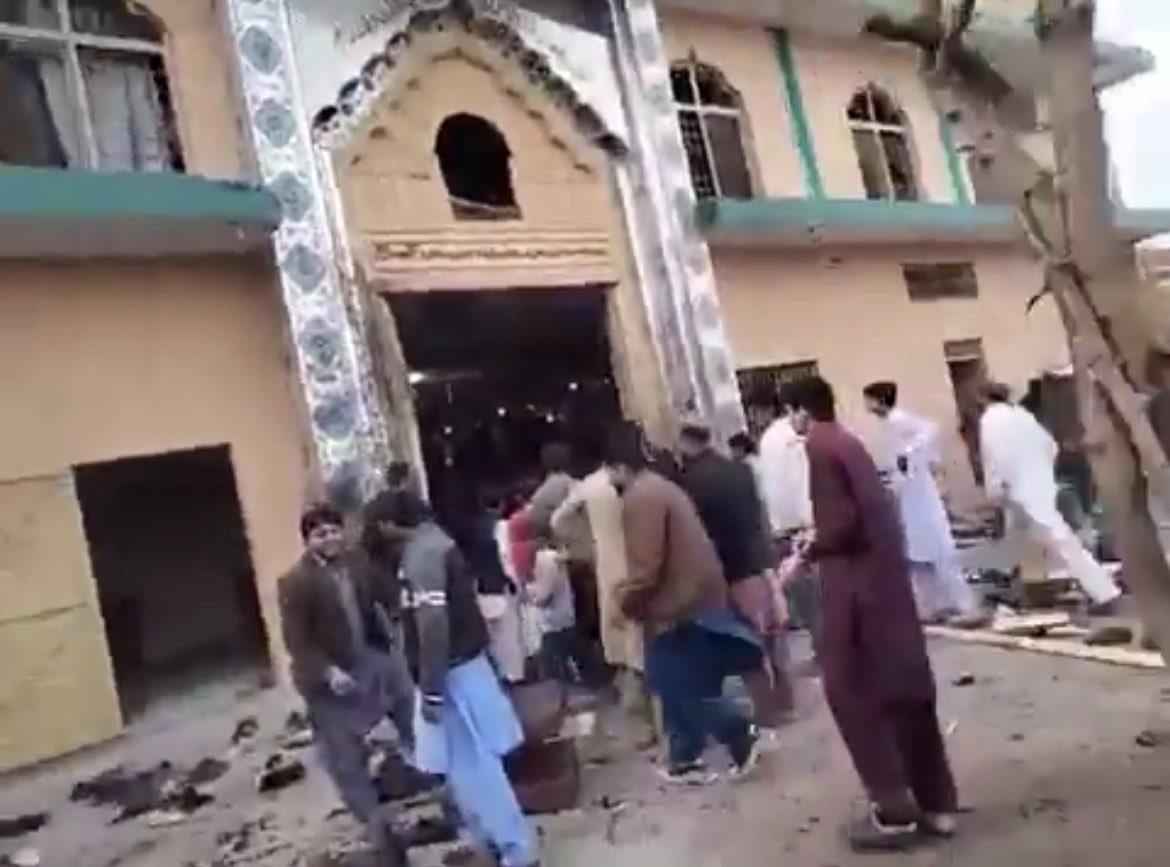
Islamabad (AsiaNews/Agencies) – At least 31 people were killed in a bomb explosion inside the Qasr-e-Khadijatul Kubra Shia mosque in the Tarlai area, on the outskirts of Islamabad. The explosion hit people performing Friday prayers inside the Imambara (a site for mourning ceremonies or communal prayers).
This is the second attack in the capital in three months, which, despite an increase in violence between terrorist groups, has long been considered safe. Attacks against Shias, especially on such a large scale, have also been rare in recent years. For this reason, many observers believe the Islamic State might be responsible.
According to police and local officials, the blast was so loud it could be heard within “a radius of hundreds of metres," sowing fear and panic among residents.
Islamabad's Deputy Commissioner, Irfan Nawaz Memon, confirmed that at least 31 people were killed and 169 injured, some critically.
The incident appears to be a suicide attack: two anonymous police officials told Reuters that the attacker was stopped at the gate of the Imambara before detonating the explosive device.
Officials added that it was too early to speculate on the nature of the explosion.
The injured were taken to various hospitals in the capital, including the Pakistan Institute of Medical Sciences (PIMS), the Polyclinic, and the Capital Development Authority hospitals – where a state of emergency was declared.
No group has yet claimed responsibility for the attack, but in the past, similar attacks have been blamed on the Tehreek-e-Taliban Pakistan (TTP, Pakistani Taliban) and the Islamic State of Khorasan Province (IS-KP).
Islamabad Police Chief Syed Ali Nasir Rizvi placed the capital on high alert. Security forces sealed off the blast site to allow forensic teams to collect evidence, and launched a search operation, with additional personnel deployed at sensitive sites and entry points to the city.
Islamabad police also reported that additional personnel were deployed to protect Christian places of worship in the Rawalpindi area.
Parliamentary Affairs Minister Tariq Fazal Chaudhry repeated the usual arguments used by the Pakistani government in the event of such attacks.
The attackers “are the enemies of Islam, the enemies of Pakistan. We will end terrorism from our country, we will continue this fight till every one of these people are brought to justice,” he said. “We want peace in the region but our neighbors, especially India, has been very active in terror activities in Pakistan. They are involved in the recent attacks in Balochistan, FATA[*] and now in Islamabad,” he added.
This incident comes after a recent series of attacks in the country, including coordinated operations in Balochistan against security forces and civilians.
The Inter-Services Public Relations reported yesterday that security forces successfully concluded their operation in Balochistan, killing 216 fighters.
In November 2025, an attack on a district court complex in Islamabad killed at least 12 people and injured 36 others.
Prime Minister Shehbaz Sharif, after a briefing with the interior minister, ordered an immediate and thorough investigation to bring those responsible to justice.
Deputy Prime Minister and Foreign Minister Ishaq Dar declared that targeting places of worship and civilians is “a heinous crime against humanity” and “a blatant violation of Islamic principles.”
[*] Federally Administered Tribal Areas.

.png)
30/03/2007










