

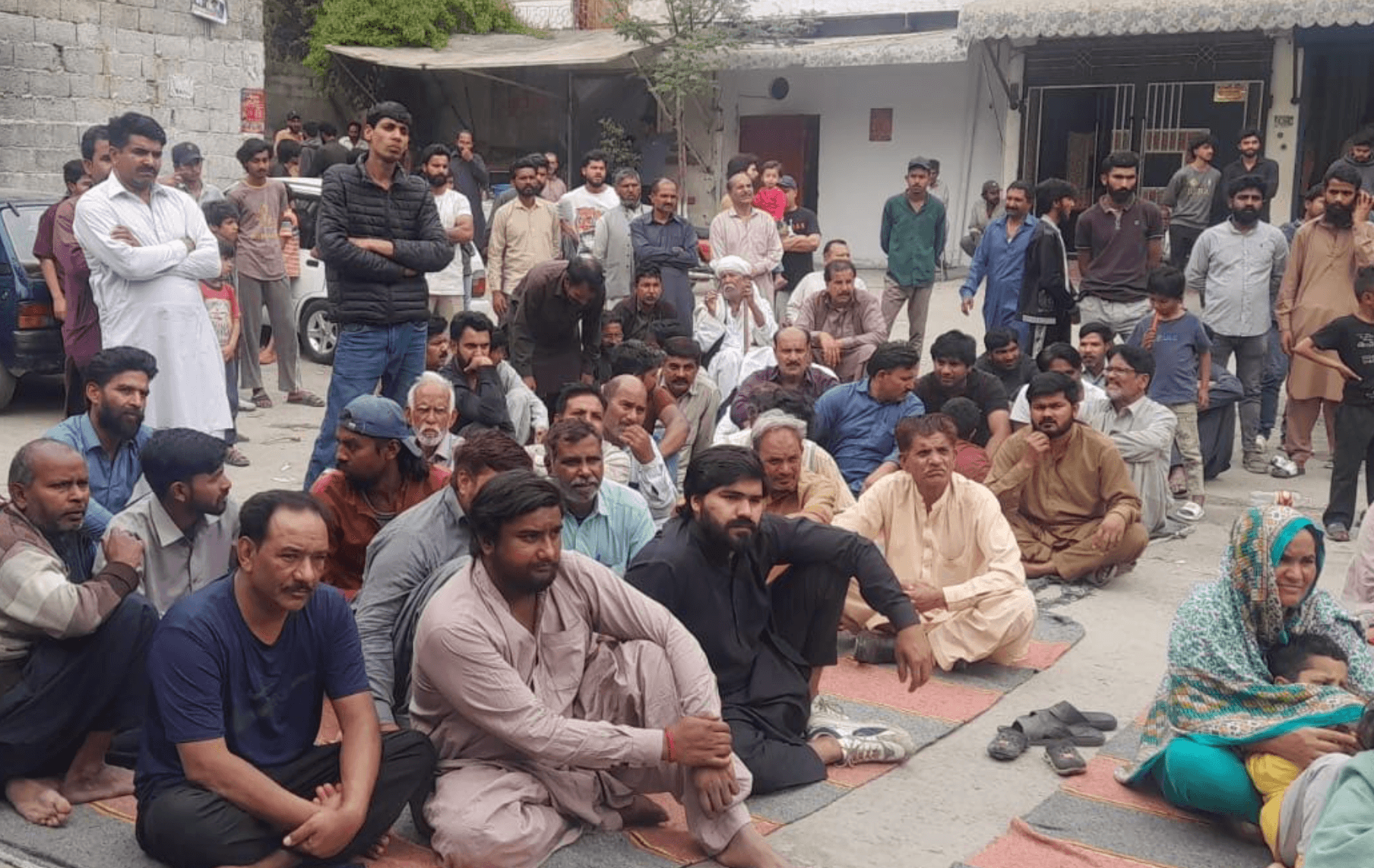
Islamabad (AsiaNews) – Thousands of Christian residents of the H-9 Rimsha Colony slum in Islamabad have protested against the Capital Development Authority (CDA), the company responsible for municipal public services in the Pakistani capital, which ordered them to leave their homes and shops within two days, under penalty of forced eviction.
This is not the first time that the authorities have ordered residents of working-class and poor neighbourhoods to leave without offering them any alternative place to live.
According to residents, the CDA created the Rimsha settlement about 15 years ago, while the Shapar settlement was established in 2002-2003.
The people involved came from Mehrabadi, a neighbourhood near G-12 Islamabad, who had to flee their homes at night for their lives in August 2012, leaving all their belongings behind, after Rimsha Masih, a 14-year-old Christian, was arrested on blasphemy charges.
The girl was falsely accused of burning pages of the Qur'an, and subsequently left the country finding asylum in Canada with her family, but the rest of the community was permanently displaced.
At the time, the displaced families, with the consent of the government, set up makeshift tents in H-9, which they converted over the years into permanent structures, and began calling the area Rimsha Colony.
The 2001 National Housing Policy clearly protects the rights of slum dwellers, declaring that there will be no evictions from katchi abadis (informal, often illegal, settlements) unless residents are relocated according to resettlement plans.
Furthermore, it specifies policy guidelines for low-cost housing, stating that the relevant ministries, in coordination with provincial governments, should develop a package of measures to improve living conditions in slums.
“The dangerously located slums should be shifted,” the housing policy reads, and “low-cost housing schemes should be developed”.
According to Bashir Masih, a resident, the CDA is threatening Rimsha and Akram Gill in the capital's H9 sector, home to approximately 25,000 predominantly Christian people.
The cruel irony is that the CDA itself relocated hundreds of Christian families here after the horrific Rimsha case.
Now, CDA enforcement crews are issuing verbal notices to both settlements, claiming that they are “illegal”, even though katchi abadis in Islamabad are protected by a stay order issued by then-Chief Justice Jawwad Khawaja in 2015.
The vice principal of Rimsha Community School issued an urgent appeal to the government to offer support to Rimsha and Akram Gill and prevent their eviction, stressing that they should at least be given time, since pupils at local schools are taking exams.
Furthermore, the CDA should guarantee the resettlement of all 25,000 residents, as mandated by the Supreme Court in 2015 and required by various national and international human rights agreements.
In an official statement, the Human Rights Commission of Pakistan (HRCP) also expressed alarm at the CDA’s recent eviction attempt.













