








Magnifica Humanitas: Half of Singapore's eight-year-olds already use AI
A local study confirms the pervasive use of artificial intelligence, even among the youngest children. Researchers call on the government and families to pay more attention to the new technologies. In his encyclical, the pope urges education to also teach “when and for what purpose it ought not to be used it,” so as not to extinguish “the desire to ask questions”.
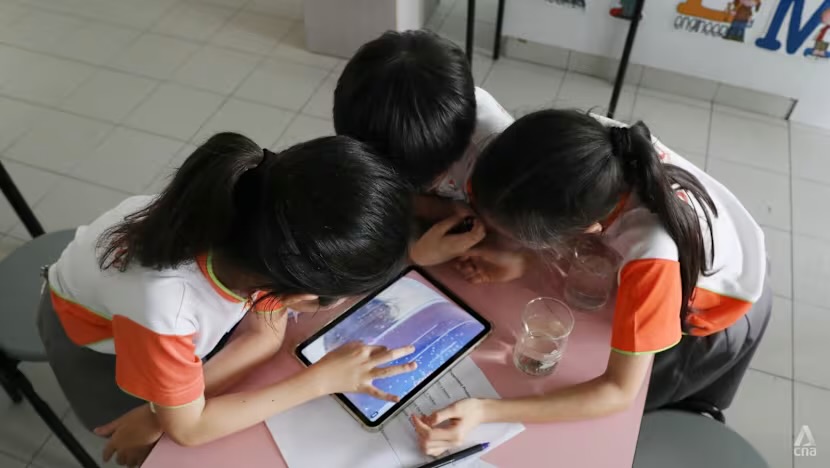
Singapore (AsiaNews) – A recently published study among Singapore youth shows that more than half of all eight-year-old children have already used artificial intelligence (AI) tools, a practice that rises sharply from age 10 onwards, becoming almost universal among teenagers.
For researchers, this offers one of the clearest pictures of how deeply rooted its presence is in everyday life from a very early age, further confirming the relevance of Magnifica Humanitas, the encyclical letter Leo XIV presented yesterday on a technology that is now an integral part in every sphere of life, from work and education to entertainment and research.
“Educating people about the use of AI,” the pontiff writes, “involves teaching them to decide when and for what purpose it ought not to be used. The speed and ease with which answers or summaries can be obtained risk extinguishing the desire to ask questions, which is a process that bears fruit only over time.”
The study, presented at the recent Population Association of Singapore Annual Conference at the National University of Singapore (NUS), found that ChatGPT emerges as the most widely used AI platform among children aged eight to 13.
It shows that at least 53 per cent of eight-year-olds have already used AI tools. By age 10, this rises to more than 70 per cent, while more than 90 per cent of 13-year-old boys and girls reported using AI regularly.
The data come from 2,985 children participating in the Singapore Longitudinal Early Development Study (SG-Leads), a nationally representative project examining trends.
Xuejiao Chen, senior scientist at A*STAR's Institute for Human Development and Potential, and Jean Yeung, professor at the Yong Loo Lin School of Medicine at NUS, led the research.
Speaking to The Straits Times, Yeung said the study provides the "first national picture" of how children are using AI in Singapore and highlights early exposure to the technologies.
The researchers said the issue is no longer simply whether children have access to AI, but how they are using it and what habits are forming.
The study found that younger children’s use often revolved around play and schoolwork.
Among children aged eight to nine, nearly 16 per cent were classified as "game-dominated", meaning that they use AI primarily for play-related activities, several times a week.
Another 17 per cent were " studying and gaming-dominant”, relying on the technology for schoolwork and entertainment.
Children commonly use AI tools to translate languages, solve math and science problems, and explain new concepts.
Others use AI-based gaming platforms like AI Dungeon or modified versions of Minecraft, which include generative AI companions and assistants.
Only a little over 20 per cent of children in the youngest age group were considered low AI users, using the tools less than once a week or not at all.
Among older children aged 10 to 13, nearly a quarter regularly use AI for both learning and gaming. In addition to ChatGPT, children use Meta AI and Google Gemini.
The study also found differences related to parents’ education levels: children whose parents had lower levels of education were more likely to use AI for leisure and general purposes, rather than for homework. However, the researchers noted that children from higher socioeconomic backgrounds were not necessarily more likely to adopt AI tools.
The research findings come at a time of growing concern among governments, schools, and religious leaders around the world about the use of this technology and the ethical and social implications of AI’s rapid expansion, especially among younger generations.
Pope Leo XIV has emerged as one of the most prominent global voices highlighting the dangers of uncontrolled development, arguing that technological progress must never erode human dignity or weaken authentic human relationships.
“In an era when truth is often distorted in order to serve particular interests and communication strategies, the field of education assumes decisive importance,” Pope Leo writes in Magnifica Humanitas. “Yet rapid technological transformations reveal just how unprepared we are on the educational level.”
“The pervasiveness of digital media fosters a culture of immediacy and hyper-stimulation, which gives rise to fatigue, boredom and apathy concerning the effort required for seeking the truth,” the encyclical reads.
“Education, by contrast, is a long journey requiring patience, and therefore needs time for development and for engagement with reality beyond appearances. This is a fundamental issue because every technology shapes those who use it.”
Sometimes, it is necessary to learn “how to use restraint”, avoid the danger of over-use and digital indigestion, which risk making “human thought seemingly superfluous precisely when it is most needed.”
Reflecting in particular on AI’s impact on young people, the pontiff warns of the dangers of negative consequences regarding “sleep, attention span, control of emotions and relationships, especially during the most vulnerable stages of life, at times with tragic consequences.
“This is further aggravated by easy access to violent or degrading content that offends sensibility, to pornographic and hypersexualized material, to messages that trivialize the body and emotions, and to proposals that normalize risky behavior.”
With this in mind, several countries, including in Asia, are introducing legal restrictions and constraints on access to social media, but the issue is broader and goes beyond the daily use of a tool like the mobile phone, starting in childhood.
The pontiff warns that, “Having a personal mobile device at too early an age and using it without adult supervision can exacerbate young people’s vulnerabilities, foster addiction and expose them to isolation, bullying and cyberbullying, as well as to pressures to share intimate images or sensitive information.”
Instead, the pope calls for appropriate steps to set “age limits, holding service providers accountable rather than shifting the whole burden of control onto families, and for providing specific protections against all forms of online sexual exploitation and violence.”
Finally, he writes that “it is also necessary to teach children, adolescents and young people how to recognize manipulation, defend their dignity and respect that of others in digital environments.”

.png)
06/02/2026 18:46
14/10/2024 17:03
25/07/2024 13:14










