








Money to ‘fix’ failed exams: private university under investigation in Xi'an
A complex system of corruption disguised as educational trips and remedial courses that never took place has come to light after complaints from the families of some students at the Technology and Business College. Faced with the nationwide outcry over the case, local authorities are shifting the blame. There are currently around 800 private universities operating in the country, with popularity levels now on a par with public universities.
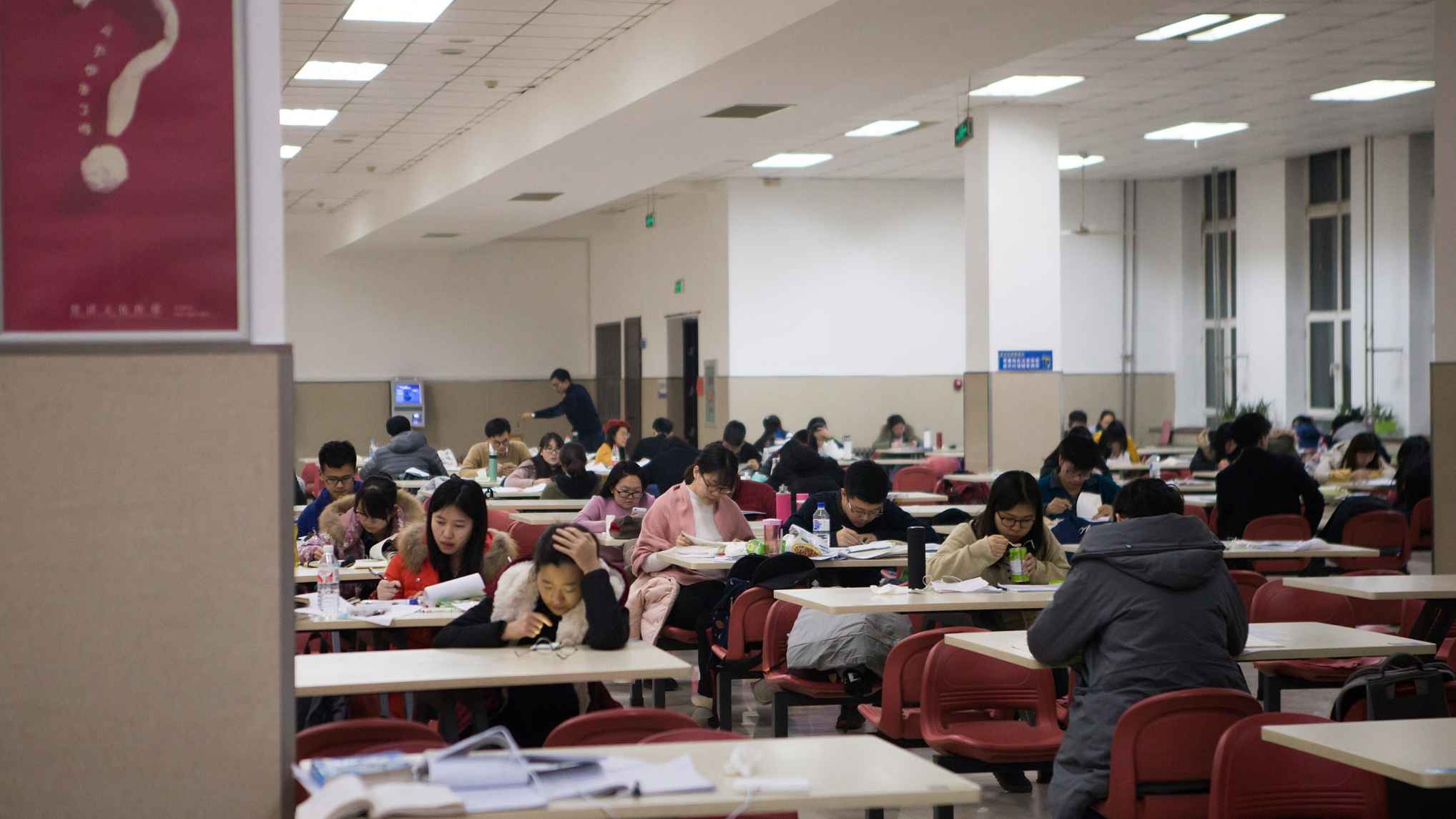
Milan (AsiaNews) - A recent scandal has jeopardized the integrity and reputation of China's privately run higher education system. The spotlight has fallen on the Xi'an Technology and Business College, an institution in Xi'an, the capital of the northeastern province of Shaanxi, financed by a Beijing-based investment company.
According to Benliu News, the Chinese online news site that first reported the story, the university allegedly induced students who had failed certain exams to pay a large sum of money to remedy the negative outcome of the tests. Officially, this ‘fee’, just under 80,000 yuan (approximately €10,000), was to be used to participate in a two-week study trip abroad, at the end of which it would be possible to retake the exams, with a guarantee of passing them.
However, this program turned out to be just a pretext: teachers at Xi'an Technology and Business College informed the families of the students concerned that, in reality, no trip abroad was planned, nor were the students required to carry out research activities.
Those who signed up for the program were promised not only the removal of their failing grades, but also “preferential treatment” in terms of awards, scholarships, and other benefits, including the opportunity to choose the best dormitories. Alternatively, the young people would not have had an easy life at Xi'an College.
Ms. Wu, the mother of a second-year student, said that a university tutor ordered her to pay the fee of about 80,000 yuan to participate in the study abroad program, otherwise he would not take responsibility for the problems her son was having with the dormitory. After repeated threats and to avoid retaliation against her son, Ms. Wu gave in to the request. However, although the dormitory issue was eventually resolved, the promised study trip abroad never materialized.
Ms. Huang, the mother of a senior student, found herself in a similar situation. She reported that she was contacted by the university at the beginning of the fall semester because her daughter had failed four exams. If she wanted to prevent her daughter from repeating the year or being expelled, Huang would have to enroll her in the expensive study abroad program, which later turned out to be non-existent.
Other witnesses were offered a “package” that included everything “from a bachelor's degree to a master's degree” at the exorbitant cost of 89,000 yuan (US,000) or even 129,800 yuan (US,000).
Suspicions grew when Wu, Huang, and other parents in the same situation discovered that the institute refused to issue invoices and that the destination bank account belonged to a technology company based in Yili, in the western region of Xinjiang.
The families turned to the school in vain for explanations, while the education departments began to pass the buck. For the education offices of Xi'an municipality and Gaoling district, the school reported directly to the provincial education department, which, however, stated that it was “unaware of the situation,” leaving the parents without answers.
Meanwhile, some background information has emerged. It appears that the university provided specialized training to teachers, teaching them how to use “psychological warfare strategies” and “the art of conversation” to convince families to sign up for the fictitious study trip. In addition, it was discovered that teachers with the most enrollments would receive bonuses, while those with the fewest enrollments could face penalties.
The incident quickly spread across Chinese social media, sparking widespread outrage. The most common opinion is that buying university exam grades or even degrees, like any other marketable commodity, is a completely unacceptable and reprehensible practice. “It's beyond my comprehension. How can anyone speculate on something like this? School has become a business,” commented one user on the web. Another person wrote: “The authorities should investigate thoroughly and punish those involved severely.”
An investigation is currently underway by the Shaanxi Provincial Department of Education. Xi'an University will have to answer for what appears to be a “penalty system for exam failure” and alleged illegal activities related to it, such as embezzlement and tax evasion.
At the moment, the only thing that is certain is that what happened, in addition to constituting a serious violation of the fundamental principles of teaching, has seriously compromised the credibility of the entire private higher education sector in China. According to the latest data published by the Chinese Ministry of Education, there are currently about 800 private universities in the country, many of which have achieved a level of popularity equal to that of public universities.

.png)
12/02/2016 15:14










