








Nepal’s former prime minister arrested, a still fragile political journey
The arrest of former Prime Minister K P Sharma Oli and former Home Affairs Minister Ramesh Lekhak reopens the question of responsibility for the repression of the Gen Z-led protests in September 2025 that left at least 76 people dead. While the new government led by Balendra Shah launches a recovery plan, tensions and fears remain high in the country over restrictions of civil rights.
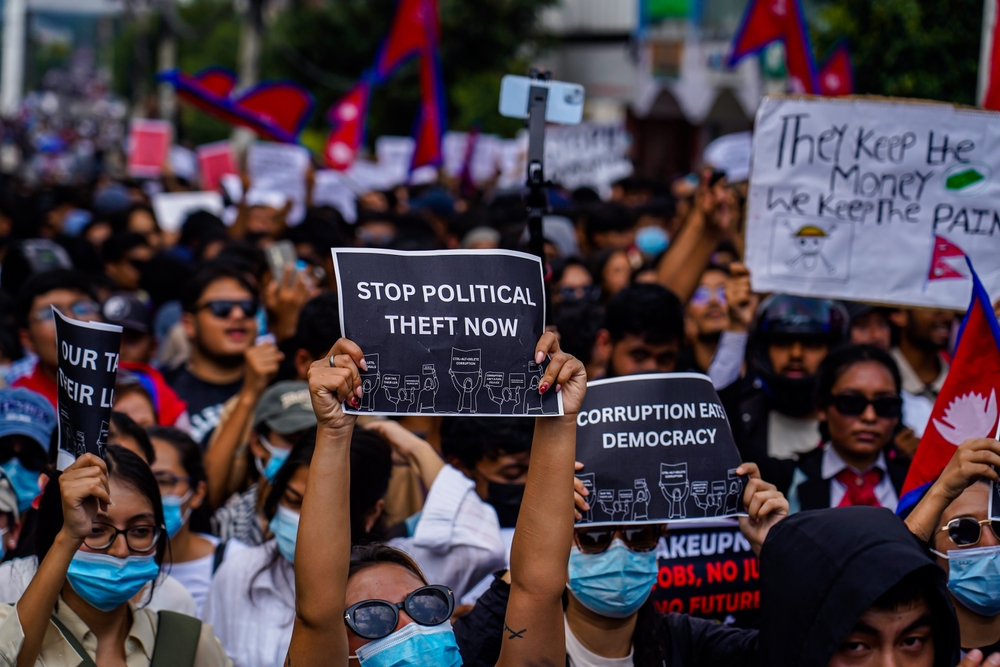
Kathmandu (AsiaNews) – The arrest on Saturday, 28 March, of former Prime Minister K P Sharma Oli and former Home Affairs Minister Ramesh Lekhak marks a new phase in the major ongoing transformation of Nepal's political scene.
The Communist Party of Nepal (Unified Marxist-Leninist) (CPN (UML)) reacted immediately, calling for their two leaders to be released and their rights to be respected.
Both political leaders are held responsible for the crackdown against Generation Z protests on 8 and 9 September, which culminated in violence that resulted in the deaths of 76 people, including at least 20 young people.
During the hearing that led to the issuing of the arrest order, government lawyers argued that pre-trial detention was needed to allow the investigation to continue.
The Kathmandu District Court ordered five days of pre-trial detention (compared to the ten requested by the government), ruling that former Prime Minister K P Sharma Oli, 74, be held in hospital after recently undergoing a kidney transplant.
The decision is based on the findings of the commission of inquiry set up after the protests, which found that the "reckless and negligent actions” of the two former ministers contributed to the brutality of the crackdown by security forces.
Meanwhile, in an operation apparently unrelated to Saturday's arrests, police yesterday took into custody former Minister of Energy, Water Resources, and Irrigation, Deepak Khadka, a member of the Nepali Congress (NC), on charges of money laundering based on evidence gathered by investigators.
The 5 March elections marked a sharp decline in the power of the two main traditional parties – the CPN (UML) and the NC, which have dominated the country's political life since the end of the monarchy in 2008.
The vote favoured the rise of new political figures, including Prime Minister Balendra Shah, leader of the Rastriya Swatantra (National Independent) Party (RSP), which now dominates the House of Representatives with 182 of the 275 seats.
Despite the change in leadership, the situation in the country remains tense. Protests continue, for the release of the arrested ministers and for an end to what many observers call a virtual state of emergency, which significantly limits individual rights.
The fallout from the arrests and the new government's next moves are being closely watched both domestically and internationally.
In the last few hours, the government announced a 100-point recovery plan, largely based on the RSP’s election platform, but it remains to be seen whether it will be able to stabilise the country amid ongoing deep political and social tensions.
Photo: AP Tolang / Shutterstock.com

.png)
06/03/2026 17:02










