








New military agreements among Central Asian nations
The countries of Central Asia are also taking steps within the framework of strengthening regional cooperation in defence systems, a process triggered by the war in the Middle East. Kazakhstan has announced the opening of its airspace to military flights from Turkey. Together with Uzbekistan, it aims to strengthen the alliance between the Turanian states through coordination plans with European nations.
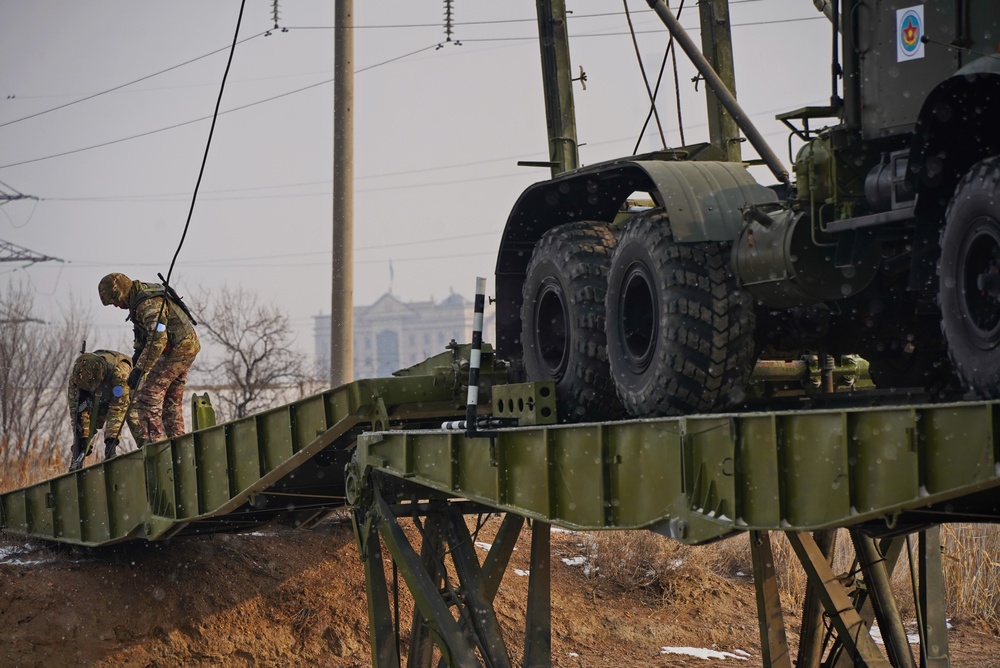
Astana (AsiaNews) - The conflict in the Middle East is prompting all affected countries to bolster their regional defence forces. The European Union has declared that it will invest €1.07 billion in 57 defence projects to create what is now being called the “Schengen of defence”, with infrastructure for the operational movement of troops, equipment and personnel from Europe via rail and road routes, by sea and by air, towards the easternmost borders – a programme that complements or perhaps serves as an alternative to NATO’s initiatives.
The project is already underway in Romania and Moldova, with Chişinău having joined the initiative even before its accession to the EU, and as the Moldovan press describes it, “there is a procession of military convoys heading towards Ukraine on our roads”. To speed up logistics, a new bridge will even be built over the Dniester River, to be funded by Kyiv. The EU openly states that cooperation with the Ukrainian defence industry will be significantly strengthened, with agreements signed alongside Kiev’s Office for Defence Innovation, “a partnership aimed at more effective integration of Ukraine into the European industrial base”, according to the official statement.
In recent days, Kazakhstan announced the opening of its airspace to military flights from Turkey, under an agreement ratified by the Mažilis, the parliament in Astana. Although formally this is only limited access, and only subject to agreement between the parties, in practice this marks a significant step forward in strengthening military cooperation among the members of the Organisation of Turkic States (OTG). Kazakhstan’s airspace takes on crucial significance in the current context, for coordinating the logistics of all the countries involved. Kazakh transit can, in fact, greatly facilitate deliveries from Turkey to Uzbekistan, and Turkey is a NATO member facing off against Russia, despite all Ankara’s efforts to seek compromises.
Kazakhstan and Uzbekistan, on the other hand, are members of the Eurasian military alliance CSTO, and are therefore official partners of Moscow, but the ongoing conflict in the Middle East is leading to a profound re-evaluation of these alliances. The OTG is considering organising its own military alliance, similar to the one increasingly taking shape in Europe, and Russia’s reactions to this upheaval of balances that once seemed untouchable are awaited. Central Asia is thus moving ever closer to a mechanism for cooperation, including military cooperation, with plans for coordination between Turanian and European countries.
The OTG comprises Kazakhstan, Kyrgyzstan, Uzbekistan, Azerbaijan and Turkey as permanent members, with Turkmenistan and Hungary as observers; the only Central Asian country excluded from this group is Tajikistan, which, being fundamentally of Persian origin, does not associate itself with the Turkic-speaking nations. A recent meeting in Bukhara between the presidents of Kazakhstan and Uzbekistan, Kasym-Žomart Tokaev and Šavkat Mirziyoyev, demonstrated how Astana and Tashkent have, moreover, taken charge of the entire Central Asian region, transforming it into an independent centre of power capable of reaching agreements with all possible Eastern and Western partners, particularly following the difficult negotiations between the US and Iran, to avoid being left completely isolated in the new geopolitical landscape.
The world is changing, and the various regions now prefer to draw up their own defence and economic development plans, so as not to depend on the increasingly unpredictable great powers. The aim remains to protect themselves from conflicts and from energy, economic and communications crises. And in this regard, Central Asia finds itself increasingly in step with Europe, from markets and logistics right through to defence plans.

.png)
12/02/2016 15:14










