








Patriarch Pizzaballa with Gaza's Christians for Christmas, bringing a ‘light of hope’
The cardinal is visiting Christian communities in Gaza, ravaged by more than two years of war. Tomorrow, the traditional solemn Mass will be celebrated, with a focus on rebuilding and healing hearts. The patriarchs and heads of Christian Churches in Jerusalem have issued an appeal to Israeli authorities for Gaza’s sick children, asking for them to be cared for at the Augusta Victoria Hospital.
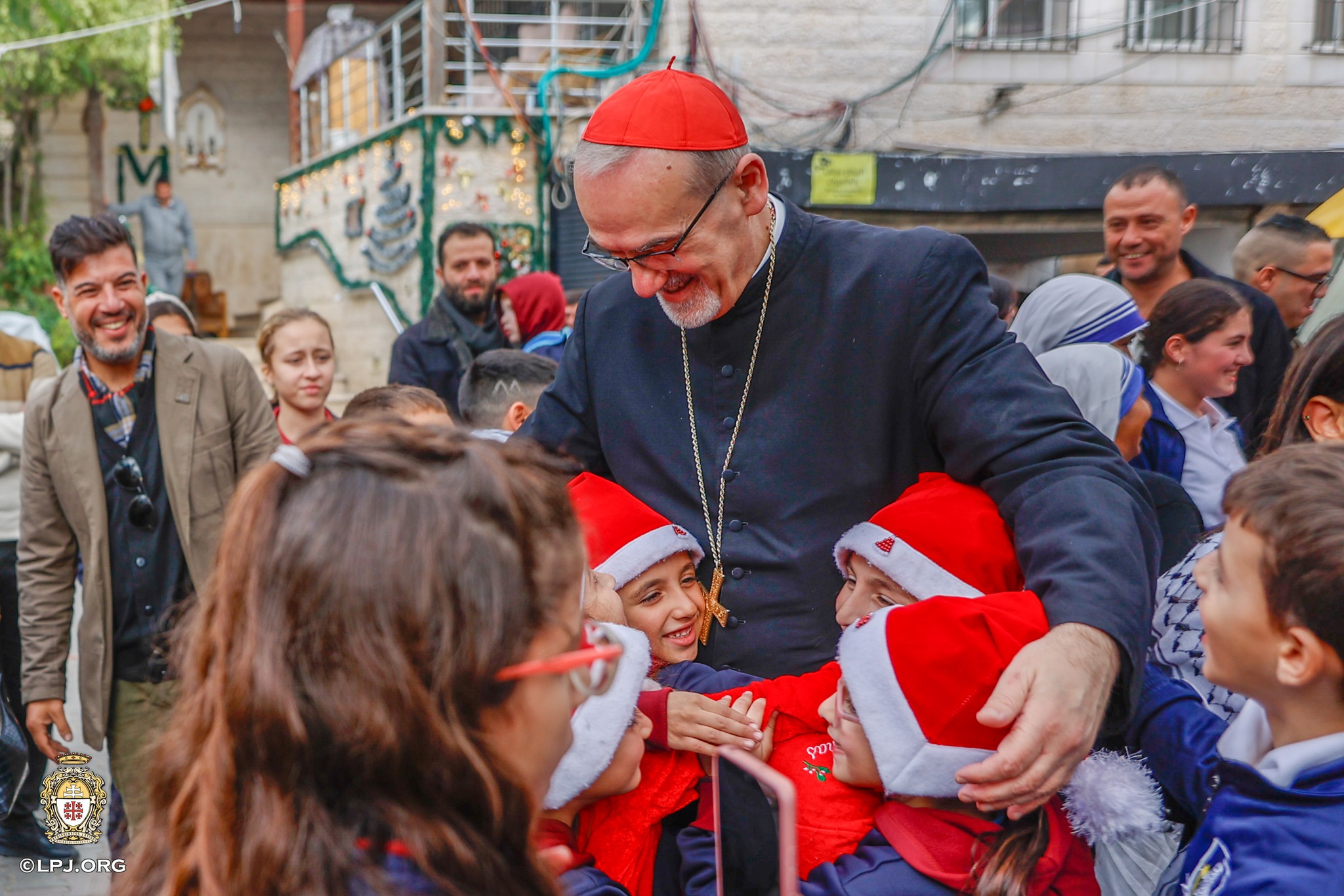
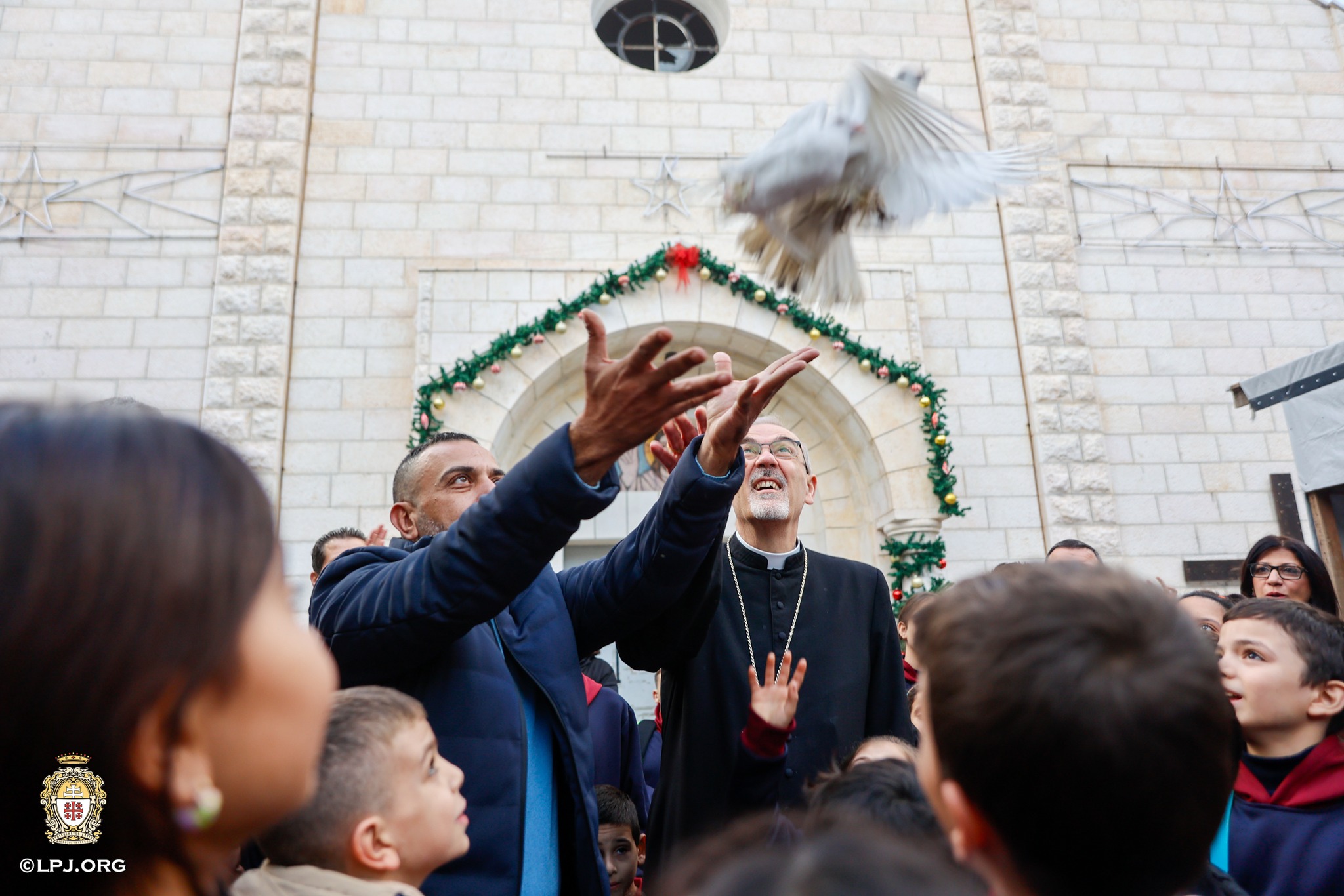
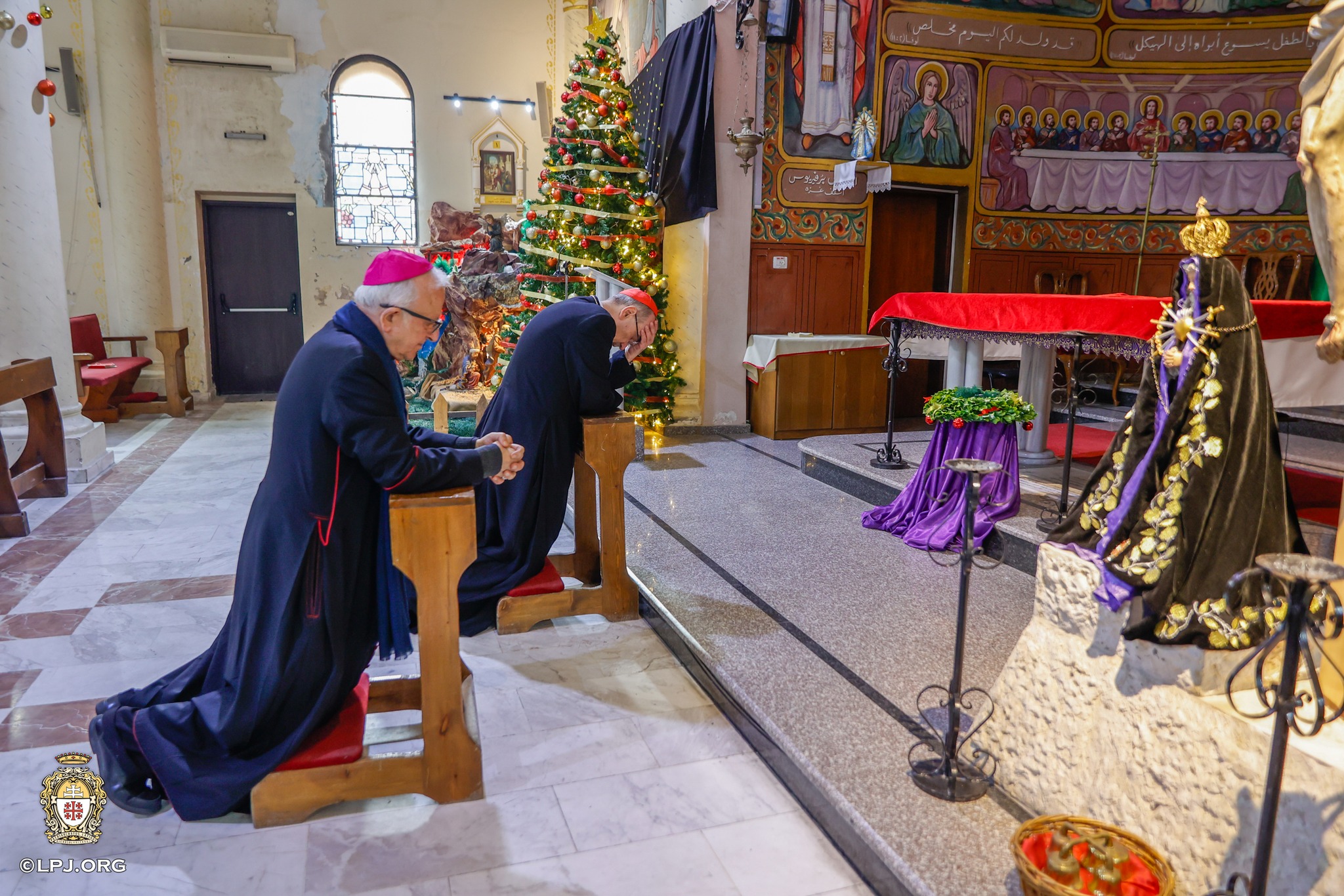
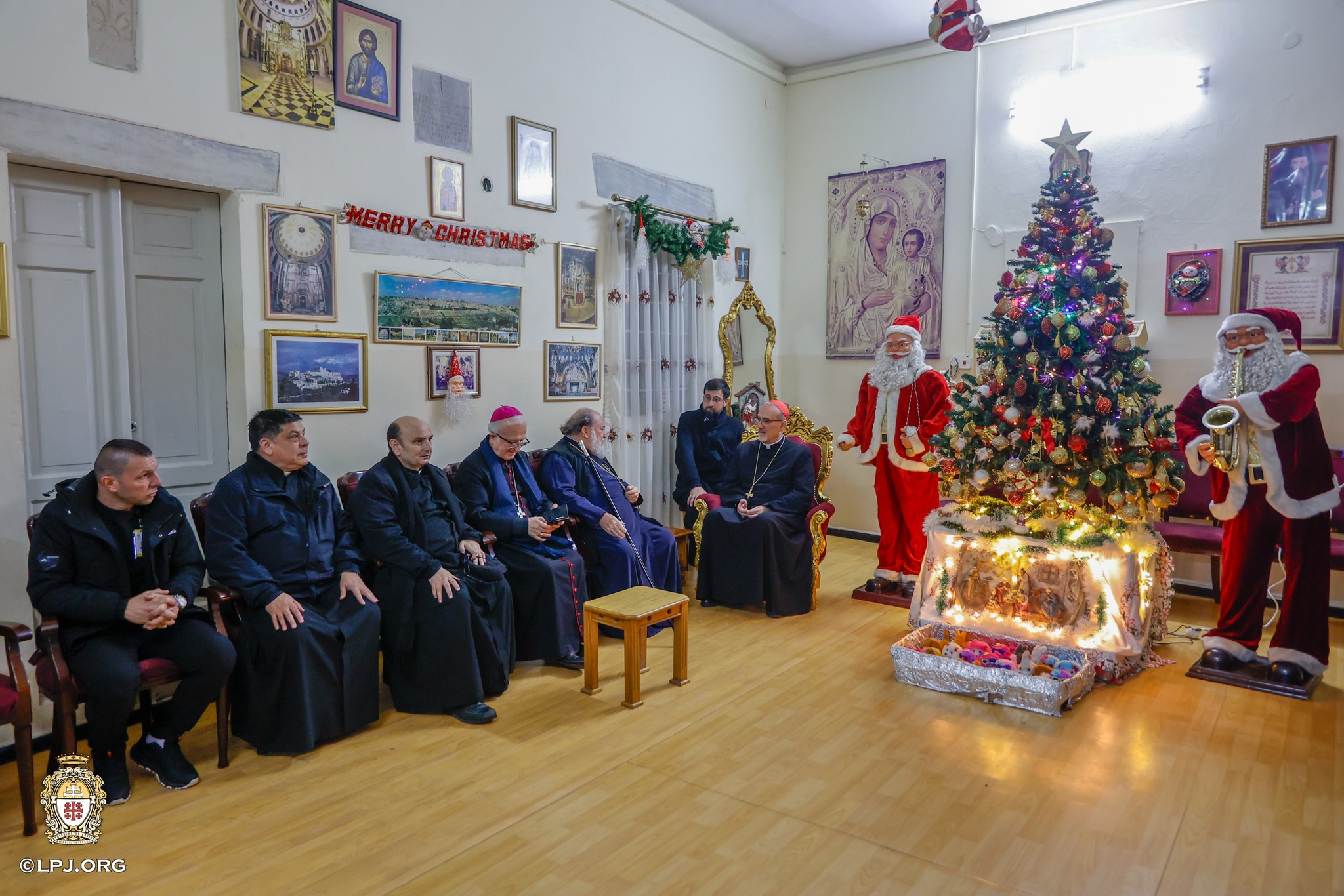
Gaza (AsiaNews) – I am “happy to be here with you” and, at the same time, “relieved to see you again,” said Card Pierbattista Pizzaballa, the Latin Patriarch of Jerusalem, who arrived in Gaza yesterday morning to meet with the community and celebrate Christmas Mass at the Holy Family parish.
Although the long-standing tradition was disrupted in 2023 during the first year of the war, it traditionally falls on the last Sunday before Christmas. “I know the situation is hard," the cardinal said, but the reopening of the school and the restart of activities are "a small glimmer of hope."
Bringing greetings not only from the Church of the Holy City, but "from all over the world," the prelate stressed that everywhere “groups and associations” are “united with you in this moment.”
“You have made it clear and evident what it means to remain steadfast and firm in the faith during this terrible time,” giving a “wonderful testimony not only of resilience, but also of faith and hope for many people” in Gaza and around the world.
The cardinal, according to a statement issued by the Latin Patriarchate, is accompanied by his vicar, Bishop William Shomali, and a small delegation called to examine the parish's situation, the humanitarian response, and the relief efforts for the community.
In the afternoon, the patriarch visited the Greek Orthodox Church of Saint Porphyry, where he met with its parish priest and parishioners. He then visited the sick and administered the sacraments, concluding the day with a Mass at the Holy Family Church and a meeting with members of the community. Tomorrow, Christmas Mass will be celebrated in the parish.
"This visit," the statement reads, “marks the beginning of Christmas celebrations among a community that has lived and continues to live through dark and difficult times. It reaffirms the enduring bond between the Holy Family Parish in Gaza and the Diocese of the Latin Patriarchate of Jerusalem.”
The visit also “expresses the Patriarchate's commitment to accompanying its faithful in hope, solidarity, and prayer."
In his address, Cardinal Pizzaballa admitted that “we cannot forget what happened," but he also urged the faithful to "look forward" and think about rebuilding homes, schools, and the lives of the community.
"Here are our roots,” he noted, “and here we will remain. We want to be here, permanently, a point of reference. In this sea of destruction, we want to be the ones who look on and show what it means to rebuild. I want to be able to celebrate Christmas here with you, as is tradition”. Just as "we were here during the war; even more so, we want to be here” for this holiday, which “is the source of our faith and our life."
“You have used the word love many times," he said, addressing the parishioners, "and only love can build. The walls can be rebuilt, and we will rebuild them, but we must heal our hearts” without fear, moving forward "strong and united."
This call to a shared task is not reserved for the Latin Church alone, but also touches Anglicans and Orthodox as well, who “will be united here to rebuild life in Gaza.”
Finally, he said that he expects to perform a baptism like “every time I come here.”
From the Holy Land, the patriarchs and heads of the Churches of Jerusalem also made a urgent appeal for seriously ill children of Gaza, calling on Israeli authorities to grant the latter permission to travel to the holy city and receive treatment “available only to them”.
Issued on Wednesday, the statement emphasises the need for “permits to allow children in Gaza who have been diagnosed with leukemia to travel to the Augusta Victoria Hospital on the Mount of Olives to receive specialized treatment that is only available to them there.”
The religious leaders said that the facility “is prepared to arrange not only for transportation, but also for the full care and treatment of these young and vulnerable patients, who will then be returned by the hospital to their homes in Gaza at the end of the treatment.”
The appeal is made “on humanitarian grounds,” because adequate healthcare is “not available” in a conflict-torn Gaza.
The note from the patriarchs and heads of the Churches ends expressing hope that “permission for the treatment of these young patients to be granted as soon as possible. As with any disease, the swift delivery of treatment is essential for the good outcome.
“We therefore hope very much that the responsible authorities will see fit that these patients receive the medically necessary care that the excellent facilities of Augusta Victoria Hospital can provide, in order that these children can begin their journeys to recovery and health.”
The Christian leaders' appeal underscores how hard it is for Gaza's residents, both Christians and Muslims, to get treatment or medicines available elsewhere.
This emergency affects even the youngest children, making it even more urgent to pressure the Israeli authorities to respond to what is a humanitarian plea even more than a medical necessity.
“I am a pediatric oncologist at Augusta Victoria Hospital in East Jerusalem. My job is simple: to battle cancer. But today I want to talk about a different type of battle, one that breaks the voice of the doctor who is speaking to me from the other end of the phone line, in Gaza.”
Khadra Salameh's testimony published by the Israeli newspaper Haaretz, is further proof that the situation in Gaza is serious amid widespread suffering.
The hospital in the holy city, the doctor said, represents "a lifeline" for children in the Gaza with “vicious cancer such as brain tumors, bone sarcomas and severe leukemia. This was the promise, but as of today, this lifeline has been cut.”
The gravity of the situation in Gaza, Dr Salameh explains, is best evinced by the “messages from the only remaining oncologist in Gaza” who is trying “to treat children and adults with no resources” in a situation that “he describes is devastating: a shortage of basic medicine, no chemotherapy at all, no means to obtain a diagnosis, and special treatments that are only available in Nasser Hospital in Khan Yunis – and even there, they're very limited.”
Doctors are helplessly watching the progression of diseases, becoming “merely witnesses to suffering".
One of the many cases involved six-year-old Ghazal, who was diagnosed with severe leukemia, but doctors had nothing but steroids, “sprinkling drops of water on a raging fire.”
“The child and the doctor waited for two months for a medical evacuation, which never came. Two months of pain and suffering [. . .]. The child died, not because the leukemia he suffered from was untreatable, but because we were unable to reach him.”
“We must demand the immediate formation of a safe and protected humanitarian corridor to remove these children from danger, so they can get treatment. [. . .] Our silence will cost the lives of children,” Dr Salameh bemoaned.
The Augusta Victoria compound in East Jerusalem was built between 1907 and 1914 by the Empress Augusta Victoria Foundation for German Protestants. It is located on the north side of the Mount of Olives and includes a community hospital, one of six that serve the eastern part of the Holy City.
During the First World War, it operated as a German/Ottoman military hospital, then as British headquarters and the seat of the British High Commissioner, before suffering severe damage in the 1967 war.
Today, it is a major hospital providing special care for Palestinians in the West Bank and Gaza. Its Department of Oncology is an advanced centre for cancer treatment. The compound includes the Church of the Ascension with a 50-metre high bell tower, an interfaith kindergarten, and a pilgrim centre.
(Picture by the Latin Patriarchate of Jerusalem)

.png)
24/10/2023 18:50
22/08/2025 14:42










