








Philippines migrants, the hidden face of the conflict over Greenland
Faced with a rapidly declining population, Greenland is increasingly relying on workers from the Philippines for key sectors of the local economy, such as fishing and seafood processing. This is happening at a time when some studies suggest that Southeast Asia is the region most affected by rising sea levels due to melting ice sheets.
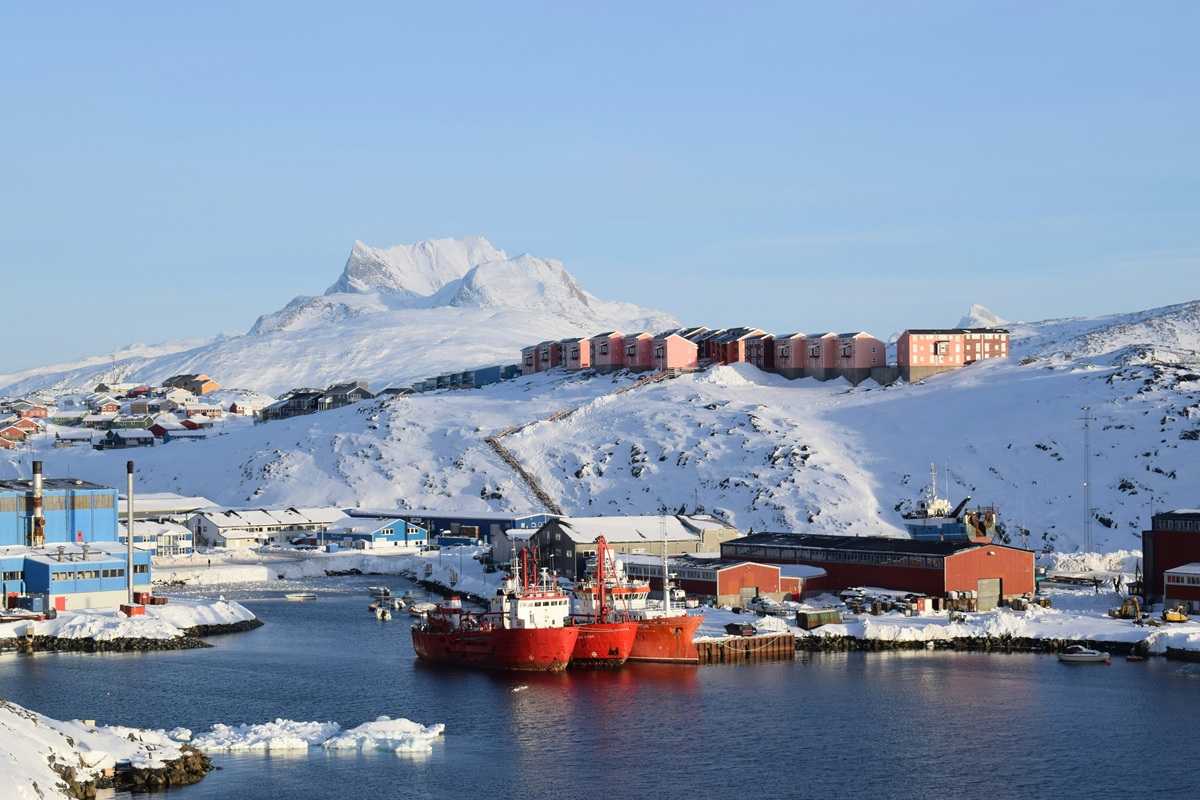
Milan (AsiaNews) – The current crisis in Greenland closely involves Southeast Asia, and the Philippines in particular, and this for several reasons.
The first is economic and social: Greenland's economy is increasingly dependent on foreign labour, especially from Asia. The second concerns the environmental consequences of the melting ice sheet, which risk disproportionately affecting the countries of origin of many of these workers.
Greenland relies on immigration to keep afloat key sectors such as fish processing, restaurants, and its shipping fleet – essential for an economy that relies heavily on fishing and Danish subsidies.
The island has been facing a severe labour shortage for several years. According to Statistics Greenland, the official statistical institute, the population could drop from the current 57,000 to around 46,000 in the next 25 years, worsening the pressure on public finances and the economy.
This is one of the challenges Greenland leaders are trying to address as they ponder the country’s political and economic future.
The labour shortage, particularly in the fishing industry, has increasingly been filled by workers from Southeast Asia. Filipinos now represent a central component of this workforce, alongside with Thais.
There are currently approximately 1,100 Filipinos and 400 Thais on the island, a sharp increase over just five years ago, up from only 270 registered immigrants from the Philippines and 200 from Thailand.
As the Financial Times reports, many restaurants and shops in the Nuuk area are run almost exclusively by workers from the Philippines.
Royal Greenland, the country's largest seafood company, which is government-owned, is openly advertising job opportunities on its website, targeting foreigners directly, especially Filipinos and Chinese.
For the former, the company emphasises that the gap between Philippine and Greenlandic income can be as high as 1:7 to 1:1. For Chinese workers, the wage gap is smaller, between 1:1.5 and 1:2, but the company notes that the difference lies in the intensity of the work.
In this context, in November, the Danish office responsible for facilitating the arrival of foreign skilled workers opened its first office in Greenland, a sign of an increasingly structured strategy to attract foreign labour.
For Greenland, migratory flows represent a way to address economic and demographic problems that some consider as urgent as the threat from the United States.
Not everyone, however, welcomes these changes, especially among the Inuit, who have historically faced discrimination in both Greenland and Denmark.
The linguistic issue also underscores this social divide. Southeast Asians tend to prioritise learning Danish over the more complex Greenlandic language.
Meanwhile, Washington's statements regarding the island's future affect all workers, immigrants, and families who depend on remittances sent back to their countries of origin.
In fact, according to the Financial Times, foreign workers are concerned that this new precariousness could be used by employers to lower their wages.
But the most paradoxical fact is that the impact of rapid melting of the Greenland ice sheet, which intensive development could exacerbate, could be worst in Southeast Asia.
Melting glaciers cause sea levels to rise unevenly, more so along the coasts of countries near the equator. This is due to the gravitational fingerprint: Large ice masses, such as the Greenland ice sheet, exert a gravitational pull on the surrounding ocean waters, drawing them inward, thus locally raising sea levels.
When these masses shrink, their gravitational pull diminishes so that sea levels tend to fall in adjacent areas, while rising in more distant regions.
Researchers estimate that the melting of the Greenland ice sheet has contributed an average of about 0.6 millimetres per year to sea level rise over the last century, while the Philippine Climate Change Assessment Report recently confirmed that it has risen by about 2.6 centimetres per year in Manila.
According to the gravitational footprint concept, countries like the Philippines will be directly exposed to this redistribution, exacerbating an already high climate vulnerability.

.png)
14/07/2025 17:10
15/03/2022 16:26
01/06/2018 10:34










