








Protect the Non-Proliferation Treaty, say bishops from cities linked to A bomb
In a joint appeal, the bishops of Nagasaki, Hiroshima, Seattle, and Santa Fe talk about the fate of the treaty, which they see as “frayed” and at risk of collapse. While the UN review conference is currently underway, the world seems to be moving in the opposite direction. The prelate speak out against the lack of commitment to disarmament. Citing Leo XIV, they say that deterrence “is based on the irrationality of relations between nations.”
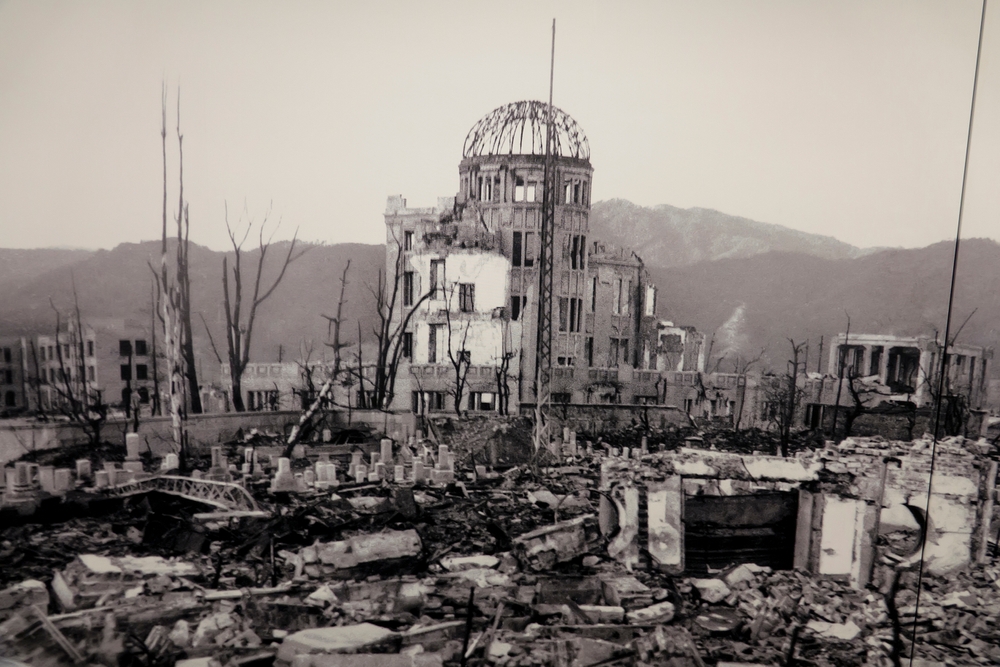
Rome (AsiaNews) – The bishops of Seattle, Santa Fe, Nagasaki, and Hiroshima – the cities that witnessed firsthand the inhumanity of atomic weapons – issued a joint statement in which they make a painful, troubled, almost resigned appeal.
The first two cities are in the United States and are concerned about the effects of the Los Alamos experiments and the stockpiling of the largest number of weapons; the other two are in Japan, the only places in the world hit by the atomic bomb.
The occasion is the 11th Review Conference of the Nuclear Non-Proliferation Treaty (NPT), currently underway at the United Nations headquarters in New York from 27 April to 22 May.
The prelates warn that the treaty, in force since 1970, is now "frayed” at a time when the nuclear issue is highly topical given the ongoing conflict between the United States and Iran.
Signed in the aftermath of August 1945, the NPT is a cornerstone for preventing the spread of atomic weapons, but is now " in danger of collapsing”, the bishops lament.
The commitment of American and Japanese Catholic prelates to nuclear disarmament is formally embodied in the "Partnership for a World without Nuclear Weapons," signed in 2023 by Archbishops Paul D. Étienne of Seattle, Peter Michiaki Nakamura of Nagasaki, Joseph Mitsuaki Takami of Nagasaki (emeritus), John C. Wester of Santa Fe, and Bishop Alexis Mitsuru Shirahama of Hiroshima.
Following in the footsteps of Pope Francis and Pope Leo XIV, they state that “mere possession of nuclear weapons is immoral.” And saying so is not a given.
In fact, the TNP is in crisis because of the “never-ending refusal of the nuclear weapons states to enter into serious negotiations leading to nuclear disarmament, which they pledged to long ago in NPT Article VI.”
Although the Treaty has been signed by 191 countries, “deterrence” has become a “one-word rationale” that conceals the possession of “immoral, genocidal weapons.”
“One must ask, why is it that Russia and the United States have always rejected the minimal deterrence of just a few hundred nuclear warheads in order to keep thousands of warheads for nuclear warfighting?”
The bishops ask questions that still have no answers in order to challenge people to reflect upon the matter. They note that Leo XIV calls for a “world built on law, justice and peace,” and that “It is our God-given duty to pursue that.”
They go on to describe the poor state of the Nuclear Non-Proliferation Treaty, noting that, “The nuclear weapons powers have not upheld their end of this legal bargain.”
While acknowledging that the NPT was “indispensable in limiting nuclear weapons proliferation” to three non-signatory countries – India, Pakistan and Israel – and North Korea, which withdrew in 2004, there is pessimism in looking at the conference underway in New York, which takes place every five years.
Sadly, “the last two NPT Review Conferences have utterly failed to outline any concrete steps toward nuclear disarmament. We don’t see how this one will succeed where the others have failed. Clearly, the nuclear threats are escalating.”
Unfortunately, “The brutal practice of might makes right is ascendant, arms control treaties are gone, and we are sliding backwards with massive modernization programs to keep nuclear weapons forever.”
Against this alarming backdrop, the bishops still hope that the conference can reverse course.
“We wish all of you at this Non-Proliferation Treaty Review Conference the very best of luck. We fervently hope and pray for a favorable outcome that genuinely leads to nuclear disarmament.
“However, if past is prologue, that outcome is unlikely.”
They note that this year a second chance is available to truly contribute to disarmament, namely the Review Conference of the Treaty on the Prohibition of Nuclear Weapons (TPNW), which came into force in 2021.
“The Vatican was the first nation-state to sign and ratify the TPNW. We will be there to help witness its further implementation,” the bishops write.
This fact underpins Pope Leo XIV’s recent call for the truth against those who have criticised him over the Vatican’s position on the Iranian nuclear programme.
“The idea of the deterrent power of military might, especially nuclear deterrence, is based on the irrationality of relations between nations, built not on law, justice and trust, but on fear and domination by force,” Pope Leo XIV wrote in his Message for the 2026 World Day of Peace.
“Here we believe that our Holy Father gets into the heart of the matter,” write the bishops of Seattle, Santa Fe, Nagasaki and Hiroshima. In the meantime, “Please know of our continued prayers for peace and healing. May you all help lead this suffering world to the promised land of a world free of nuclear weapons.”

.png)
11/10/2024 17:43
10/12/2024 17:46










