








The rush for rare earths accelerating Mekong pollution
New data released by Thailand shows that in some tributaries, arsenic concentrations caused by active mining operations exceed the limits set by guidelines. Civil society initiatives are calling for greater cooperation among the countries in the basin, as well as more concrete measures to halt the pollution.
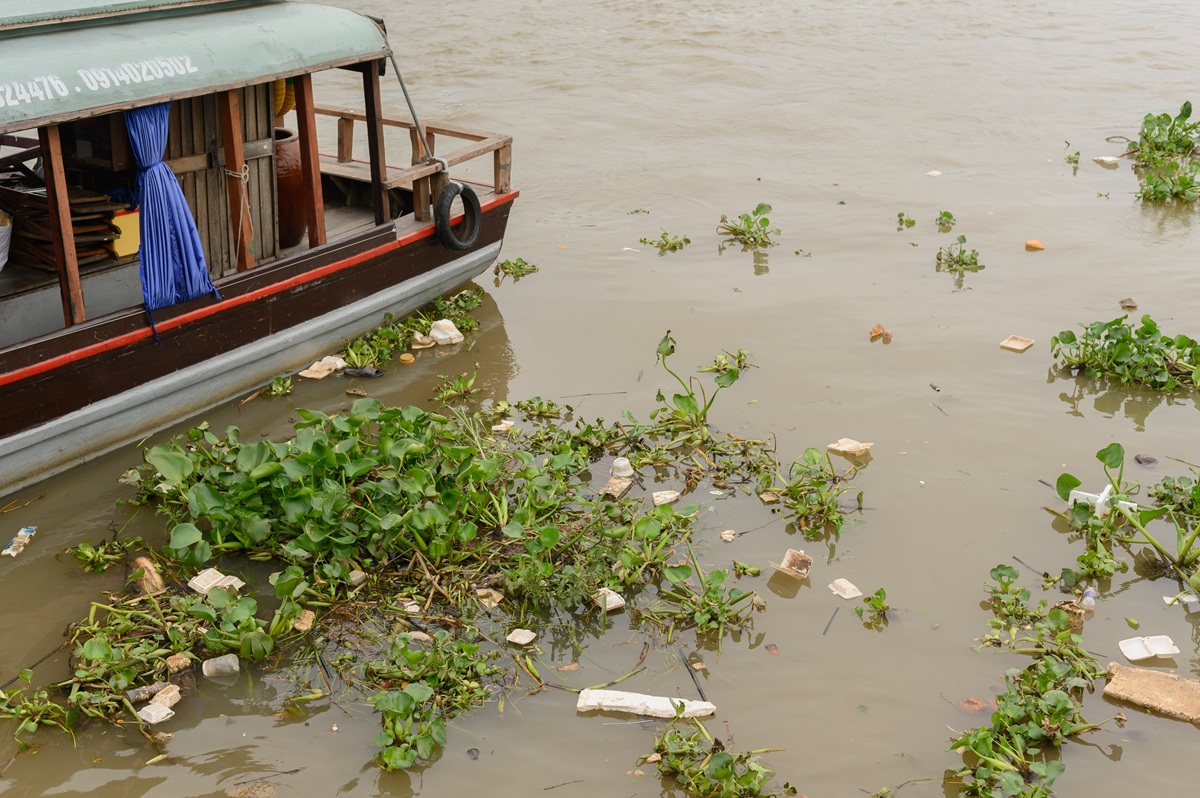
Bangkok (AsiaNews) - The health of the Mekong remains a cause for concern. The main course and tributaries of the great river, which flows for 4,909 kilometres from its sources in the Tibetan Autonomous Region of China to the Gulf of Tonkin in Vietnam, are besieged by hydroelectric projects involving local, Chinese and Thai partners in Laos, Thailand, Cambodia and Vietnam, reducing its flow and consequently decreasing sediment discharge whilst increasing the concentration of pollutants.
Recent monitoring data from Thailand’s Department of Pollution Control, shared with the Secretariat of the Mekong River Commission via the Thai National Mekong Committee, reveal persistent levels of arsenic contamination, largely attributable to active mining operations – as many as 800 in the great river’s basin, now fuelled in part by the rush for rare earths. In particular, monitoring cycles conducted between February and March 2026 indicate an impact on certain stretches of the Kok, Sai, Ruak and Mekong rivers.
While the average concentration of the substance is only slightly above the tolerance threshold (0.01 mg/L), the situation is different and more worrying when assessing the concentration by area. As regards Thailand, it appears that, in particular along the Kok River in the sections concerning the municipalities of Chiang Mai and Chiang Rai, as well as along the Sai and Ruak rivers and at all three Mekong monitoring stations in Chiang Rai province, concentrations exceed the limits set by Thai guidelines.
Arsenic contamination, although localised, requires constant attention due to its persistence in both water and sediments. This is all the more so given that general and seasonal climate changes – rainfall, river flow, sediment transport – are likely influencing the spread and accumulation of contamination, thereby increasing the risks to the population.
A series of consultations held last year at national and transnational level in the Mekong region under the auspices of the Mekong Commission – comprising Cambodia, Laos, Thailand and Vietnam – have led to significant initiatives.
For example, the roundtable of civil society organisations on the water quality of the Kok River and its potential impact on the Mekong, of which it is a tributary, proposed a platform for dialogue and commitment on 20 August 2025. On 8 December 2025, a regional consultation meeting on emergency response and management regarding water quality was held in Vang Vieng, Laos. Bearing in mind the regional impact of local decisions or situations, the Commission has also promoted cooperation with Myanmar on joint monitoring and assessment. A proposal was formally accepted last January, with reference to the regions bordering Thailand.
What is therefore emerging is not only the need for broader cooperation, but also for more concrete action plans. A key priority is the monitoring of river areas downstream of those with confirmed contamination, as in Laos, where last year arsenic monitoring took place in the Luang Prabang and Bokeo areas in July and October respectively.

.png)
05/07/2025 15:41










