








Punjab: Deaths of two Christian workers in the sewers reflect denied rights
Shakeel and Sammer Masih, sewer cleaners, are the latest victims of workplace fatalities among Christians. Activists denounce the failure to comply with safety protocols. The Bishop of the Sahiwal Baptist Church has spoken out, and the authorities have promised a thorough investigation. Also weighing heavily is the lack of access to education for Christians, who are exploited in dangerous jobs.
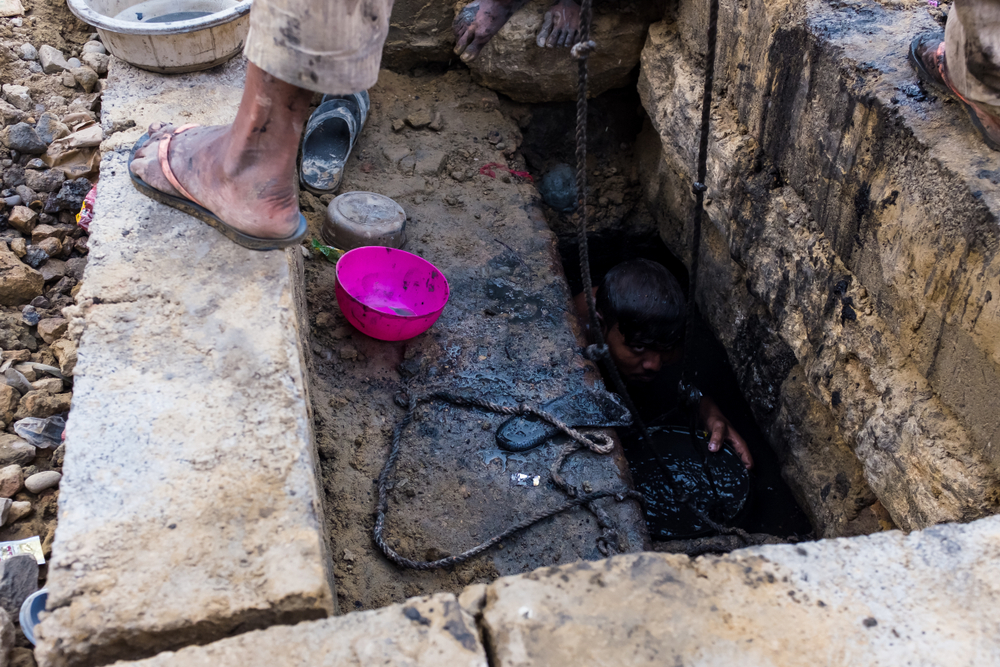
Sahiwal (AsiaNews) - The death of two sewer maintenance workers during cleaning operations in Sahiwal, formerly known as Montgomery until 1966 in the province of Punjab, has brought the issue of workplace safety back into the spotlight. In particular, the focus is on the (alleged) negligence of contractors and the exploitation of Christian labourers – a minority in the country – in potentially dangerous jobs where fatal accidents occur.
An investigation has been launched into the matter, partly following a meeting between the CEO of the Water and Sanitation Authority (WASA) and Bishop Abraham Daniel of the Sahiwal Baptist Church. The deputy commissioner in charge of the case has refuted the version provided by company officials, highlighting errors in the First Information Report (FIR), whilst the authorities state that those responsible will be held to account for their actions before the courts.
Local sources report that Javed Iqbal filed a complaint (FIR No. 412/26) at Sahiwal police station against a private contractor, claiming that the deaths of the Christian workers (Shakeel and Sammer Masih) were caused by negligence and a failure to implement safety measures. He adds that contracts for the cleaning of sewer pipes were always drawn up under strict terms and conditions, which required contractors to ensure the safety of workers and to provide protective equipment. In this specific case, a written agreement had been signed with Khalid Masih on 3 February for the cleaning of the sewer pipes.
Under the agreement, working hours were set between 10 am and 10 pm, whilst access to the sewers was not permitted during prohibited hours. The contract required the contractor to provide the necessary safety equipment, including protective jackets, shirts, vests and other essential gear designed to minimise risks during the work – considered potentially dangerous – of cleaning the sewer pipes.
However, according to the complainant, Khalid Masih allegedly breached the agreement by continuing operations without implementing the required measures. According to Iqbal, the contractor allegedly allowed workers to access the underground network without the necessary equipment and without following protocols, ultimately causing the deaths of Shakeel Masih and Sammer Masih whilst they were working under his direct supervision.
The tragedy once again draws attention to the hazardous conditions faced by sanitation workers across Pakistan, many of whom work without adequate training, personal protective equipment or mechanised cleaning systems. Human rights organisations have repeatedly criticised the methods used in manual sewer cleaning operations, describing them as a serious violation of workers’ rights and human dignity.
Social and human rights activist Khalid Shahzad strongly condemned these ‘workplace deaths’ and linked the issue to what he described as ‘systematic discrimination’ against religious minorities, particularly Christians, in the labour sector in Pakistan. He points out that the Christian community, which historically played a significant economic role prior to Partition, has increasingly been pushed into low-paid and dangerous occupations. These include cleaning sewers, working in brick kilns and on farms in rural areas, particularly where inspections are lacking. Moreover, limited access to higher education and professional opportunities has left many Christian families trapped in cycles of poverty and occupational segregation.
For the activist, these practices constitute a violation of Article 27 of the Pakistani Constitution, which guarantees protection against discrimination in public employment, and also constitute a serious violation of international human rights principles. “If the state,” he states, “does not truly wish to abandon Christians to die in the sewers, then the complete mechanisation of sewer cleaning must be implemented immediately.” Finally, Shahzad called for strict criminal liability for officials responsible for monitoring working conditions and, in the event of accidents, they – including Executive Engineers (Xen) and Sub-Division Officers (SDO) – must be held accountable for manslaughter.
The issue of the disproportionate allocation of public sanitation work to minorities was recently highlighted during a meeting of the Senate Commission on Minority Affairs chaired by Senator Dinesh Kumar. Activist groups and workers’ rights organisations are citing figures that reflect deeply entrenched occupational segregation. According to the activist group “Sweepers Are Superheroes”, at least 84 sanitation workers have died in 19 districts across Pakistan over the past five years. Statistics shared by WaterAid Pakistan indicate that nearly 80% of sanitation workers in the country are Christians, despite Christians making up only around 2% of the total population according to the 2023 census. Finally, WASA employs 2,240 sanitation workers, of whom 1,609 are Christians. Similarly, the Lahore Waste Management Company (LWMC), responsible for solid waste management in the city, employs around 9,000 workers, the majority of whom are Christians.

.png)










