








Sabella: Voting in the West Bank is a sign of ‘hope’, but the future depends on 'real peace'
Palestinians are going to the polls in some 90 municipal councils and more than 280 villages. Elections are also taking place in Deir el-Balah, the only place in Gaza taking part in the vote. For the Catholic leader, today's election is of local rather national importance. The high cost of living and socioeconomic problems exacerbated by war and occupation are the main issues. A conference on the future of Fatah is scheduled for May.
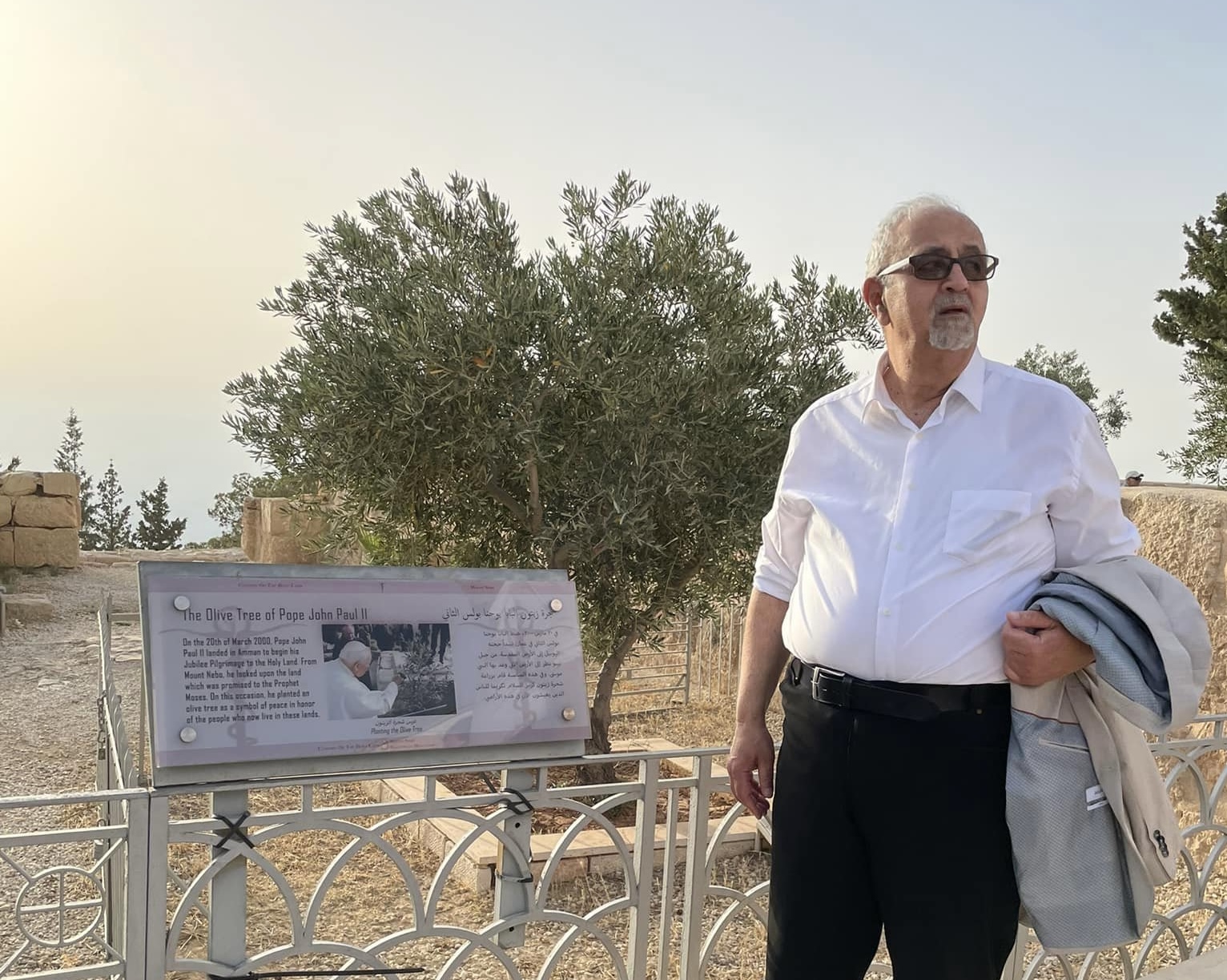
Jerusalem (AsiaNews) – The elections in the West Bank and a Gaza district are, despite some critical elements, "a good sign”, one of “hope”, said Bernard Sabella, a former Fatah representative.
Sabella, executive secretary of the Middle East Council of Churches' Palestinian Refugee Service, spoke to AsiaNews saying that he hopes that, one day, "all of us can vote" in a climate of "real peace" with the end of the wars in Gaza and in Iran.
In the meantime, he looked at the elections in some 90 municipal councils and more than 280 village councils. One of particular interest is in Deir el-Balah, the only place in the Gaza Strip called to the polls, with a potential pool of 70,000 voters.
“I don't know how many will vote”, but “hopefully, these elections will eventually lead to elections to both the Palestinian National Council and the Palestinian Legislative Council, although there are so many difficulties and uncertainties at present.”
We reached the Palestinian Catholic leader and professor by phone on the eve of the vote, which like every election represents “a good exercise, a good democratic exercise, but they have not been clearly, I wouldn't say, accepted, but the condition that the national authority put on the candidates to commit to the Palestinian Liberation Organisation and its international agreements, meaning acceptance of the state of Israel and so on, this has been seen by some as not democratic.” With a bit of luck, the vote will “take place without much Israeli intervention”.
Only independents and Fatah candidates will be on the list. This “means that in the end you will get municipal councils that are service-orientated and not politically orientated,” Sabella explained.
“The question that some people are asking, and I heard this on the radio the other day, is whether these candidates and lists for municipal councils can respond to the various needs of the population, and whether they have really the technocratic” knowledge to govern.
In fact, trust remains a key factor. Voters will have to evaluate the work of elected officials to understand whether they will really be able to develop and contribute to the well-being of the population.
Elections in Deir el-Balah, in the Gaza Strip, are being held for the first time in 21 years. This is the first sign of going back to normal municipal governance since Israel launched its war in response to the Hamas attack of 7 October 2023.
Eligible voters in Gaza go to the polls along with 1.5 million Palestinians in the West Bank, four years after the last local elections. Today's vote will be the fifth since the creation of the Central Election Commission following the establishment of the Palestinian Authority (PA) in 1993.
In 42 municipalities, a single list of unopposed candidates is on the ballot, like in two major Palestinian cities, Nablus and Ramallah.
This can be attributed to the desire to avoid unnecessary competition at a time of political uncertainty, although in fact it also seems to reflect the Palestinian leadership's desire to avoid an electoral process that shows its weakness and unpopularity.
The next mayor of Nablus is already known, a woman, Anan Al-Attir, while businessman Yacoub Sa'adeh will be the mayor of Ramallah.
Just over one million Palestinians are eligible to vote in an electoral system based on an open list system of proportional representation. Voters will be asked to pick a list and up to five candidates on it. Women must make up at least 32 per cent.
Some 367 electoral lists have been submitted, with 4,475 candidates for 284 village councils. Ninety municipal councils will hold elections on Saturday, while the others will not because of the lack of any other list.
Most candidates are family or tribal representatives or belong to the ruling Fatah movement and must sign a document stating that they will adhere to the international agreements signed by the Palestinian government. This requirement effectively excluded Hamas and Islamic Jihad.
The vote comes at a time of grave social, political, and economic hardship in the Palestinian territories and a situation of great uncertainty, from the far-from-resolved conflict and the need to rebuild in the Gaza Strip to the expansion of Jewish settlements in the West Bank and financial and employment difficulties.
“[W]e hear about Europe and the US people complaining about prices going up and so on,” the Catholic leader noted, “But here also the prices are going up,” and “necessary machines and tools,” like computers, are not coming in.
“[P]eople are worried, really” about “Israeli policies after the war has settled down? What would happen to people, like, for example, in the northern West Bank, in the northern Jordan Valley. [. . .] Will we be kicked out?”
Another major question mark concerns the education. Children and young people continue with distance learning and online classes as during the COVID-19 pandemic.
In addition, public servants’ salaries are another crucial matter. The money, when it arrives and isn't blocked by Israel, is inadequate.
“[Y]ou are talking about roughly 500 euros (US$ 585) for an employee,” he said. The “cost of living here is as high as some of the most expensive cities in Europe.”
In addition to the elections, Palestinians' attention is also focused on the upcoming Fatah conference scheduled for 14 May, which many see as a "test" of the Palestinian Authority's (PA) support for prisoners held, many for years, in Israeli jails.
Despite conflicting opinions on the matter, Fatah’s leadership announced that Palestinians who served 20 years or more in Israeli prisons will become ex-officio members of the conference.
“There have always been several members of the [Fatah] Revolutionary Council from within the prisons, and also brother leader Marwan Barghouti, who is a member of the Central Committee, was elected while in prison,” noted Tayseer Nasrallah, a member of the Fatah Revolutionary Council.
“This way, this conference will be held only with true and serious representation of the Palestinian prisoners,” Nasrallah added.
Speaking about the conference of the party he represented, Professor Sabella stressed the need for renewal and for a new generation of leaders capable of addressing economic and political challenges.
Much will depend on the selection process for Mahmoud Abbas's succession, whether the elderly leader's recommendation regarding current Vice President Hussein al-Sheikh as his successor prevails, or elections will be held to replace him.
The issue of Marwan Barghouti’s possible future role is also on the table. The Palestinian leader has been in an Israeli prison for many years.
“We don't know what's going to happen. We hope that the Congress would indeed introduce a new kind of leadership,” capable of dealing with Israel and confront its expansionist policy to the detriment of a (future) Palestinian state.
“They know that they are very limited in what they can do or cannot do,” Sabella acknowledged. “But at the same time, there is some kind of opposition to a dramatic change in which you say, we have had enough with the system of political factions and we need new blood. We need new parties. We need new factions.” And new faces.

.png)
25/08/2008










