








Tajikistan’s ‘River of Gold’ and the world of the Sogdians
Archaeological excavations in the Zeravshan Valley, which began in the 1930s, continue to this day, yielding new discoveries about the rich world of this ancient people, who made a significant contribution to world culture.
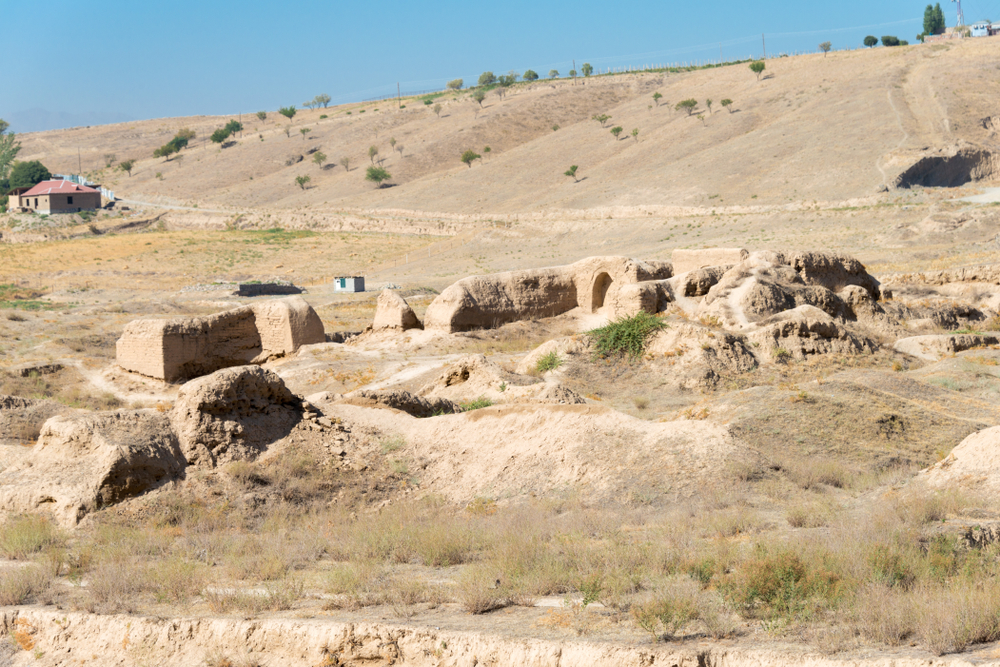
Dushanbe (AsiaNews) - The Zeravshan River flows from Tajikistan to Uzbekistan; in ancient Persian, its name means ‘the spreader of gold’ of the province of Sogdiana. According to the region’s ancient traditions, it was created by Fire, the Sun and Water, when the fundamental elements of nature were regarded as gods who bestowed great creative energies upon mankind.
The Tajik professor of architecture, Munavar Mamadnazarov, has attempted to explain in Asia Plus what the secrets of the Sogdians’ energy are, and what the religious roots were that gave rise to these great traditions.
Archaeological excavations in the Zeravshan Valley began in the 1930s and continue to this day, offering new discoveries about the rich world of this ancient people, capable of making a significant contribution to world culture. In the Avestā, the ancient hymns of Zoroastrianism, there are inscriptions dating back over 2,500 years that contain references to golden peaks from which the Iranian god Mithra contemplates the entire Aryan land, including Gava in Sogdiana.
This is probably the earliest mention of the Zeravshan Valley. Deciphered documents from the castle on Mount Mug have confirmed the eastern Iranian roots of the Sogdian language, and have also revealed the tragic events that befell the Sogdians following the Arab conquest of the 8th century.
Sensational excavations of the ancient city of Penjikent have revealed a hitherto unknown, vivid and unique picture of life in a small Sogdian community. Pendžikent, or Panč as the Sogdians called it, was founded between the 4th and 5th centuries and was destroyed by the Arabs in the 8th century.
The city was abandoned by its inhabitants and never rebuilt, allowing archaeologists to study it in detail, unlike the capitals of Sogdiana, namely Bukhara and Samarkand. The city stood on two terraces surrounded by fortified walls: the upper terrace, which rose above the surrounding area, housed the citadel with the ruler’s palace, whilst the šakhristan, the city proper where most of the population lived, lay below.
The citadel, separated from the rest of the city by a deep moat, housed a large palace, a multi-storey complex with the ruler’s apartments at the top. The palace’s open terraces offered a picturesque view of the city below. The ceremonial section of the palace included a spacious throne room, measuring 250 square metres, with a raised platform accessible via a ramp situated on the central axis. Two imposing square pillars and a deep niche in the back wall lent the interior a fitting solemnity and monumentality.
The ruler sat on a throne in the raised section of the hall, whilst his subjects sat in the lower section on suffas running along the walls. The throne room was covered by a spectacular and complex wooden structure of sloping tiers, with a skylight at the top. Fragments of carved wood and numerous paintings on the walls indicate that, in terms of decorative richness, the palace of the ruler of Penjikent was no less impressive than the palaces of the rulers of Bukhara.
The two temples of Penjikent, situated on artificial platforms, still make a majestic impression even in their ruined state. Each temple had a large inner courtyard, built along the perimeter, with a ceremonial entrance portal on the main axis.
The temples’ spacious colonnaded porticoes (iwan) faced east. In the rays of the rising sun, worshippers could admire a slender and elegant colonnade, numerous bas-reliefs and multicoloured frescoes. All this must have created a solemn and festive atmosphere.
In addition to the general pantheon of gods, individual Sogdian families worshipped their own protective deities, linked to family history and genealogy and the deeds of their ancestors.
An image of such a patron deity was placed on the wall opposite the entrance to the main hall, but the main religion of the Sogdians was undoubtedly Zoroastrianism, in its Sogdian-Bactrian variant, perhaps with more ancient Indo-Iranian roots, subsequently enriched by Indian, Middle Eastern and Hellenistic influences, which today people are seeking to revive not only through archaeological excavations, but also in the consciousness of the peoples of these ancient territories.

.png)










