








The return of ‘IS widows' and the question of accountability
The repatriation to Australia of women and children linked to the Islamic State puts the spotlight on a hitherto forgotten issue. Thousands held in the Al Hol and Al Roj camps, run by the Kurdish Syrian Democratic Forces (SDF), are not only the last physical vestige of the caliphate but also the battleground between two difficult-to-reconcile needs: the protection of national security and obligations towards one’s citizens.
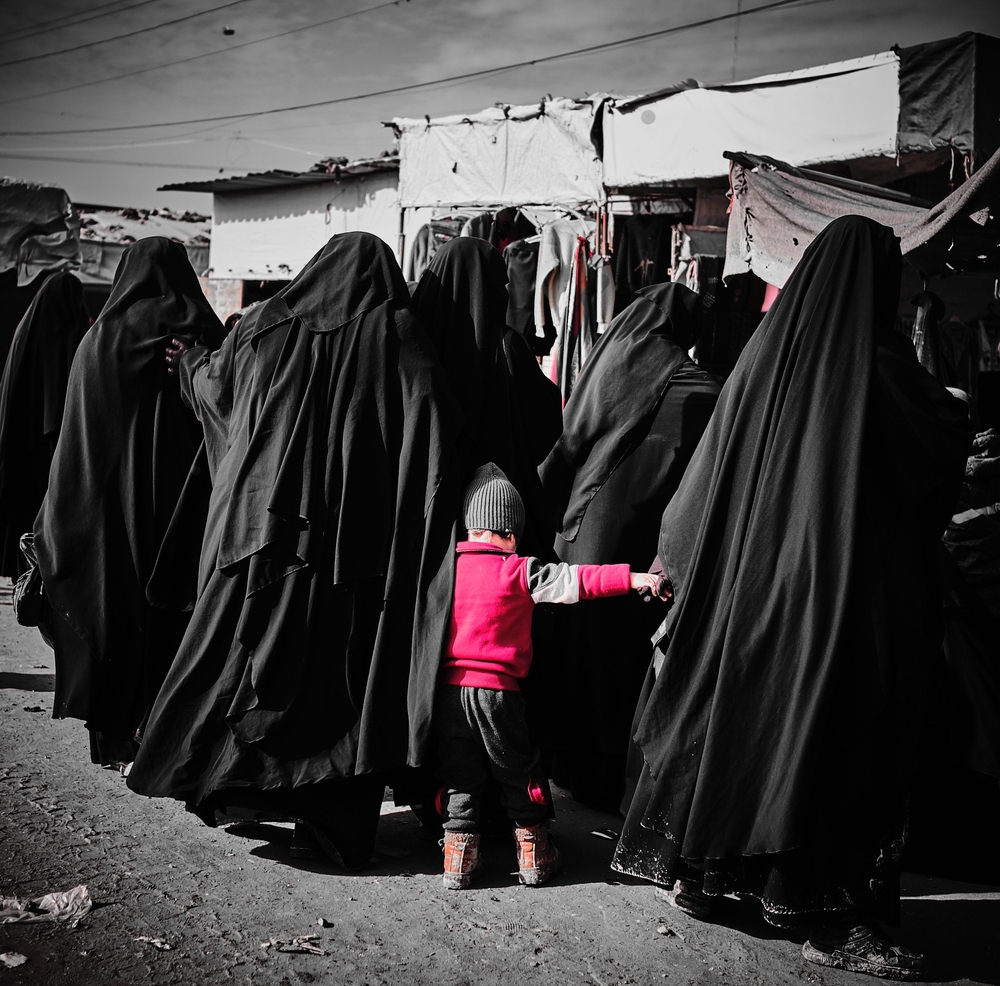
Milan (AsiaNews) – The recent return to Australia of a group of women and children linked to the Islamic State (IS) has put the spotlight on a question that many Western governments have long sought to avoid, if not to suppress, namely what to do with their citizens (both men and women) who travelled to Syria and Iraq, especially between 2013 and 2019, to live (and fight) under the black flag of the so-called Islamic State caliphate?
A separate issue is that of jihadi wives. Between May and June 2026, several Australian women and their children returned to the country after years spent in the Al Roj camp in northeastern Syria. Some were arrested upon arrival, with two accused of crimes against humanity and enslavement, and another facing terrorism-related charges.
Australian authorities have reiterated that repatriation does not equate to any form of impunity and that criminal charges will be laid if warranted. Minors are, however, deemed victims of war and, therefore, in need of protection and assistance.
The Australian case is just the latest in a conflict involving numerous Western countries. After IS's military defeat in March 2019, with the capture of its last stronghold of Baghuz, thousands of foreign women and children were detained at the Al Hol and Al Roj camps, run by the Syrian Democratic Forces (SDF), a Kurdish-led alliance supported by the United States.
Today, the situation appears even more complex.
Following the fall of Bashar al-Assad's regime in late 2024 and the subsequent territorial reorganisations, northeastern Syria entered a new phase of political and military uncertainty.
The reduction in the international presence has fuelled doubts about the ability of local authorities to continue managing thousands of detainees and their families.
Under the new Syrian regime led by Ahmed al-Sharaa, a former terrorist who went by the nom de guerre Abu Mohammad al-Julani, attitudes towards the Kurds of northern Syria (Rojava) have generally been of mistrust, political-military confrontation, and open opposition to the region's autonomist aspirations.
For years, the camps have been one of the thorniest issues. Humanitarian groups have denounced overcrowding, inadequate healthcare, educational deficiencies, and frequent episodes of violence.
At the same time, the risk of radicalisation among youth growing up in an environment still permeated by jihadi ideology has fuelled concerns among security agencies.
The scale of the problem is smaller than in the years immediately following IS’s fall, but remains significant.
While in 2019 the camps housed about 70,000 people, the latest estimates put the number at between 40,000 and 45,000, mostly children, and 20,000 to 25,000 adult women, mostly Syrian and Iraqi, including wives, ex-wives, and widows of IS fighters, as well as family members whose individual status requires individual assessment.
Inmates in the camps in northeastern Syria include an estimated 5,000 to 6,000 foreigners, mostly women (1,500 and 2,000) and children, from more than 40 countries, a major dilemma for Western governments, uncertain about repatriating them, leaving them in the camps, or seeking international legal solutions that have so far never really taken off.
The debate over the nature of their commitment to the caliphate divides politicians, lawyers, and human rights activists.
Some believe many of the women who left for the caliphate remain fully aligned with a project based on violence and oppression. Those who share this view consider repatriation too risky since it would mean transferring difficult-to-manage security concerns to their countries of origin, as well as constituting an affront to IS victims.
Others note that some of the people may have been coerced, manipulated, or recruited at a young age.
Some sources are reporting that Al Hol has begun a gradual process of emptying, while Al Roj has reportedly seen the number of residents decrease thanks to repatriation programmes.
The question of the thousands of IS militants held in prisons in northeastern Syria remains open, considered by observers to be a major threat to regional security.
According to the estimates most frequently cited by Kurdish authorities and international observers, some 10,000 male fighters are still held in facilities controlled by the SDF. Of these, between 2,000 and 2,500 are believed to be foreign nationals from various countries.
Kurdish authorities have repeatedly maintained that they cannot sustain the burden of running the camps and prisons indefinitely.
What is more, it is feared that any political crisis or renewed clashes could encourage prisoner escapes or strengthen the IS’s underground networks.
This very scenario has prompted several Western governments to reconsider their positions. For years, many states have adopted a cautious or openly hostile approach to repatriations.
France and the United Kingdom have favoured case-by-case assessments, often allowing returns only for vulnerable minors.
London has also made extensive use of revoking the citizenship of some dual nationals, drawing criticism from human rights organisations.
Initially very restrictive, Australia had already authorised the return of a first group of women and children in 2022.
The 2026 returns seem to indicate a more defined approach: willingness to welcome Australian citizens who manage to leave Syria, but accompanying their return with an investigation into possible criminal responsibility.
Although the IS has been defeated militarily, surviving only through scattered cells and underground activities, the problem of the so-called IS widows has by no means disappeared.
The tents of Al Hol and Al Roj represent not only the last physical vestige of the caliphate, but also the place where two needs, that are certainly not easy to reconcile, collide: the protection of national security and the responsibility every state has towards its own citizens.
For years, delegating the management of this "inconvenient legacy" to Kurdish militias in northeastern Syria seemed the simplest, politically least costly solution.
The evolution of the Syrian conflict and the fragile balance that emerged after Ahmad al-Sharaa's rise to power in December 2024 have exposed all the limitations of that choice. And the time for delays now seems over.
australia, syria, iraq, islamic state, wives, children, detention camps, repatriation, kurdish militias

.png)










