








The unseen war: Pakistan strikes Kabul, killing more than 400 people according to the Taliban
According to Kabul, a drug rehab facility in the Afghan capital is also hit in the latest Pakistani airstrikes, with hundreds killed, while Islamabad denies targeting civilians. The escalation is part of Pakistan's "open war" against the Taliban, accused of supporting terrorist groups. India slammed the attack, while China continues to call for restraint.
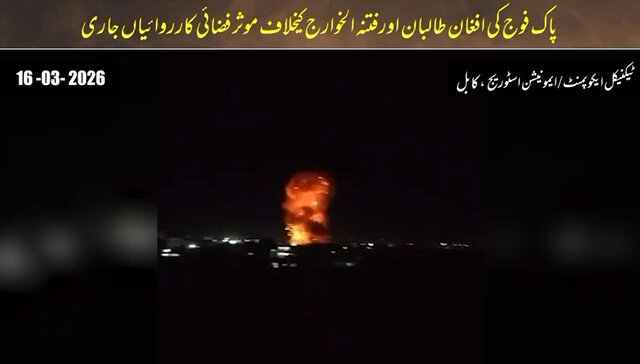
Islamabad (AsiaNews) – At least 400 people have been killed and 250 wounded from a Pakistani airstrike at a Kabul drug rehabilitation centre that hosts thousands of patients, Taliban authorities have reported.
Pakistan has denied responsibility for what happened to the healthcare facility, stating instead that it “successfully carried out precision airstrikes” targeting “Afghan Taliban regime terrorism-sponsoring military installations in Kabul and Nangarhar”.
Overnight on 21-22 February, Pakistan launched an “open war” against the Taliban, accusing them of providing refuge and financial support to the Tehrik-i-Taliban Pakistan (TTP), the Pakistani Taliban, which has carried various terror attacks aimed at turning Pakistan into an Islamic emirate modelled on Afghanistan’s.
This morning, Pakistani Information Minister Attaullah Tarar shared footage of the attacks, saying that facilities used by the TTP and pro-independence groups in Pakistan’s Balochistan province were targeted.
Balochistan is a region bordering Iran and is at risk of being caught up by the ongoing wars. The Free Balochistan Movement, for example, last week released a statement backing Israeli and US attacks against Iran, fuelling concerns within the Pakistani security establishment.
In fact, weakening the Iranian regime could strengthen pro-independence groups in Pakistani Balochistan as well.
Italian NGO Emergency, active in various parts of Afghanistan, said that several wounded people were brought to its Kabul trauma centre.
“Following the attacks, we received 27 patients in our hospital, and it became necessary to activate the mass casualty procedure," said Dejan Panic, Emergency’s country director for Afghanistan.
“A woman is also among the wounded, all adults. Two are in critical conditions. Unfortunately, three people arrived already dead. Most of the victims came from a drug rehabilitation centre. We ask that healthcare facilities be always respected and not become targets of attacks."
The situation, especially in the capital, has worsened in recent months, Panic noted. In another attack a few weeks ago, "several wounded people, including women and children, arrived at the NGO's hospital. The concern is that we will return to a situation like that before 2021," the director explained, referring to the war launched by the United States against Afghanistan.
In August 2021, the Taliban regained control of the country, but the security situation worsened after their victory over international forces, spurring various terrorist groups in the region to action.
One of the wounded in the Pakistani attack last night told Radio Hurriyat, a Taliban-affiliated news outlet, that Pakistani fighter jets also hit a target about 200 metres from the drug rehabilitation centre.
For their part, Taliban intelligence has urged local media to avoid reporting news of the deaths of Taliban officials, underlining that such media coverage could have “serious consequences”.
Over the weekend, Pakistan again targeted the city of Kandahar, southern Afghanistan, home to the Taliban's supreme leader. Hibatullah Akhundzada, who heads the group's most hardline faction, appears to have become one of the Pakistani government's main targets.
Last Friday, Pakistani President Asif Ali Zardari condemned a series of attacks by Taliban drones saying that Kabul had “crossed a red line by attempting to target our civilians”.
The Pakistani military said it intercepted Afghan drones, but debris wounded two children in Quetta and several civilians in Kohat and Rawalpindi, headquarters of the Pakistani army.
India, which fought a brief war against Pakistan last year, strongly condemned Pakistan’s attack on Kabul.
“This is a cowardly and unconscionable act of violence that has claimed the lives of a large number of civilians in a facility which can by no means be justified as a military target," said India’s Ministry of External Affairs in a statement.
“That this attack was carried out during the holy month of Ramzan (Ramadan), a time of peace, reflection, and mercy among Muslim communities across the world, makes it all the more reprehensible,” it added.
Despite the concern, Indian Prime Minister Narendra Modi's government has long discriminated against Indian Muslims, and, in some cases, persecuted them.
China, which has mining interests in Afghanistan and Pakistani Balochistan, has called for the safety of staff and organisations in both countries to be guaranteed. In the recent past, armed separatist groups have targeted Chinese nationals and investment projects in the Pakistani province.
In Beijing, the Foreign Ministry reiterated that “China will continue to play a constructive role through its own channels” to de-escalate tensions.
At the Ministry’s daily press conference, spokesman Lin Jian expressed hope that “the two countries will remain calm and exercise restraint and engage in face-to-face talks at the earliest possible opportunity to resolve differences through dialogue.”

.png)
07/05/2023 14:24
31/08/2021 11:19










