








The ‘world cup’ failure of Asian teams at USA 2026
With Japan’s elimination in the round of 16 – the only team to have progressed beyond the group stage – the continent now has no teams left in the competition. The stark contrast with Africa and the wave of resignations, from South Korea to Saudi Arabia. The case of Iran, which remained unbeaten but was eliminated on goal difference (and due to hostile politics). The players’ message: “May peace and friendship prevail”.
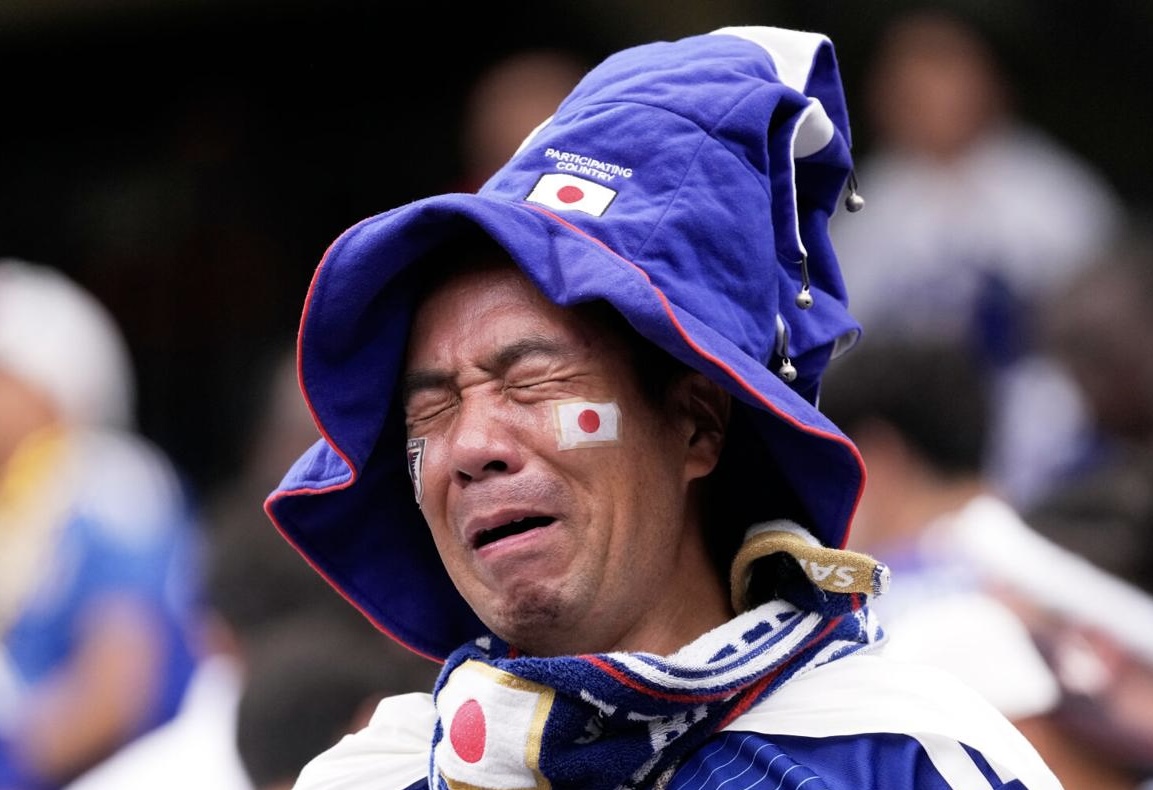
Milan (AsiaNews) – A ‘global’ failure with no mitigating factors, despite the pre-tournament proclamations and expectations: the 2026 World Cup for the Asian teams has already come to an end, almost three weeks before the final, scheduled for 19 July, following Japan’s elimination yesterday at the hands of a far from unbeatable Brazil in the round of 16, the first knockout stage.
The continent’s other teams failed to even make it past the group stage, outclassed by nations with far lower expectations in terms of investment and resources, such as Cape Verde: the small African island nation qualified by beating, amongst others, Saudi Arabia – the next host of the tournament in 2030 – and on Saturday 4 July, it will face Argentina in a match that is already making history.
In addition to the stark contrast with the African continent itself – which, with Morocco’s victory over the Netherlands, already has a team capable of securing a place in the round of 16 – Asian football seems to have hit rock bottom in recent history, a history characterised by investment and sponsorship. After all, the words of the then FIFA president (the international federation that organises the competition and governs global football), Sepp Blatter, in the early 2000s are still fresh in the memory.
It was a period of great growth for the sport, on the eve of the World Cup in South Korea and Japan, which took place in the summer of 2002. “In Asia,” Blatter had prophesied, “more than half the world’s population lives [and for this reason] the future of football must lie in Asia.” For the executive, the sporting aspect went hand in hand with economic returns, against a backdrop of growing popular success and – perhaps over-optimistic – predictions of a possible final victory. The current edition of the most prestigious international football tournament shows just how wrong those predictions were.
With the ‘Blue Samurai’ out of the running, the only ‘Asian’ team still in contention is Australia, which belongs to the Asian Football Confederation (AFC), despite not being part of the continent.
Conversely, it is worth noting here the immediate elimination of Turkey as well, which, unlike the ‘Kangaroos’, is to all intents and purposes an Asian nation, despite being part of the Union of European Football Associations (UEFA). In any case, the pre-tournament expectations for the largest-ever contingent at a World Cup (nine teams in total) have already faded, and the search for those responsible has already begun, with the resignations of the heads of the South Korean and Saudi Arabian football associations.
The statistics are stark: Iraq conceded 12 goals, scoring just once. Uzbekistan conceded 11 goals, scoring only two. Qatar conceded 10, scoring two. Jordan conceded eight goals, scoring three. Saudi Arabia conceded five, scoring one.
South Korea scored two and conceded three goals. Iran, the only team among the seven to avoid defeat but politically opposed due to the Gulf conflict and subject to restrictions and obstacles that affected its performance, scored three goals and conceded the same number. Overall, the seven eliminated Asian teams won just one match, drew six and lost 15. They scored 14 goals and conceded 52.
Four teams finished with one point or fewer. Three teams finished with zero points. Qatar, the reigning two-time Asian champions, managed to secure just one point. Uzbekistan, Jordan and Iraq finished on zero points, reflecting a continent that has not progressed as rapidly as its resources, investment and number of participants might suggest.
In the last few hours, South Korea’s manager has resigned, asking the nation for forgiveness: “I would like to apologise sincerely,” he said, “to the citizens who have loved Korean football and have always supported the national team. I have failed to deliver the results the public expected. The responsibility,” he concluded, “lies entirely with me.”
Saudi Arabia, a nation that had beaten Argentina – who went on to become world champions in 2022 – finished with just two points, and the decision to change the manager on the eve of the tournament, sacking Hervé Renard and replacing him with Georgios Donis, proved of little help. Iran remained unbeaten but fell victim to factors beyond the game itself; despite drawing three matches, they failed to qualify as one of the best third-placed teams on goal difference.
Captain Mehdi Taremi described the tournament as a “disaster”, whilst manager Amir Ghalenoei said the team had been “the most oppressed” due to visa restrictions. In the changing room after the final match, they left a handwritten note. “From ancient Persia thousands of years ago to today’s civilised Iran, the spirit remains alive and constant.” “We came to Los Angeles with pride, we competed with honour and we left with dignity. May – the message concludes – peace, respect and friendship prevail amongst all nations.”
The contrast with Africa is stark and impossible to ignore: of the 10 African teams entered in the tournament, no fewer than nine reached the knockout stages. On this point, Jordan’s manager Jamal Sellami offered an eloquent analysis: “The most important thing for Jordanian football, if it is to have a better chance of achieving results, is to have players competing in stronger leagues.” The African success suggests he is right, with players spread across all European leagues, whilst the majority of Asia’s best players play on the continent itself.
In the run-up to the tournament, AFC President Shaikh Salman bin Ebrahim Al Khalifa had urged Asian teams to “seize the moment” and “set a new record for results outside Asia”. The response was a “global flop”, despite the enormous financial and promotional efforts of the Asian federation and individual countries – not least China, which failed to qualify. The South Korean media are among the most critical voices, with the Chosun Ilbo describing the campaign as a “disappointment”, with the team leaving behind an “embarrassing result”. A fan’s banner at Seoul’s Incheon Airport was even more blunt: “South Korean football is dead”.

.png)
12/02/2016 15:14










