








Jordan is cataloguing and promoting its 34 Christian sites
The initiative promoted by the Hashemite Kingdom consolidates investment in Christian religious tourism in the country and looks ahead to 2030, when the 2,000th anniversary of the Baptism of Jesus will be celebrated. From Mount Nebo to Madaba, from Gerasa to the Byzantine site of Petra itself – these are places that aim to create itineraries independent of trips to Israel and Palestine.
Milan (AsiaNews) – The strategy is clear. Jordan aims to significantly strengthen its position as a destination for religious tourism in the Middle East. For this reason, 34 sites linked to Christian history (or of biblical interest) have been surveyed, catalogued and included in a comprehensive development project.
The initiative was outlined by the Jordanian Minister of Tourism and Antiquities, Imad Hijazin, who confirmed the strategy through which the Hashemite Kingdom aims to consolidate its role in the international pilgrimage market.
The project is not limited to the protection of archaeological and religious heritage: it represents a genuine cultural and economic investment, at a historic moment marked by conflict and violence which has seen visitor numbers at other pilgrimage destinations (with Jerusalem and the Holy Places at the forefront) decline sharply.
The announcement of the survey of the 34 Christian sites coincides with the forthcoming launch of a digital platform dedicated to Al-Maghtas, the site of the Baptism of Jesus on the eastern banks of the Jordan, and the training of guides specialising in religious tourism.
These are key elements of a strategy launched several years ago and directly supported by the Hashemite monarchy, which regards the biblical heritage as one of the country’s most important assets for international promotion.
The heart of the project remains, of course, Al-Maghtas, identified by Christian tradition as the ‘Bethany beyond the Jordan’ mentioned in the Gospels, where tradition places the baptism of Jesus.
Recognised by UNESCO and visited by popes and religious leaders from all over the world, the site is now the main centre of Christian pilgrimage in Jordan. Around it, the government is developing infrastructure, services for pilgrims and a comprehensive hospitality plan in the run-up to 2030, the year in which the two-thousandth anniversary of Christ’s baptism will be celebrated. This initiative is promoted by the Christian Churches in Jordan and supported by King Abdullah II.
However, the strength of Jordan’s proposal lies in presenting the country as a veritable ‘biblical landscape’, where the Old and New Testaments intertwine. It is worth highlighting some of the main destinations which, combined with Jordan’s historical and natural beauty, make it a truly unique travel destination.
As for the New Testament, in addition to the site of the Baptism, a place steeped in history and charm is Machaerus (Mukawir), the Herodian fortress overlooking the Dead Sea where, according to tradition, John the Baptist was imprisoned and beheaded on the orders of Herod Antipas. It is one of the most evocative settings in the Gospel narrative and represents a site of great interest for Christian pilgrims.
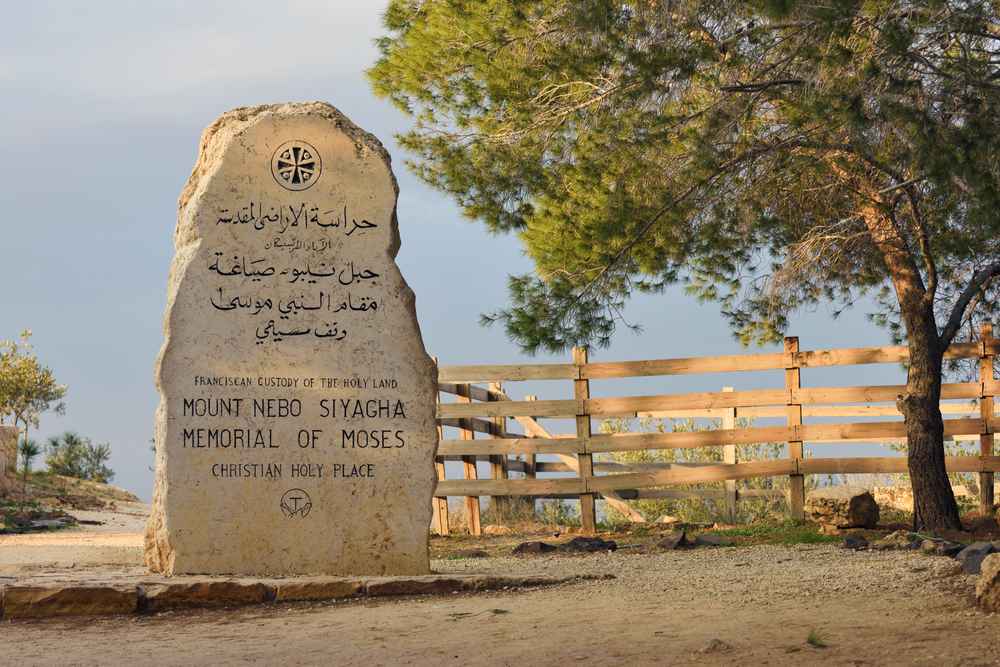
Equally important is Mount Nebo, from which Moses beheld the Promised Land before his death. Although it belongs to the history of the Old Testament, over the centuries the sanctuary has become a favoured destination for Christian pilgrimage, as evidenced by the remains of the Byzantine basilica and the splendid mosaics recovered by Franciscan archaeologists of the Custody of the Holy Land. From Mount Nebo, on clear days, the view stretches as far as Jerusalem and the Jordan Valley.
Then there is the city of Madaba, another cornerstone of Jordan’s religious heritage. The Greek Orthodox Church of St George houses the famous Madaba Map, the oldest surviving geographical mosaic in the Holy Land, dating back to the 6th century. For historians and pilgrims alike, it represents an extraordinary testament to the Christian memory of biblical sites.
And how could we fail to mention Gerasa (Jerash), where a thriving community existed from the earliest Christian centuries, building churches and basilicas? And then there is Gadara, one of the cities of the Decapolis.
At Umm ar-Rasas, the biblical Meefat, the remains of the splendid Basilica of St Stephen have been unearthed, featuring one of the finest mosaic floors in the Middle East. Petra, too, alongside its Nabataean beauty and antiquities, preserves Christian heritage from the Byzantine period.
There are also (probably legendary) traces of biblical history preserved in the place names: in addition to Moses’ Spring (Ain Musa), one of the rocky peaks rising around the ancient city is called Jebel Harun (Mount Aaron). Finally, it is worth mentioning the Crusader castles, which stood along the King’s Highway (linking the Red Sea to the Mediterranean). The fortresses of Kerak and Shobak are destinations of great charm and interest.
The River Jordan itself, in its course, represents a common thread running through the entire sacred history: it is the watercourse that the Israelites crossed as they entered the Promised Land led by Joshua, the place associated with the prophets Elijah and Elisha and, subsequently, with the ministry of John the Baptist and the baptism of Jesus. A geographical feature that strikingly links the Old and New Testaments.
Amman’s objective is clear: to transform Jordan from a mere extension of traditional itineraries in the Holy Land into an independent destination for international pilgrimage. No longer merely a stopover complementing trips to Israel and Palestine, but a destination with its own religious identity, the guardian of biblical memory in the contemporary Middle East.

.png)
10/01/2025 19:28
17/10/2016 17:36










