








Vicar of Arabia: A Christmas of diverse rites and traditions, hope for a “living Church”
In the third instalment of AsiaNews’ report from the Gulf, Monsignor Bernardi reflects on the richness each person brings to the celebrations of Catholic communities composed of people from many different backgrounds. There are numerous challenges: from internal disputes among the Syro-Malabars to the need for formation that prevents faith from slipping into mere devotionalism. Local and universal jubilees are experienced with “dynamism and creativity”.
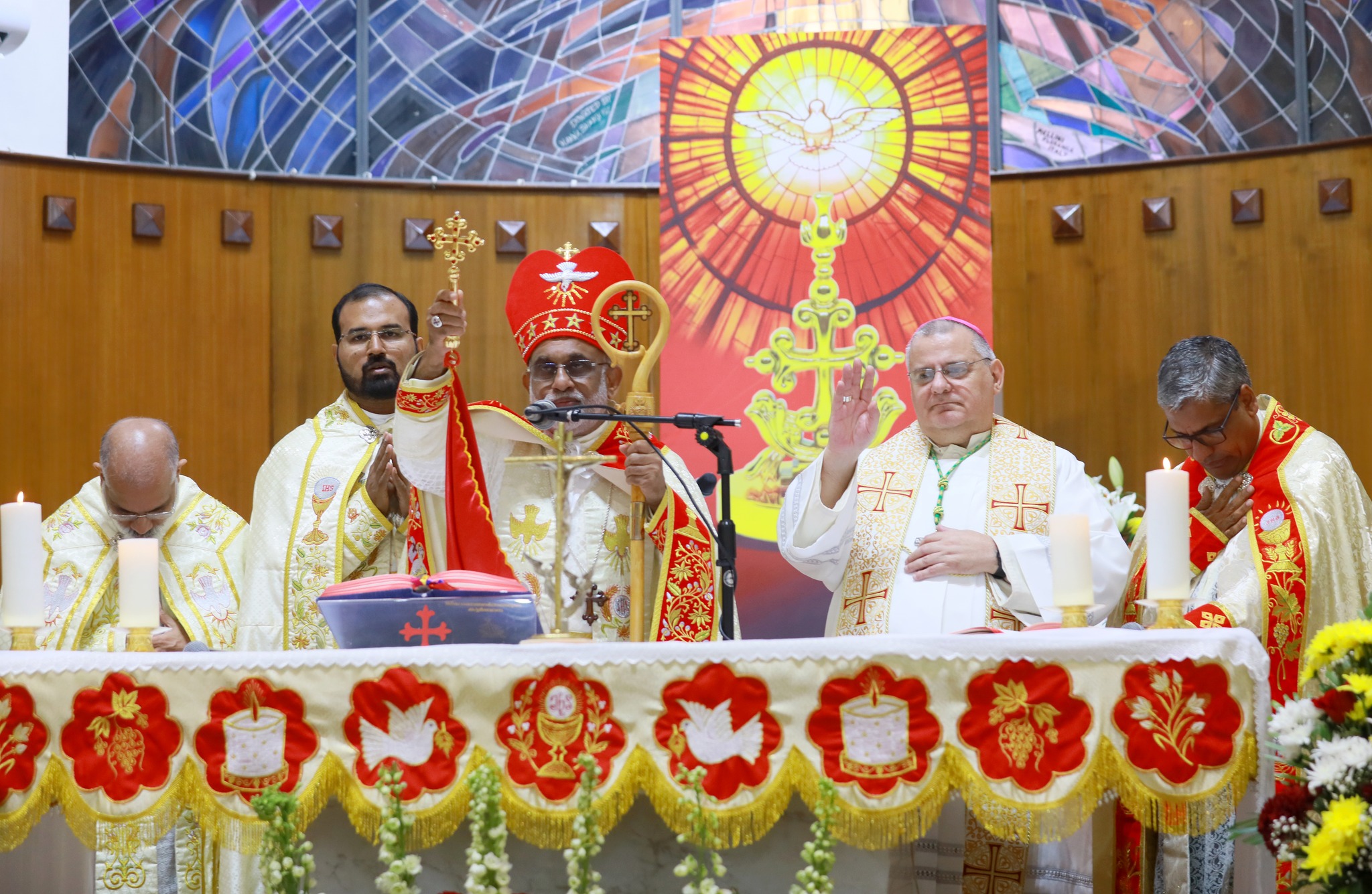
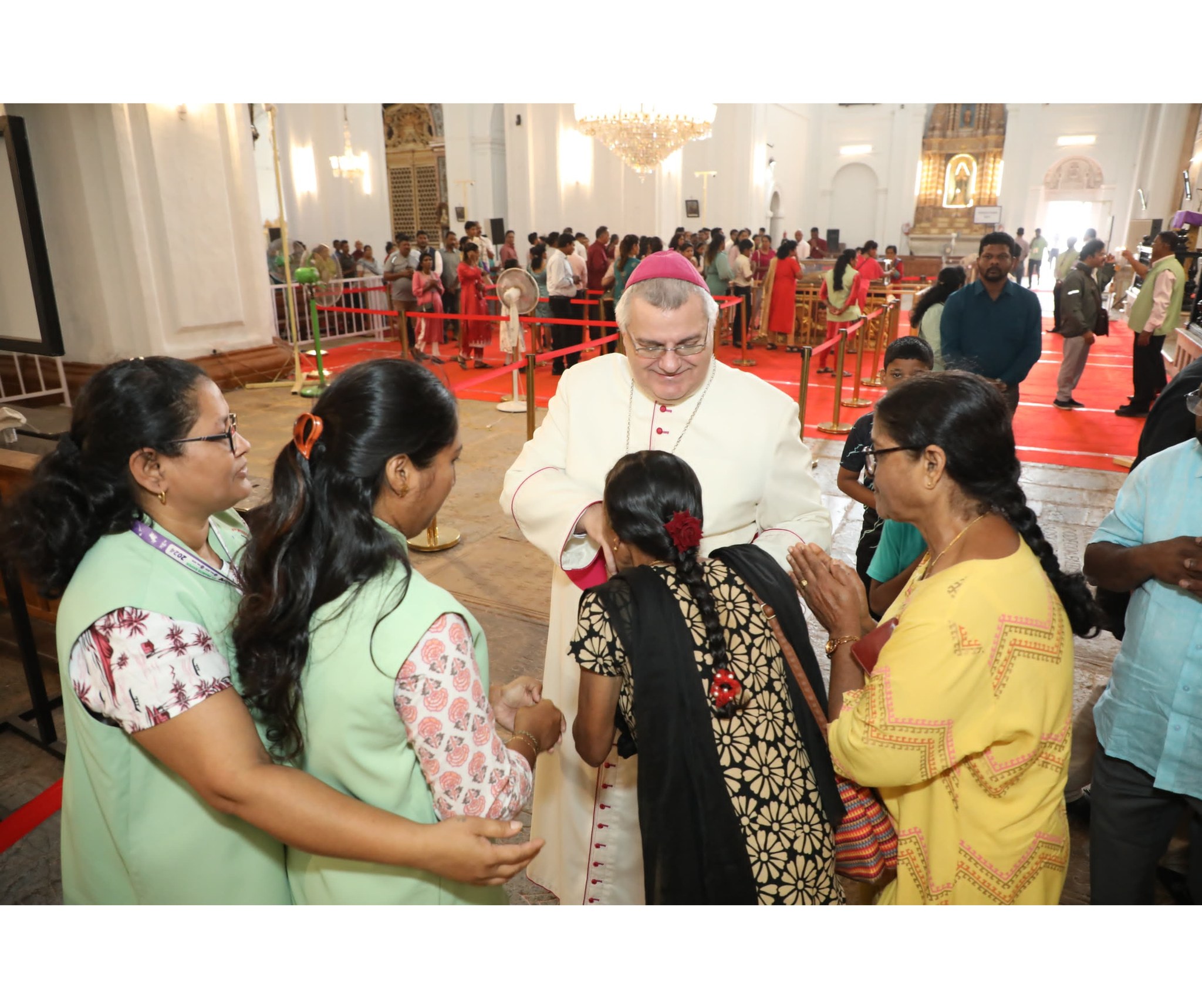
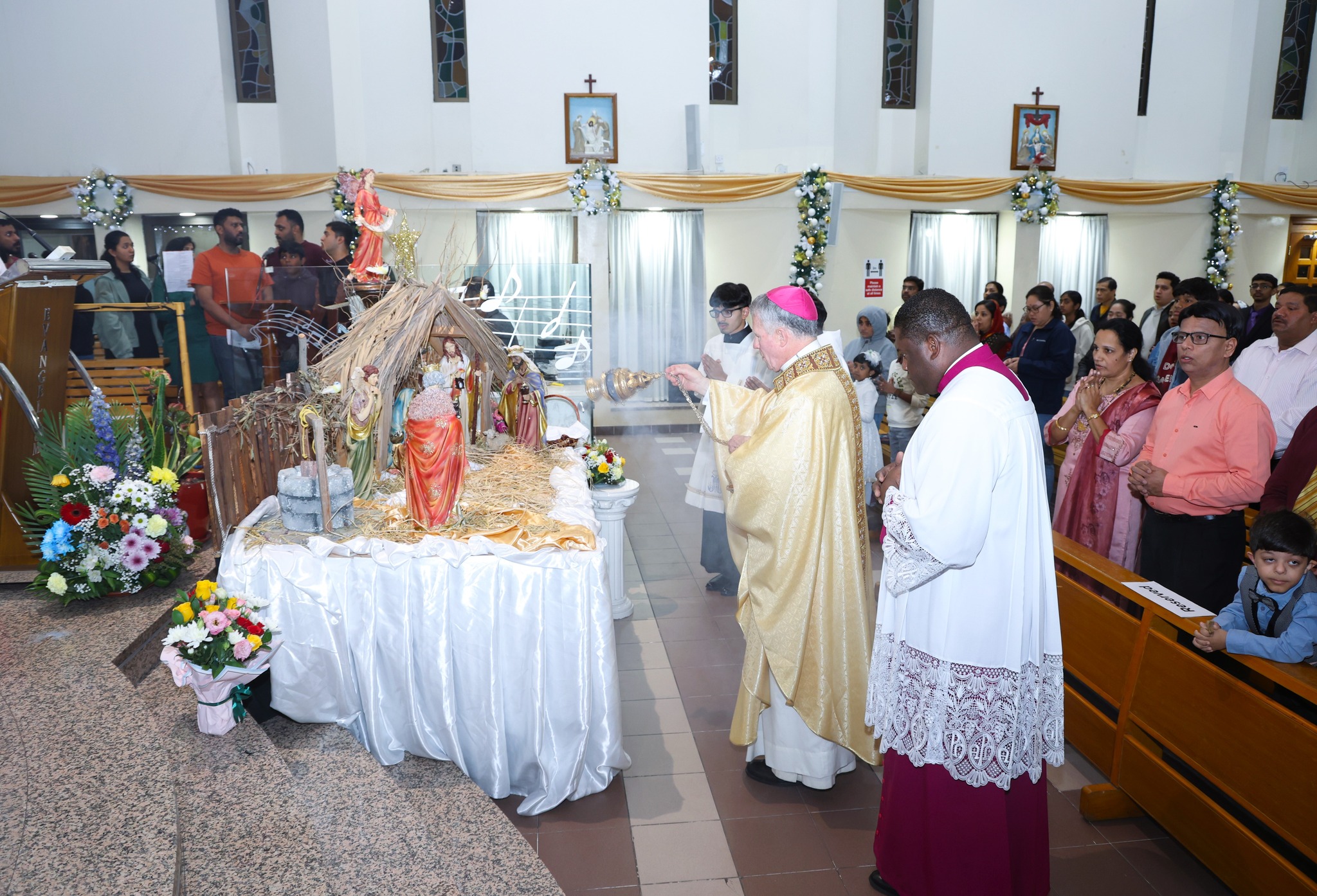
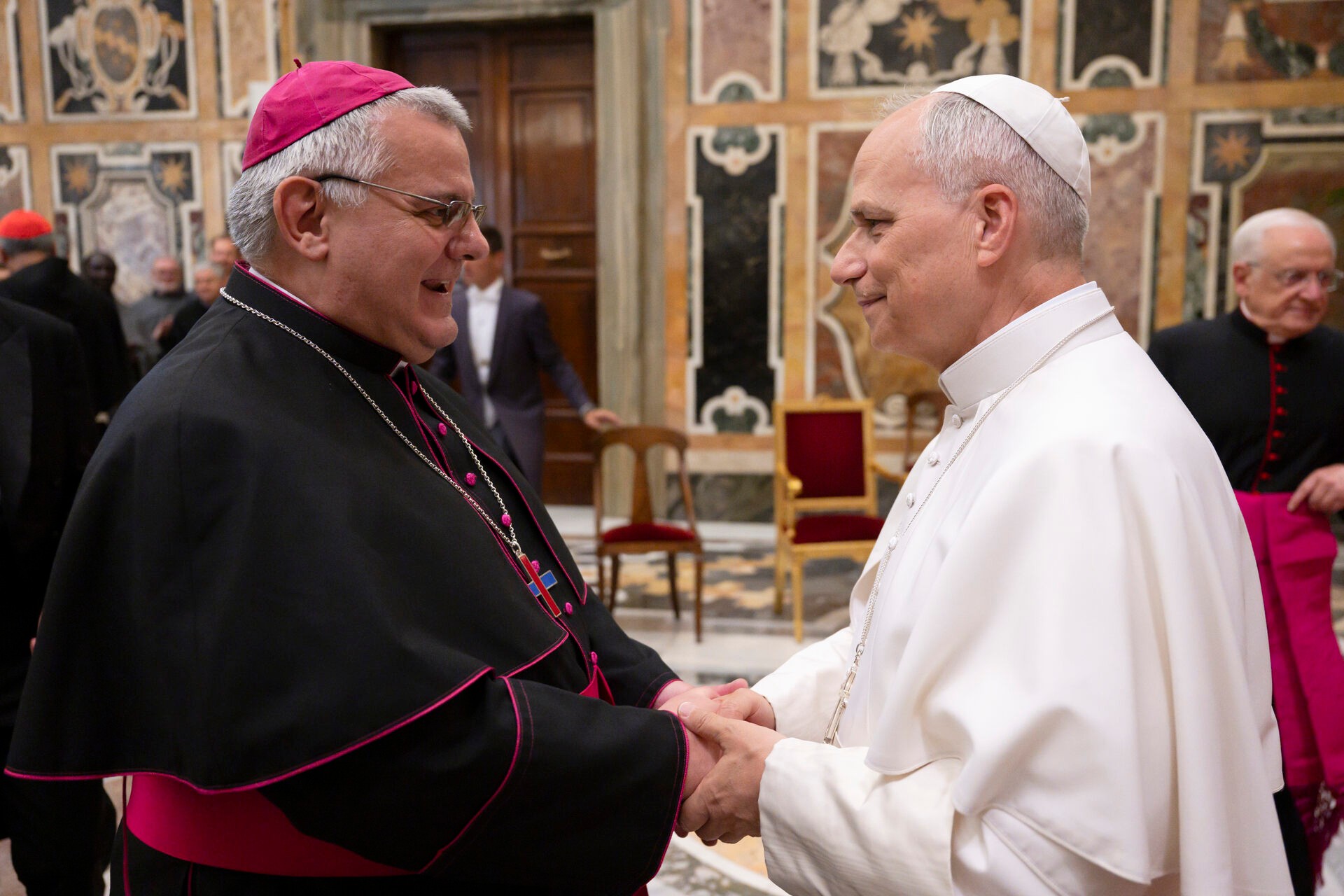
Manama (AsiaNews) - The Christmas season, especially Christmas Week, is ‘intense’ with each community contributing “the characteristic elements of its own faith”. Priests and bishops strive to ensure that celebrations reflect each culture and history. However, Monsignor Bernardi stresses that tradition must not become an end in itself: Thus, the Apostolic Vicar of Northern Arabia, Monsignor Aldo Berardi, of the Order of the Holy Trinity and Slaves, of which he was Vicar General, recounts the preparations for the upcoming festivities in the territory where he has been pastor for almost three years (his appointment was in January 2023). Filipinos, Indians, Maronites and Europeans are part of a Church that is rooted in unity in diversity, which represents both a richness and a complexity.
From the challenge of a “destructured” vicariate with “administrative difficulties” after the death of his predecessor, Monsignor Camillo Ballin, in 2020, to the health emergency linked to Covid-19 and the two years as apostolic administrator of Monsignor Paul Hinder, today the underlying theme is pastoral care: one must be studied, explains the prelate, "for each nation, abandoning a conservative approach but trying to take a step forward in the name of “creativity”. We met Msgr. Berardi at the vicariate headquarters during a reportage that AsiaNews carried out in the Gulf, at the end of a Mass celebrated in the Cathedral of Our Lady of Arabia in Awali.
Below is the second part of the interview with AsiaNews:
Monsignor Berardi, how are you experiencing this period of Advent in preparation for Christmas?
The Christmas season, like Holy Week, is intense, and each community brings with it the characteristic elements of its own faith, so much so that priests pay close attention to this aspect. We do our best so that everyone can celebrate according to their culture and history. I am not opposed to this as long as it is not just a matter of tradition: a rite should not be a ‘museum’ piece, an end in itself, but dynamic, and originality must be found because the Church is alive and faith must be lived deeply. I do not dispute rites and traditions, but I always ask that a distinctive element be found... not ritual for ritual's sake and not traditions for traditions' sake!
In this respect, the different communities offer great richness: just think of the Filipinos with their “Misa de Gallo” or Simbang Gabi.
Exactly! To the Filipinos, for example, I say: “With the Santo Niño, do you just want to dance or do you want to explore why and what the meaning is, how this tradition has shaped your Christianity?”. And this is where the preparatory aspect comes in, which becomes very important! The vicariate is a living Church that can share its centuries-old history with others. Holy Week is a particularly significant time, with processions and rites [linked to the Spanish colonial era in the Philippines]. But these elements need to be elaborated upon, to understand the relevance of the message, what moves the faithful. This also applies to the Syro-Malankara Catholics from India, just think of the Good Friday celebration that lasts up to six hours, in the middle of the night! That is why the preparatory phase is essential, while the feast day is only the conclusion of a journey.
Delving deeper into the theme of the various communities, there is no shortage of internal problems, as in the case of the Syro-Malabar Catholics and the controversy over autonomy and rites. What is the situation?
This is a sensitive issue: until 2020, Pope Francis had given full authority to the apostolic vicar over all rites. Then he decided to give jurisdiction to the patriarchs, first to the Maronites, who then, in a short time and for practical reasons, renounced it. In 2024, Pope Francis granted jurisdiction to the Syro-Malabars, but at the moment we are still in a phase of reflection. The pontiff is expected to send an apostolic visitor to the seven Gulf countries [the reference is to the vicariate of southern Arabia comprising the United Arab Emirates, Oman and Yemen, ed] to meet with the communities and assess the circumstances.
Your Excellency, what are the most critical issues?
Even today, there are several unresolved issues: a primary factor is that of jurisdiction, which is not recognised at the legal level because in the various countries [legal personality] refers to the Latin vicariate. It will take time to achieve recognition as an independent Church and, for the time being, they will have to depend on the vicariate for visas and places of worship. As far as the question of rites is concerned, we follow the directives of the Syro-Malabar Synod where possible, because in many places of worship there is not enough space for two altars. The question remains open. Some civil or cultural associations are pushing for independence, but for the faithful, the important thing is to be able to live their faith, so they are happy. On the other hand, the other patriarchal Churches - starting with the Maronites - seem to have given up because it is too complex in terms of organisation.
In January, you will have been apostolic vicar for three years: what are the positives and negatives?
After the death of my predecessor [Monsignor Camillo Ballin in 2020, with the following two years under the apostolic administrator Monsignor Paul Hinder, editor's note] and the Covid pandemic emergency, I found a “destructured” vicariate with administrative difficulties. After three years, we have a more structured administration, the economy and finances have been reviewed and some appointments have been made, then there is the work at the pastoral level, taking into account that each country has its own laws and we depend on different ministries. We have restored some churches in Qatar and Kuwait, now we have to think about Bahrain. A pastoral approach must be studied for each country, abandoning a conservative approach but trying to take a step forward in the name of “creativity”. We must also rethink the whole pastoral approach, which must not be merely devotional and conservative. On the contrary, a specific approach must be devised for each country, one that looks to the future with creativity, energy and vitality, which are elements of the Catholic communities in the Gulf.
In this perspective, the jubilee years take on particular value, starting with that of Saint Areta, deeply rooted in the land of Arabia...
That of Saint Areta [and companions, originally from the ancient city of Najran, in present-day Saudi Arabia, martyred in 523 for their faith] in 2023 was an opportunity to deepen our understanding of the history of the martyrs of Arabia and discover the Christian past of the Peninsula, giving meaning to our presence. Then there is the general Jubilee of Hope in 2025, which is coming to a close, and in January, the one in Kuwait for the 65th anniversary of the co-cathedral. I also remember, at the local level, the Jubilee for the 85th anniversary of the Church of the Sacred Heart in Manama [recently became a Shrine, ed] and for the 75th anniversary of the Church of Our Lady of Arabia in Ahmadi [elevated in recent months to Minor Basilica]. They are pillars of our history, around which we can build our stability. Not only churches, but also the Sacred Heart School [in Manama, the only Catholic school in Bahrain, ed.], which has been in existence for more than 75 years and is the second most important institution in the country, where several politicians and officials have studied and which enjoys an excellent reputation. I am in favour of celebrations and commemorations because they are a way of inserting ourselves into the historical context of this land. However, we must not stop at the devotional element, but strengthen the aspects of dynamism and creativity, preparing ourselves for tomorrow.
Monsignor Berardi, finally, returning to the theme of the Jubilee Year that is coming to an end, I ask you: what is the hope for this Church in Arabia?
To maintain this spirit of creativity and mission! Even though we have to experience many limitations, there is always hope rooted in the faithful and in the way they live their belonging. Furthermore, being part of the universal Church, especially for the faithful of Saudi Arabia who are members of an underground Church, of the catacombs, with the risk of being isolated. In this sense, the participation of small groups in World Youth Days (WYD) in Madrid, Krakow, Panama and Portugal was significant. Each time, the young people brought a statue of Our Lady of Arabia, donating it to the parish that had welcomed them.
PREVIOUS ARTICLES:
Monsignor Berardi: gifts of peace for Gaza from the children of the Vicariate of Arabia
What's really changing in Riyadh? Taking the 'pulse' through Saudi youth

.png)










