








While it mediates between the US and Iran, Islamabad expels Afghan refugees, more than 146,000 so far this year
Even Afghans with valid papers are affected by warrantless arrests and deportations, Human Rights Watch reports. Women and children are hiding to avoid repatriation, while journalists, activists, and former officials with the previous government fear persecution by the Taliban. More than a thousand Afghans are in a precarious situation stranded in Qatar, with the United States seeking to send to Congo.
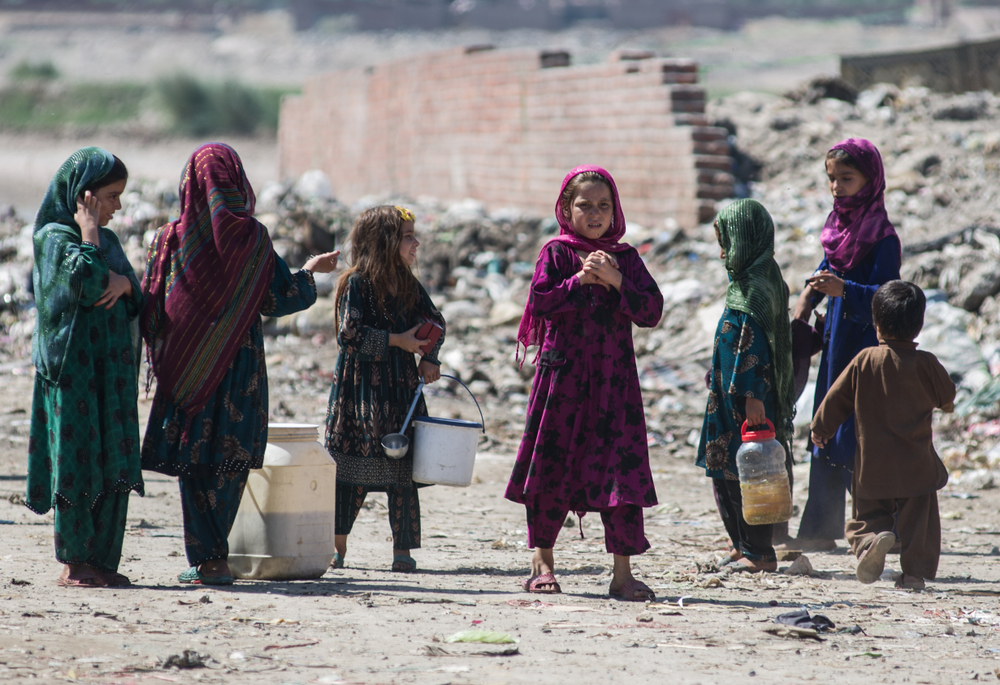
Islamabad (AsiaNews) – While the world waits to hear whether talks between the United States and Iran will continue in Islamabad, Afghan refugees in Pakistan are being expelled from the country in their thousands as a form of pressure on the Taliban regime in Kabul.
Human Rights Watch recently reported on the crackdown, noting that it intensified after hostilities between Pakistan and Afghanistan broke out again in late February, a week before Israel and the United States launched their war against Iran.
Islamabad accuses Kabul of sponsoring and harbouring the Tehrik-i-Taliban Pakistan, the Pakistani Taliban (TTP), which it holds responsible for a rise in terrorist attacks in Pakistan after 2021 with the aim of creating an Islamic emirate modelled after Afghanistan’s.
According to Human Rights Watch, since the start of the year, Pakistan has expelled more than 146,000 Afghans after arresting them without warrants and placing them in detention centres.
As in the past, people with regular documents were also affected, plus refugees left without legal status in the wake of Pakistan’s decision to halt permit renewals in 2023.
According to witnesses who spoke to the rights organisation, people have been arrested during everyday activities, shopping, going to school, or at work, their money confiscated, or subjected to demands for bribes. Anyone unable to pay is expelled.
Many Afghan women have begun hiding from the authorities to avoid repatriation and the discrimination imposed by the Taliban regime.
Also at risk are those who worked for the previous Afghan government before the Taliban returned to power: journalists, activists, and former officials who were unable to find refuge in a third country.
Many refugees avoid hospitals or other public places for fear of arrest. Entire families barricade themselves in their homes, while sick children remain untreated.
In some cases, families have been split with minors sent across the border without parents or family members who were lost during the chaos of expulsions.
Such pressure on Afghanistan has reached worrying levels this year, this in a country already struggling to cope with the humanitarian crisis that broke out in 2021.
According to the United Nations, at least 5.4 million Afghans have left Pakistan and Iran since 2023, which is pushing the country to the brink of collapse.
In areas where returning refugees concentrate, nine out of 10 families are using what the UN calls negative coping mechanisms, like skipping meals, going into debt, or selling their assets in an attempt to deal with economic hardships.
In 2025 alone, nearly three million people were expelled to Afghanistan, "the largest number of returns we have ever recorded to a single country," said Arafat Jamal, UNHCR Representative in Afghanistan.
However, most would like to leave because they are unable to rebuild a dignified and economically sustainable life.
The new wave of expulsions comes at a politically delicate time for Pakistan, which is trying to mediate between the United States and Iran.
In recent weeks, Islamabad has been under special security measures in anticipation of negotiations, which remain uncertain.
The plight of Afghan refugees does not stop in Iran and Pakistan. Those stranded in third countries after fleeing the country in 2021 are also at risk of forced return.
This is the case, for example, of about a thousand refugees in Qatar, people who worked for the US military who were promised resettlement in the United States.
The United States once again sought resettlement in third countries, such as the Democratic Republic of the Congo.
In response to the situation, the Taliban Foreign Ministry recently issued a statement saying that returning to Afghanistan would be safe.
“Afghanistan constitutes the shared homeland of all Afghans and it invites all those concerned, as well as others sharing a similar situation, (to) return to their homeland, whose doors remain open to them, to do so with full confidence & peace of mind,” reads a statement by foreign ministry spokesman Abdul Qahar Balkhi.
Anyone “intending to travel to another country may do so at an appropriate juncture through legal & dignified channels,” the statement goes on to say, noting that, “there exist no security threats in Afghanistan, & none is compelled to leave the country on account of security considerations.”
Most Afghans are hard-pressed to believe such words. When they took over the country again in 2021, the Taliban promised that they would protect freedom and women's rights. Instead, they did the opposite.

.png)
14/04/2025 16:51
02/11/2023 17:07
26/09/2024 13:33
26/05/2025 18:14










