








A Eid al-Fitr truce between Kabul and Islamabad, but clouds remain over the future
The temporary suspension of hostilities until 23 March was agreed by Qatar, Turkey and Saudi Arabia, who are pushing for negotiations on the conflict that began on 26 February. The heavy toll of the bombings on the Afghan capital. The Taliban speak of violations. Meanwhile, in Pakistan, statements by the US intelligence chief regarding “potential threats” from Pakistani missiles are causing controversy.
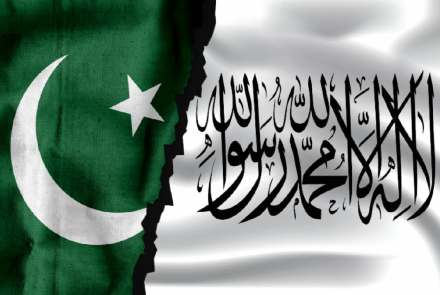
Islamabad (AsiaNews) - Between Afghanistan and Pakistan, a relative calm, fraught with uncertainty about the future, is accompanying the truce that has come into effect in the last few hours to mark Eid al-Fitr, the festival that marks the end of the month of Ramadan in the Muslim calendar.
According to Pakistan’s Information Minister Ataullah Tarrar, operations have been suspended at the request of Qatar, Turkey and Saudi Arabia. The pause – which began at midnight on Wednesday and remains in force until 23 March – was announced two days after the deadly Pakistani air strikes on Kabul, in which 408 people died, according to Afghan authorities.
“Pakistan is offering this pause as a gesture of goodwill and in accordance with Islamic norms,” said Tarrar, warning that in the event of any cross-border attack, operations would resume immediately. Meanwhile, the Afghan government announced that the Taliban are also adhering to the temporary suspension of operations to mark Eid al-Fitr. However, it also accused Islamabad of violations, citing 72 missile strikes that allegedly took place in Kunar district without causing any casualties.
The Pakistani army’s Operation Ghazab lil-Haq was launched on the night of 26 February, citing a series of cross-border attacks by the Afghan Taliban as justification. According to figures provided by Islamabad, over 700 militants were reportedly killed and more than 900 wounded, in addition to 255 positions destroyed and 44 captured.
Relations between Afghanistan and Pakistan have deteriorated due to tensions along the border, which have resulted in casualties and material damage. Pakistan’s Prime Minister Shahbaz Sharif wrote on social media platform X that he recognises the constructive role Turkey is playing in supporting efforts towards a peace agreement between Pakistan and Afghanistan.
Meanwhile, statements by Tulsi Gabbard, Director of US Intelligence, are causing debate in Islamabad. Presenting the 2026 Annual Threat Assessment before the Senate Intelligence Committee, she stated that Pakistan too “continues to develop capabilities to strike targets beyond South Asia and is refining increasingly sophisticated missile technology”, adding that “if these trends continue, Pakistani intercontinental ballistic missiles could threaten the US”.
Tahir Andrabi, spokesperson for the Pakistani Ministry of Foreign Affairs, stated on Thursday that Pakistan categorically rejects this claim. “These are purely defensive weapons,” he said, “and are aimed at safeguarding national sovereignty and maintaining peace and stability in South Asia.” Andrabi confirmed that Pakistan remains “engaged in a constructive dialogue with the United States, based on mutual respect, non-discrimination and factual accuracy”.
Tughral Yamin, a former army general and specialist in arms control and nuclear affairs, speaking to Al Jazeera, said that Gabbard was not the first US official to raise such concerns. Yamin stated that Pakistan had officially responded to such statements by emphasising that its deterrence – both conventional and nuclear – is directed at India.
Operation Ghazab lil-Haq by the Pakistani army was launched on the night of 26 February, citing a series of cross-border attacks by the Afghan Taliban as the reason. According to figures provided by Islamabad, over 700 militants were reportedly killed and more than 900 wounded, in addition to 255 positions destroyed and 44 captured.
Relations between Afghanistan and Pakistan have deteriorated due to tensions along the border, which have resulted in casualties and material damage. Pakistan’s Prime Minister Shahbaz Sharif wrote on social media platform X that he recognises the constructive role Turkey is playing in supporting efforts towards a peace agreement between Pakistan and Afghanistan.
Meanwhile, statements by Tulsi Gabbard, Director of US Intelligence, are causing a stir in Islamabad. Presenting the 2026 Annual Threat Assessment before the Senate Intelligence Committee, she stated that Pakistan too “continues to develop capabilities to strike targets beyond South Asia and is refining increasingly sophisticated missile technology”, adding that “if these trends continue, Pakistani intercontinental ballistic missiles could threaten the US”.
These remarks have caused astonishment in Islamabad, particularly given the local government’s overtures towards Trump, including General Munir’s repeated visits to Washington and the Sharif government’s membership of the controversial Board of Peace.
Tahir Andrabi, spokesperson for the Pakistani Ministry of Foreign Affairs, stated on Thursday that Pakistan categorically rejects this claim. “These are exclusively defensive weapons,” he said, “and are aimed at safeguarding national sovereignty and maintaining peace and stability in South Asia.” Andrabi confirmed that Pakistan remains “committed to a constructive dialogue with the United States, based on mutual respect, non-discrimination and factual accuracy”.
Tughral Yamin, a former army general and specialist in arms control and nuclear affairs, speaking to Al Jazeera, said that Gabbard was not the first US official to raise such concerns. Yamin stated that Pakistan had officially responded to such statements by emphasising that its deterrence – both conventional and nuclear – is directed at India.

.png)
07/02/2019 17:28










